


A 172-Year-Old Local Home Lovingly Saved & Restored
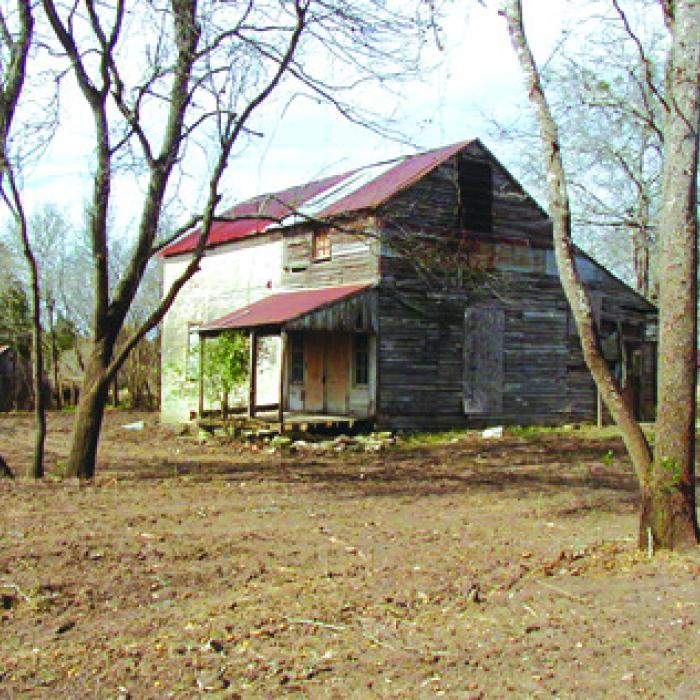
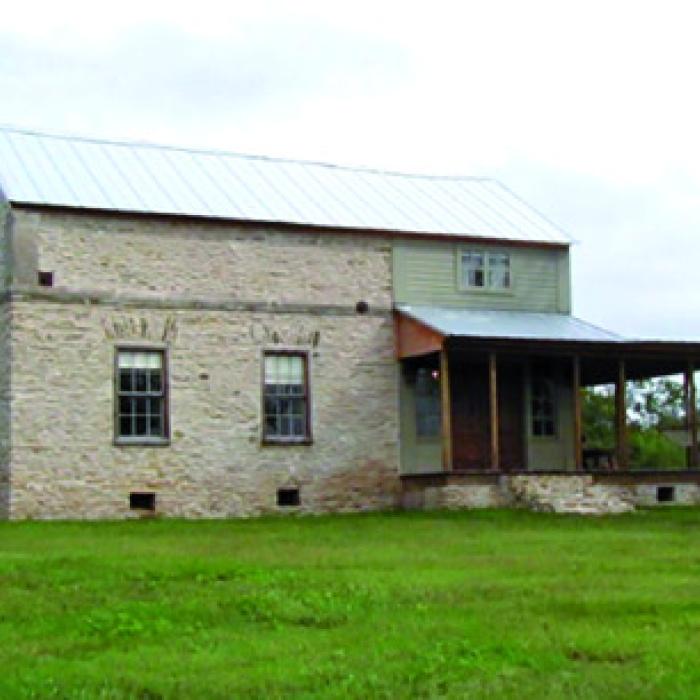

Three miles south of La Grange on Hausmann Gin Road sat an abandoned, nearruined rock house hidden in the middle of a thicket of trifoliate orange trees with a narrow path leading to the front porch.
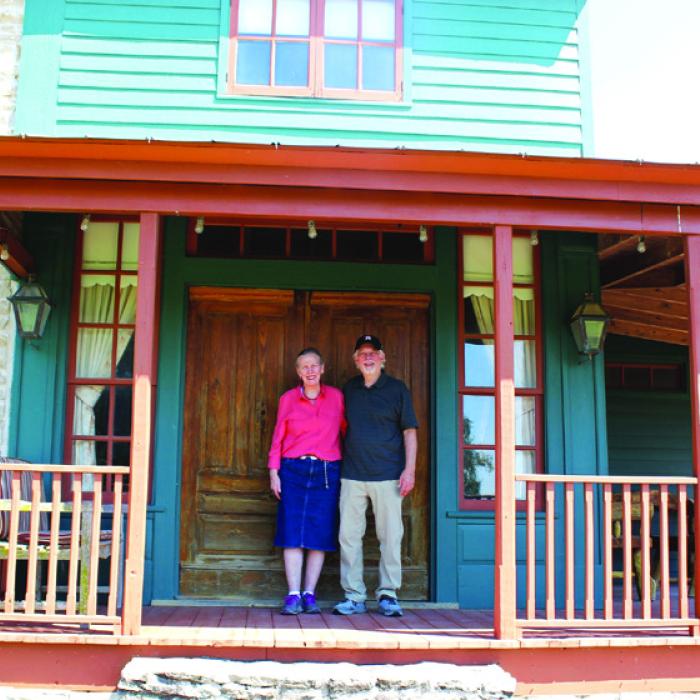
Some might not have seen any potential but for Alan and Bonnie Crawford, this house would soon become a historical endeavor.
In 2002 the Crawfords, who live in Cypress, saw an idyllic weekend property in a farm and ranch magazine from a well-known realtor in La Grange. “We called him up and he said, ‘Oh no sorry we sold that property but what are you looking for?’” And I said we really would like an old stone house and if we have to do some restoration work that would be fine too and the realtor said, ‘Oh I have something for you!” said Alan.
And boy did he have something for them! Here is more of what they saw on their first visit to the property, as told by Bonnie. “The double front doors were secured shut only by a rock at the base of the doors. All of the windows had been boarded up with pieces of tin roofing. Inside was an old kerosene stove, an old dilapidated cupboard stashed with trifoliate oranges brought in by the wild animals, and a small hall closet. Straight ahead from the entry was a back room with stone shelves most likely the original outdoor kitchen to the rock house. Double interior doors to the left of the entry led to the living room with a Rumford fireplace and mantel and another room in the back with another Rumford fireplace. Large spiderwebs and debris were everywhere but most frightening of all was the steep dark stairway leading to a wood addition.”
Also on the property was an old small car barn likely for a Ford Model T or A, a smokehouse, tool shed, hay barn, sheds over an old water well pump and an old hand dug well, and a watershed ravine on its edge.
The Crawfords couldn’t resist the overlooked property and purchased 34 acres. Accompanied by a street-smart stray border collie who was found on the property, the Crawfords were having an adventure of their own trying to restore the home to its original glory as they soon found out the land and the home had a story of its own to tell.
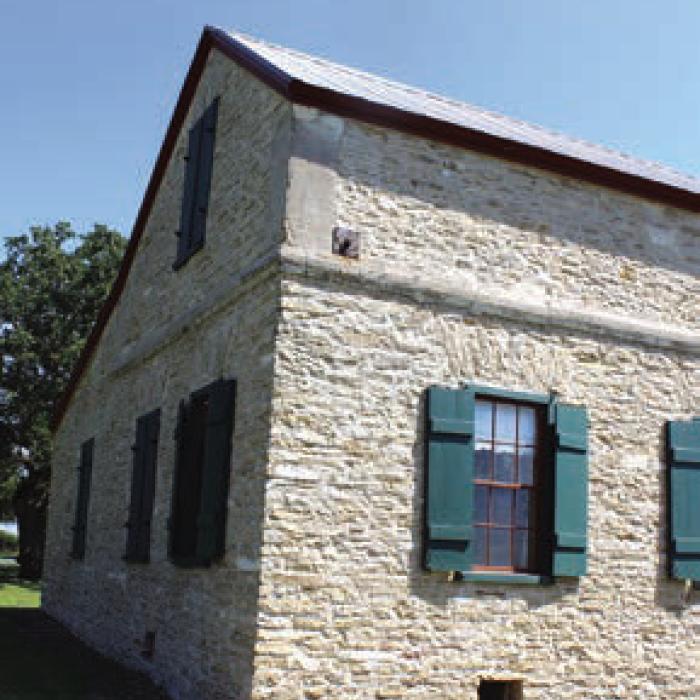
Through a title search, tax records, the style in which the home was built, and many hours of research the Crawfords were able to find that the stone farm home was likely built by the notable Heinrich L. Kreische, a stone mason and brewer master.
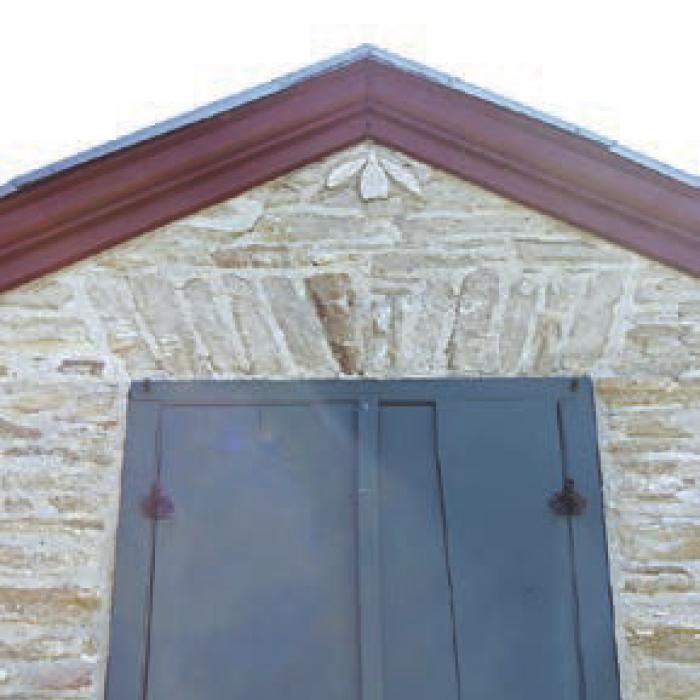
The Crawfords noticed multiple similarities between their home and Kreische’s. “Inside you can still see some of the notable Kreische features from the stone shelving, archways, Chamfered windows, and the Rumford fireplaces. On the outside, you can see molding formed in the stucco and remnants of columns to give the home a different style similar to Kreische’s which wouldn’t have been a typical farmer’s house. Also, the sandstone which was probably the only thing available during that time,” said Alan. “We like the historical aspects of it and being able to preserve something for posterity and it already lasted this long so why not.”
Along the way of preserving the home and property to its historical state the Crawfords also gained an important appreciation. “It was fun to furnish because we tried to bring it back to the period and it’s a very functional house really I just love it,” said Bonnie.“But it was an adventure more than anything because we came out here and bought the typical farm implements and we gained a huge appreciation for people who grew up in the country, who are from farm and ranch backgrounds because they are people of incredible integrity, honesty, and hardworking ethic. We like that. We saw it as something that needed to be saved.”
The home is believed to have been built between 1852 and 1853 as taxes increased from $100 to $1,000 for the most notable property owner, William Evans.
The Evans family were English, but despite their Quaker upbringing, had a very distinguished military tradition. Samuel B. Evans, William’s brother, died in the Alamo fighting for Texas independence. After his son was killed at the Alamo, Musgrove Evans Sr. and two of his sons traveled to San Jacinto and helped defeat the Mexican general, Santa Anna. At that time, William was only 13 years old and was not allowed to go, but he followed his father and brothers anyway and witnessed the aftermath of the battle. Another one of William’s brothers, Musgrove Evans Jr., was a member of the Mier Expedition, where every the Texan prisoners had to draw either a black or a white bean from a hat. Those that drew a black bean were executed. It is told that he drew a white bean and was released but was never heard from again.
Today the Crawfords who continue to restore and maintain things on the home and property are in the works of applying for a historical marker. “The connection of the former residents, their courage and bravery, to the physical remains of this unique and beautiful dwelling, and likely being built by La Grange’s most notable stone mason, has been awe-inspiring and a good reason to continue to preserve it for many more years and with a historical marker it will just make it more special,” said Bonnie.
The historical connection to Fayette County and the Crawfords’ perseverance shows that the once abandoned home and property stand not only as a reminder of what was but also a reminder that people are a history of connections.