

Tomato Picking Time in Texas

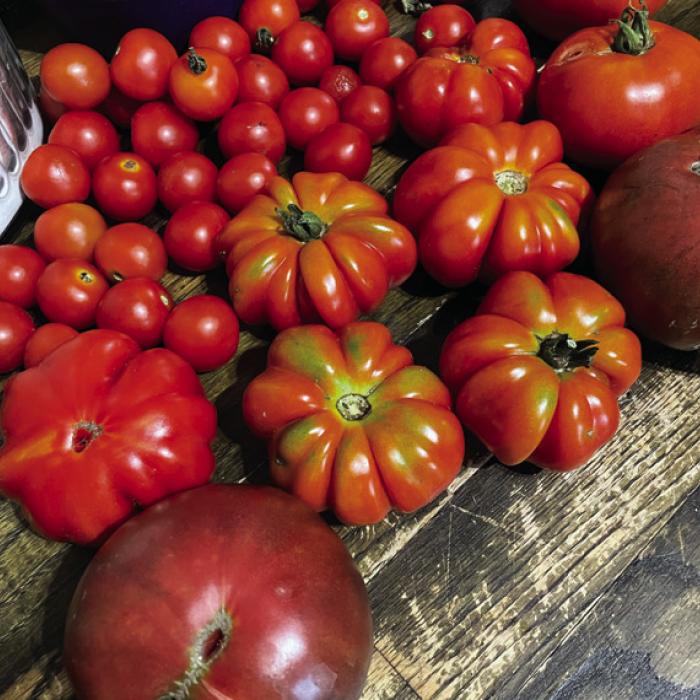
It’s tomato pickin’ time. These are my favorite fruits of the garden. And after a long wait, they are finally starting to ripen.
I’m growing a variety of cherry tomatoes called “Grappoli d’ Inverno,” which means “Winter Grape” in Italian. They were the first to set fruit and ripen.
Right behind them were a variety of hybrid tomato called “Big Boy.” They indeed live up to the name. But I’m less impressed with their flavor. Hybrid tomatoes can better withstand disease pressure than open-pollinated hybrid varieties, and “Big Boy” certainly does. But selective breeding for these traits usually comes with a trade off. Color and flavor sometimes take a back seat.
I’ve grown “Cherokee Purple” tomatoes for the past several years. Each plant typically only produces a few fruit. But these big, juicy, dark tomatoes make up for their lack of production with incredible flavor. This year I’m pleased to report that my Cherokee Purple plants are loaded with fruit. I counted eight almostsoftball- size tomatoes on one plant, and it is still setting fruit. I picked the first two ripe ones on Tuesday. I’m not sure what’s different about this year. Maybe it was the ample rain we received in the early spring. I also planted most of my tomatoes in a spot in the garden where an oak tree casts afternoon shade. Maybe that helped as well.
“Brad’sAtomic Grape” is another annual favorite of mine. Despite their name, these fruits grow to the size of a Roma tomato. They ripen to shades of copper, blue and purple with beautiful stripes. They’re incredibly tasty in salads. And the plants are very productive – mine are loaded with multiple trusses of six to eight fruit.
“Costoluto Fiorentino” is another Italian heirloom I’m growing. Also very productive, they produce ribbed medium size fruit that I think are perfect for canning or sauces. They are less juicy and more meaty than other tomatoes. Unsurprisingly, this variety is prized in Florence, Italy, where it was developed, as a paste tomato.
The only variety in my garden that hasn’t started ripening yet is “Golden Jubilee.” I’ve grown this variety several times in the past. In my experience, it’s the last to ripen, but they continue producing longer into the heat of the summer when other varieties play out. This typically happens when nighttime temperatures rise above 80 degrees. Plants will continue to flower, but they stop producing fruit until the fall, when temperatures come back down. Golden Jubilee helps to extend the early harvest season into the summer.
I’ve gotten questions from a few gardeners about problems with growing tomatoes. I hear a lot of folks complaining about birds poking holes in their tomatoes. This is an easy one to address. More likely than not, the birds are after water, not the fruit itself. Ninety percent of the time, you can put out a bird bath or a shallow tray with water, and the birds will leave your tomatoes alone.
Another common problem is blossom end rot. This is usually a symptom of calcium deficiency. If your tomatoes have suffered from blossom end rot in previous years, prevent it by adding some soft rock phosphate to the soil at the time of planting – about three to four pounds per 100 square feet. If you’re dealing with blossom end rot right now, adding soft rock phosphate probably won’t do the trick, because it takes a while for it to become part of the soil and get absorbed into the plant. Instead, you can try drenching the soil with a good organic fertilizer, compost tea or liquid seaweed. If you use liquid seaweed or fertilizer, be sure to mix with water according to the manufacturer’s instructions. Apply every couple of weeks. Be sure not to use a fertilizer with a high ratio of nitrogen, because this will encourage the plant to grow lots of foliage but few fruits.
The dreaded tomato hornworm is the biggest pest for tomato growers around here. This big, fat caterpillar can destroy an entire plant in just a couple of days. The organic pesticide Bt ( Bacillus thuringiensis) will kill them. But I find it much easier to find them and pick them off the plants. They can appear quite intimidating with a large horn-like structure on their body. But they won’t hurt you at all. They can be a little tricky to spot since their bodies blend-in so well with tomato leaves. But I learned this trick a few years ago – find them at night with a handheld blacklight. Tomato hornworms glow brightly under a black light, making them super easy to find.