

So You Grew a Lot of Tomatoes – Now What?

I think tomato season is almost over for the summer.
Tomatoes tend to stop producing when daytime temperatures stay in the high 80s and 90s and nighttime temperatures remain above about 75 degrees. At these temperatures, flowers fail to germinate and fall off the plant.
That’s about where we are at right now.
I knew it was coming, because last week I harvested about 50 lbs. of tomatoes. So far this week, I’ve picked about five. Just when you think the bumper crop has arrived, it all comes to a halt.
So now what? The tomato varieties I’m growing are all indeterminate, meaning they’ll keep producing as long as conditions remain favorable. I could leave them in the ground and wait for the fall. The cooler temperatures will kick the tomatoes back into production. I’ve done this many times in the past and it works.
But then I have to sit and watch unproductive plants for a few months. They take up space in the garden. They’re using nutrients and water without anything to show for it. They get top-heavy from all the foliage and tend to flop over. Then I have to support them with sticks and trellis. That requires work without anything to show for it, at least for now. Then when they do start producing again in the fall, all of the tomatoes will be at the top of the plants, requiring even more support.
So maybe I should pull them up and plant something else in their place, like heatloving okra or field peas.
But then I won’t have any homegrown tomatoes in the fall.
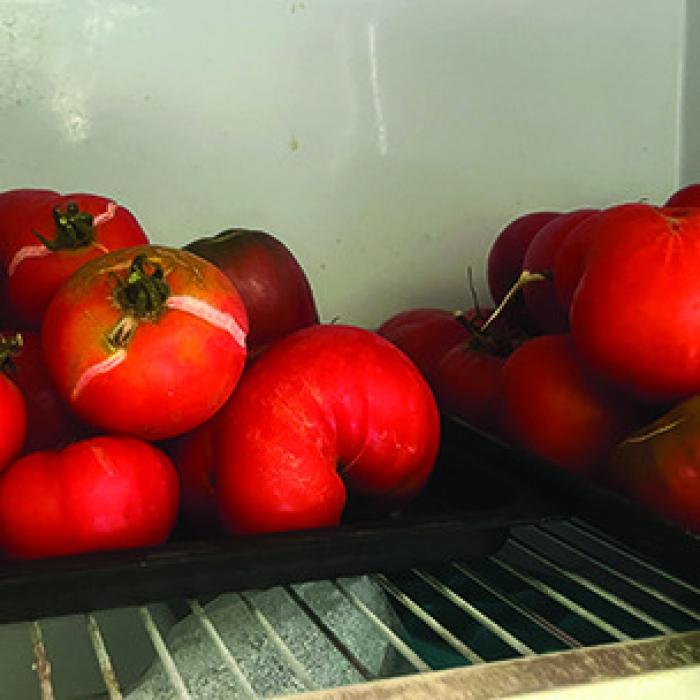
One of the varieties I’m growing is a hybrid. I forgot which one, but I think it’s “Better Girl.” These tomatoes started out great. But during the last few pickings, I’ve noticed a lot of cracked skins. I can’t leave them on the counter for more than a few hours before they start attracting fruit flies. So I have to freeze or process them right away. I think I might pull these plants.
I’m also growing some heirloom “beefsteak” tomatoes. They seem to love the heat a lot more. They’re slowing down, too. But it seems their production may last a little longer. I think I’m going to keep these around through the fall.
The small cherry and grape-type tomatoes seem to thrive in the heat the longest. I’m only growing a couple of these plants. And they are continuing to produce. So I’ll keep them around as well.
Now I have about 50 lbs. of tomatoes in the freezer, and I’ll probably add to that number before production completely stops. I used to preserve tomatoes by canning them. But that requires a lot of work – cleaning jars and lids, blanching and peeling, stuffing jars, and then steaming them in the pressure cooker.
This year, I’ve been freezing all my tomatoes. It’s just a lot easier. Simply stack them on a tray and place them in the freezer. After they are frozen, you can pack them in vacuum-sealed bags. But we eat through them so fast that I don’t bother bagging them.
When you thaw them out, the skins come off so easily. You can use the thawed tomatoes “fresh” to make salsa. But they really shine when you cook them down into a soup or tomato sauce. The flesh of these frozen-then-thawed tomatoes breaks down quickly. Tomato sauce for pasta comes together in mere minutes rather than the half-hour or more it takes to cook down fresh tomatoes.
Janessa made tomato soup one night last week to go with some grilled cheese sandwiches. I cooked a minestrone soup the other night with a bunch of vegetables from the garden. I added five or six whole frozen tomatoes. I picked them out after a few minutes to peel the skins and then returned them to the pot. A few minutes later they broke up completely and the soup turned red.