

Reds & Blues

By LARRY JACKSON
No television. No Facebook. No cable screeds or Instagram memes or Twitter rants. Just three hours of talking politics. And nobody left mad. On a recent Thursday night,
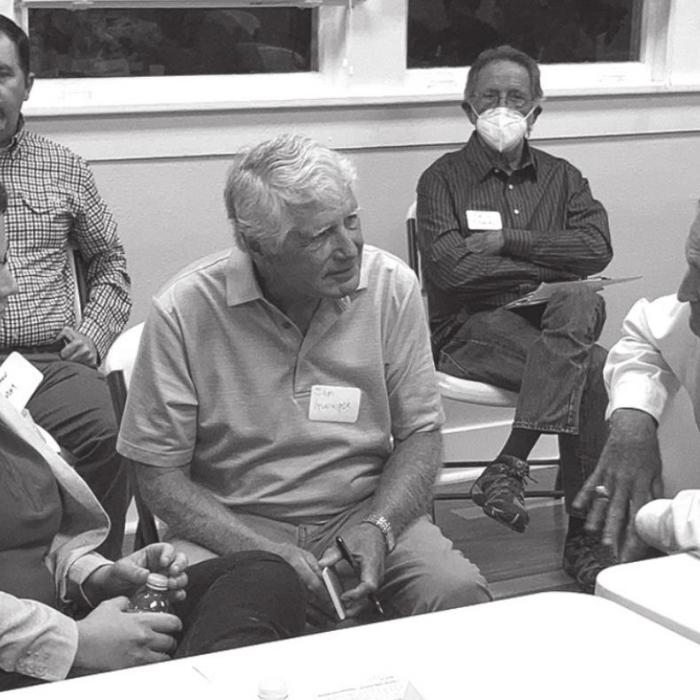
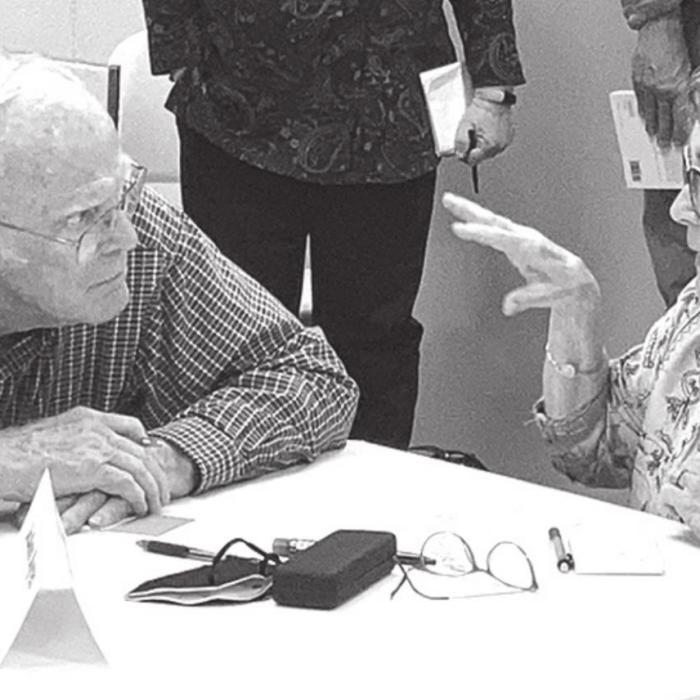
On a recent Thursday night, some two dozen Fayette County citizens gathered at Randolph Recreation Center to say why they’re Republicans or Democrats, liberals or conservatives. Yet the idea wasn’t to convince “the other side” of who is right, but rather to explore why “Reds” and “Blues” think the way they do – and just might not be what the “other side” thinks they are.
Nearly five years ago, an organization called Braver Angels was born in response to the growing polarization of Americans. Could simple conversations actually help Americans “respectfully disagree”?
Since then, hundreds of “workshops” have been held across the country, bringing “Reds” and “Blues” together for a “guided discussion” of what they believe about themselves and about each other.
Connie Shortes, who fairly recently moved to Fayette County, is a Democrat who has been a Braver Angels workshop moderator for several years. Arnold Romberg is a longtime Fayette County Republican leader who has been deeply concerned about the loss of “civility” in political discourse. The two got together and the Red/Blue Workshop resulted.
“The point was not to change anyone’s mind, and no minds were changed,” Shortes said.
“Instead, each side respectfully listened to each other, and many participants said they were surprised to find more common ground than they expected. In short, everyone there was doing the real work of citizenship in a democracy.”
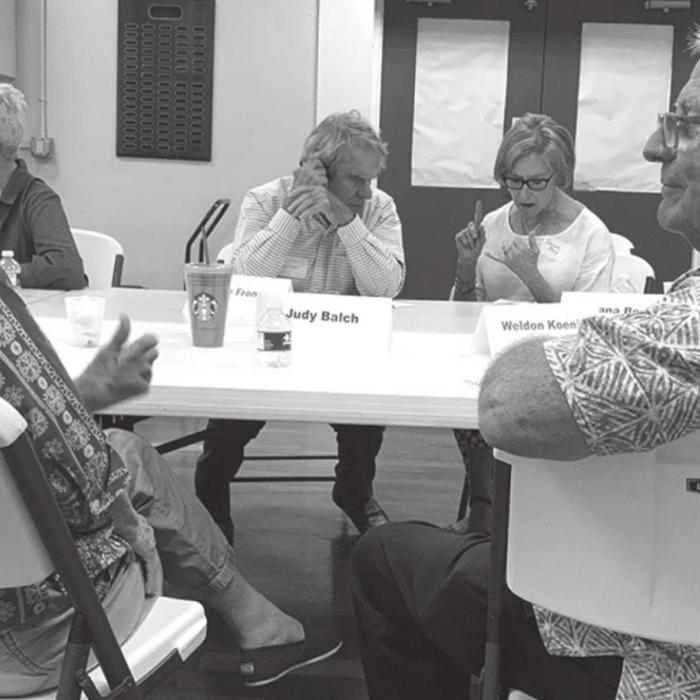
In this particular workshop, seven Reds and seven Blues were the “participants,” with Shortes and Steve Saltwick of Austin as volunteer moderators to “keep participants on track” and “create opportunities for meaningful discussion.” Another dozen or so “invited observers” – both Republicans and Democrats – attended to see the process and outcome.
“The objective of the workshop is not to debate or persuade, but rather to help participants and observers to clarify their disagreements, reduce stereotype-thinking and build the relationships needed to find common ground,” Shortes said.
And surprisingly enough even to themselves, they did.
In this particular workshop, each side “caucused” to discuss how they thought “the other side” thinks of them – the stereotypes they hear and see on TV and social media. Then they talked about what they think is the “truth” about their ideas and positions on these topics, as opposed to the “lies” the other side believes. Later, they shared their beliefs on this with each other.
It concluded with a “fishbowl exercise,” where the Blues sit in an inner circle to discuss their side’s views and beliefs, while the Reds sit in an outer circle just behind them, listening. Then they trade places and listen to the other side.
Does the listening help?
Participants overwhelming said it did. A common response was that they were surprised how much common ground they had, how much agreement there was on love of country, desire for improvement and deeply held common values.
Topics discussed range from immigration to racism, taxation to social safety networks – and no one seemingly changed their minds about any of them. But they did understand better what the other side thinks – and why.
Several months ago, Romberg and Shortes got two more Republicans and two more Democrats to form an organizing committee for the event. These then recruited the participants and observers.
Participants were Diana Berg, Karen Derr, JoAnn Ayres, Deanne Lowrey Green, Sam Kuninger, Judy Balch, Chuck Linton, Weldon Koenig, L.J. Calley, Arnold Romberg, Leonard Schultz, Sharon Muzny, Chuck Gibson and George Frondorf.
“Braver Angels is a nonprofit organization committed to bringing Americans together to bridge the partisan divide and strengthen our democratic republic. Many of the observers have said they’d like to participate in a future Red/Blue workshop, so we’ll be having another one as soon as we can get it organized,” Shortes said.
“If you think you would like to participate or observe a future workshop, or if you’d like to know more about Braver Angels, please contact me at fcbraverangel@gmail.com.”
What They Took Away
Responses from participants include:
I have discovered in myself that I sometimes stereotype. All Republicans are not the same. I also learned that there are many areas that we agree on, and that we have work to do.
I took away that we can have a polite conversation. I also took away that we, both sides, agree about corruption, term limits and whatever you want to say about politicians today, on both sides.
The people in this room do not even resemble the things that I see on social media and the things I see on TV. That’s not who the people in this room are. So maybe it’s not as bad as I thought it was.
I came away with the fact that we have a lot more in common than I thought. The differences between our positions on different things. We’re a lot closer together than I figured we were when I walked into the room.
I learned that both political parties in the county are not limited to the kind of people who write letters to the editor in the Record.
I think we are all ready for two things. I think we are ready for a woman President and we’re ready for term limits.
A need for accountability up and down, within the parties, by the elected officials, by the membership and the voters.
I am leaving with the knowledge that everyone in this room is willing to consider policies and procedures on their own merits, and not just how their own needs will be satisfied by voting a certain way.
Although we are all very different people, it’s clear that we can collaborate on improvement of our great country.
I will go out with more optimism.
I was impressed by the way we worked together. We took it very slowly, and by now, we have all gained a lot. I have a much broader understanding than I had when I came in the doors.
I guess I come out of this generally pleased with our community.
Very refreshing. I heard acknowledgements from the other side that we all need to listen more.
It’s a pleasure for me personally to see that we have that much commonality in a time [when differences are] so amped up.
I come away with a real appreciation for open and honest communication.