

Potato Planting Time
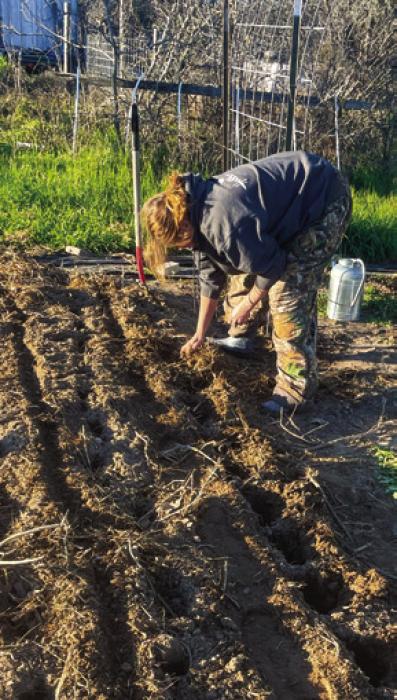

Janessa and I planted potatoes on Sunday in a new patch we expanded to our garden.
I think potatoes are a great crop to start in a new section of garden. I try to keep tilling to a minimum in our garden. Disturbing the soil by tilling breaks up the network of soil bacteria, fungi and earthworks that are so beneficial to growing plants.
But you can’t really grow potatoes without breaking up the soil. They tend to grow better in hills or mounds. Piling soil up and around the stems encourages potatoes to grow more tubers. And then when you harvest the potatoes, you have to dig up the soil. So there’s really no way around it – you’re going to disturb the soil when you grow potatoes.
Last year we started this new section of the garden by covering it with black plastic for several months. This is the best way of killing grass and depleting the bank of weed seeds in the soil. Grass dies from the lack of sunlight. Every few weeks, we would uncover the area, water it, and recover it with plastic. This encourages weed seeds to germinate, but then they die quickly from the lack of sunlight. After about six months, we had a completely barren patch of soil.
On Sunday, I spaded this patch using a garden fork and mixed in several amendments. Almost all of our native soils lack some of the trace minerals that help plants reach their fullest genetic potential. Whenever I start a new garden patch, I remedy this by adding some kind of rock mineral product. This time I used the product Azomite because I had a bag of it laying around. Lava sand and green sand are also great for improving minerals in soil.
I also added some organic granular fertilizer. I used MicroLife General Purpose 6-24 fertilizer. You can find it at many garden stores in the area. Medina Growin’ Green is also an excellent granular fertilizer. MicroLife’s products are made from ocean-derived products whereas Growin’ Green is made from poultry products. I like both of them.
I also added some homemade compost and raked all of these ingredients into the soil. We had enough space for three 20-foot rows, which planted about five pounds of seed potatoes.
I cut the seed potatoes into pieces, making sure there was at least one “eye” per piece. Potatoes grow from the eyes. Some folks roll the pieces in wood ashes before drying and planting. I didn’t bother doing that this time. I just left the pieces to dry in the outside air until they sort of “crustedover.”
We planted them about 12 inches apart in the rows. We also inter-seeded the potato bed with cilantro as a companion plant. Potato beetles are one of the biggest pests I’ve experienced with spring-planted potatoes. Cilantro attracts predators of the potato beetle, such as lacewings and ladybugs. Most, if not all, of the pesticides that kill potato beetles also kill beneficial insects like ladybugs and lacewings. This year, I’m going to try and use cilantro to keep those potato beetles away.
Once the potatoes emerge, I’ll mound up some additional compost around the plants and cover the whole spot with a couple inches of wood chip mulch. I’ll have to dig it all up when I harvest the potatoes. But after that, the spot will become part of my no-till garden.
We’re constantly expanding our garden.As we fill some parts of the garden with perennial plants like asparagus and artichokes, we need new space for annuals. Soon, we’ll pick a new spot to expand the garden, cover it with plastic, and plant potatoes in it next year.