

A Long Weekend at the Coast

My fingers are sore from picking crabs.
Last Thursday my dad and I drove down to Port O’Connor for a fishing trip. My boys, John and Sam, joined us on Saturday and Sunday.
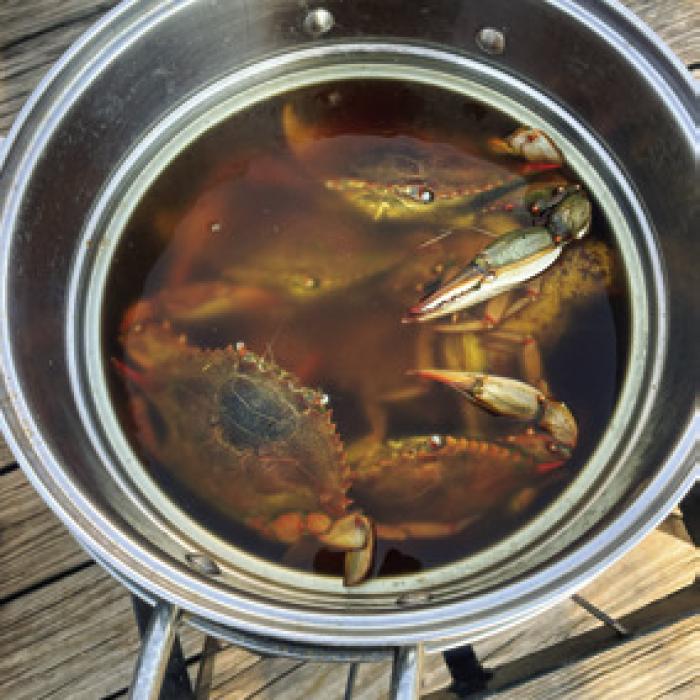
I reckon we caught about 40 crabs over the four days we were there. We boiled and ate crabs two of those days. I caught them in a couple of traps I set a few feet off the shoreline in Boggy Creek Nature Park. They sell a Tshirt in one of the stores down there that says “I caught crabs in Port O’Connor.” I thought about buying one. I don’t think my wife would appreciate me wearing it.
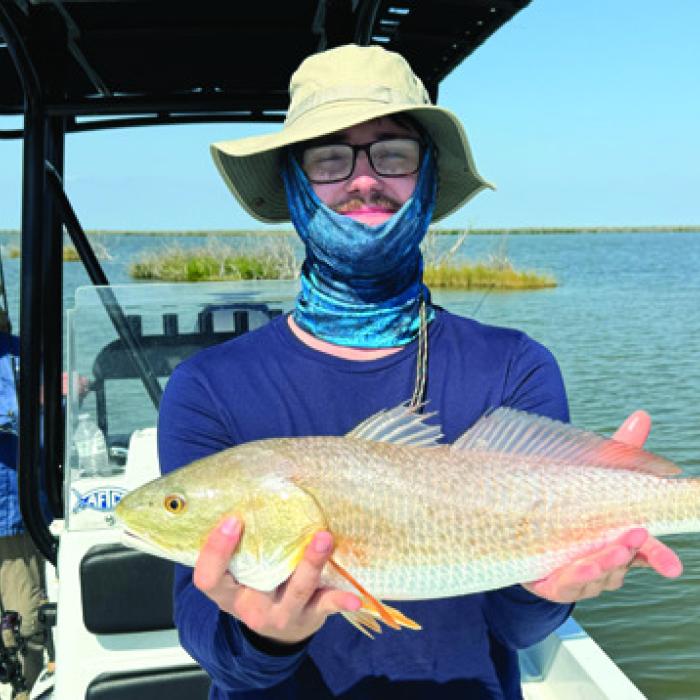
But we were there to fish. Capt. Gary Gray of Bay Rat Guide Service took us Saturday and Sunday. We brought home 13 redfish, five black drum and a speckled trout. We caught a lot more, but those were the keepers. Catching them was fun. But the best part of the trip, beside spending time with family, was learning about the bay and the people who live and make a living on it.
There were a lot of boats on the bay Saturday. Besides holidays, it’s the busiest day of the week down there.
We launched out of Charlie’s Bait Camp. Our first stop was a shallow flat just a few minutes ride from the cut out of the Intracoastal. We joined about six other boats casting onto the flat. I started catching black drum on just about every cast.
We noticed a lot of boats had guys wearing bright orange shirts. Gray said they were with a Wounded Warriors group. Several local guides took them out that day for a fishing trip. Someone in a fancy new black and green boat roared past us blasting a song by the hip hop artist YG on their loud speakers.
“That guy’s probably a banker and doesn’t listen to that stuff until he gets down here,” Gray said.
Sunday was a lot quieter. We saw a few fishing boats in the distance. The occasional airboat whizzed by.
At one spot, we heard someone running a saw and hammering, presumably a duck hunter working on a blind. There are hundreds of these primitive wooden structures out there dotting the bay. Sometimes storms knock them down, creating new underwater hazards for boaters. Anyone can build them, but anyone can use them as well. This has led to more than a few fights between hunters during duck season. Every year around this time, just before duck season, hunters “brush” their blinds by affixing palm fronds, sticks and grass for concealment.
“I haven’t brushed my blinds in two or three years,” Gray said. “Somebody’s using them. I show up and they’re brushed.”
Gray told us stories about the days when cattle used to roam some of the islands in the bay. The U.S. government confiscated the islands and used them for military training from World War II through the Vietnam War. Warplanes practiced bombing runs on the islands, and they’re pockmarked with craters that fill with rainwater. Later, some enterprising rancher hauled cattle over on a barge. You can still see remnants of fences and pens on those islands. They’d eat the saltgrass and drink water from the bomb craters. Those cattle would only see people once a year when cowboys came over to separate and ship back the calves.
“Those were some of the wildest cattle you’d ever seen,” he said.
Thickets of dead mangroves cover many of the low-lying islands. The trees died during the hard freeze in 2021. Their roots help to hold the soil in place during storms. But as the dead ones decompose, some of those islands are starting to wash away. Gray showed us one island that’s barely even there anymore. A channel has started to cut through it. The next big storm, he said, might wash it away completely.
Mangroves provide shade and habitat for many aquatic species, especially the mangrove snapper, one of the tastiest fishes in my opinion. But the mangroves are starting to come back. Gray said they flowered and set fruit this year for the first time since 2021.
The day before our first trip out with Gray, Dad and I fished off the small jetties in Port O’Connor. The only fish we caught was a redfish just barely over 20 inches. And I mean barely. I knew it was close by the marks on my rod. So Dad went to his truck for a tape measure. It looked like it was 20½ or 21 inches. Well, after we were finished and started walking off the jetty, a game warden pulled into the parking lot. She saw me holding it. So when I got to her, I said, “I guess you want to check out my fish.”
“Yeah, let’s go over to my truck,” she said.
She pulled out a fish scale with a bump board. That sucker was just the tiniest of a fraction over the 20 inch mark when she pinched the tail.
“That one’s awfully close,” she said.
Too close for comfort, if you ask me. We decided we needed to get one of those bump boards. Until then, we’re adding a half-inch to Dad’s tape measure.
On the trip with Gray, we talked a lot about size and bag limits. Everyone who works in the recreational fishing industry along the coast has opinions on these matters. Back in the 1980s, Texas Parks and Wildlife set the minimum length limit for redfish at 20 inches. Before that it was 18 inches. It amazed me how many 18 to 20 inch redfish we caught and released. Some of those were bleeders. They’ll probably die. But we had to release them. We would have limited out in a few hours. But instead we fished and fished, keeping the 20-plus inches. How many fewer fish would have died if we kept the slightly smaller ones?
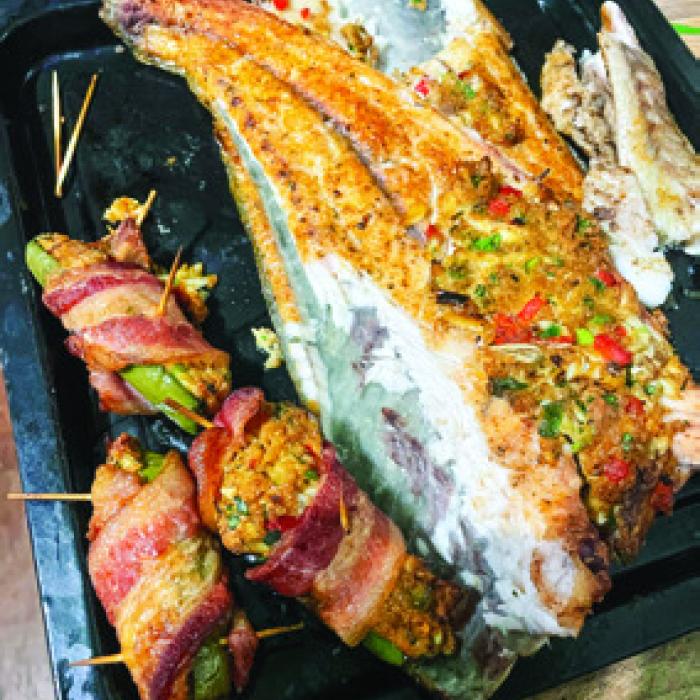
Gray cleaned our fish for us. I asked him to filet all of the redfish “on the halfshell,” leaving the scales and skin on one side of the filet. I hardly ever fry redfish. They taste so much better grilled on the halfshell. With the scales on, you can sear them quickly on the flesh side, and then flip them over to grill slowly on the scale side. I also kept one of the big redfish carcasses to make a pot of fish stock. I added some crab shells to the stock as well. I cooked the stock on Tuesday after we got back. I plan to make a pot of French bouillabaisse, a type of fish stew, with the stock. Or maybe a bisque.