

Great Expectorations
When, in 1901, it came to the motivation behind the City Council of El Paso to preserve the safety of its citizenry, the phrase “We aim to please” took on a whole new meaning.
We’re not talking about taking dead aim, as with a revolver, because, believe it or not, in that deep-in-the heart-of-Texas-city, at that time, “pistol totin’ ” was illegal. No guns! Led by acting mayor David M. Payne and his aldermen, the Council, in true Texan fashion, decided to take the bull by the horns. They crafted a safety ordinance to battle the infectious diseases besieging El Paso. Since vaccines or cures for these lay in an unknown distant future, they had to act. (For tuberculosis a vaccine was 20 years away; for bubonic plague 35 years; diphtheria 39 years; typhus 40 years; scarlet fever 41 years; cholera 63 years; and leprosy 118 years.)
Their solution was three-fold: 1) stiffen (so to speak) laundries’ regulations to improve cleanliness; 2) impose 30-day quarantines as diseases spring up; and 3) require every establishment in El Paso to place spittoons throughout their buildings. Before delving into the fun details of this regulation, let’s step back to some history.
Spittoons and chewing tobacco have been joined at the hip in American history starting when Native Americans introduced chewing tobacco to Columbus in 1492. For over 300 years, chewing tobacco—not cigarettes or cigars—was the most common form of tobacco consumption, for both men and women. As America’s population grew, so did public spaces and places where people would gather—hotels, saloons, brothels, taverns, courts, country stores, churches and the like. And so did the need to dispose of chewing tobacco, because once a chewer was finished with his chaw, (which could be from five to 30 minutes) he spit it out. Well, “spit” does not do justice to this transmittal of spittle, since the chewer’s mouth was literally full of shredded saliva-infused tobacco leaves. What came out of his mouth was a long stream of brown tobacco juice. Spittoons were increasingly placed on floors to capture this fetid liquid.
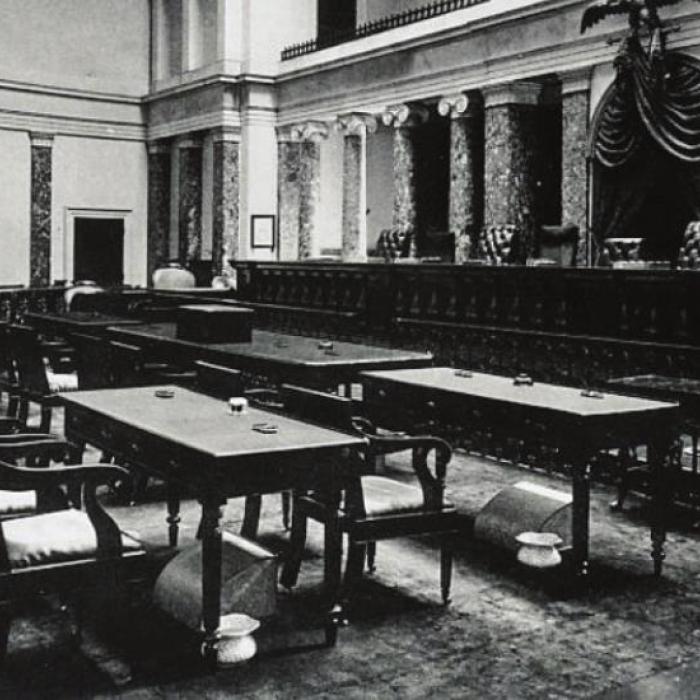
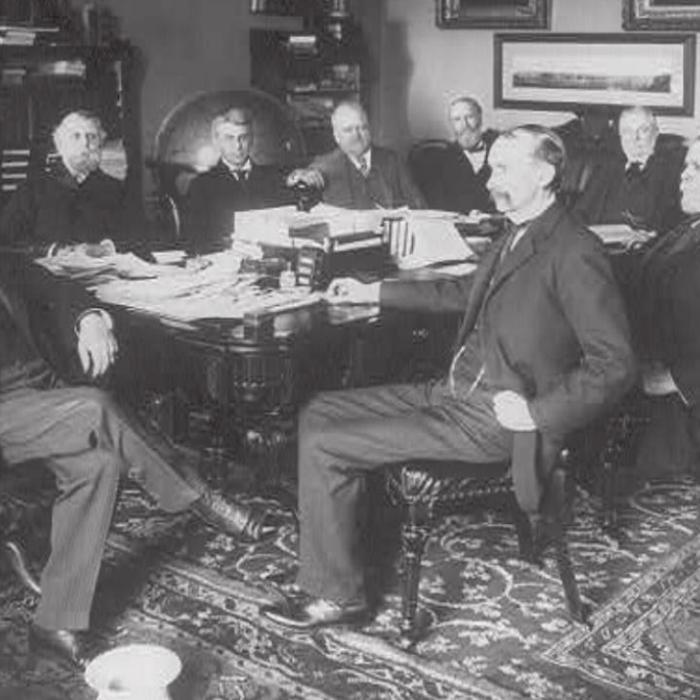
Made of brass or porcelain, spittoons were designed with a flared opening, so they could catch as much juice as possible. Spittoons permeated every level of society. The heyday of spittoons was in the mid-to-late 1800s. In 1829, Andrew Jackson installed 20 spittoons in the East Room of the White House. In 1849, Zachary Taylor was famous for never missing his aim at a spittoon. In 1901, William McKinley had a spittoon like a right-hand man next to him in his cabinet room. Every single desk in congress and in the Supreme Court sported a spittoon.
Thus, in November of 1901, El Paso passed Ordinance Section 320 of the City Charter:
“…places…such as churches, hotels, halls of assembly, stores, markets, banking rooms, railroad depots, street depots, waiting stations or saloons shall be required at the expense of the owners…to be provided with spittoons …to efficiently contain expectorations…”
Failure to provide these spittoons was subject to a fine of $5 to $50. All well and good? Ahem. The El Paso City Council was clearly well-meaning for its residents’ well-being. But there were two flies in this ointment. First? Enforceability of this law. In a town of 16,000, the responsibility for inspecting these many buildings lay with lone City Sanitary Officer John Connors. To perform his duties, he was supplied with…one horse and buggy. (And, occasionally, six laborers to clean up alleys.) And a check of the El Paso Times’ Police Blotter and Recorders’ Court records from 1901 to 1910 reveals not a single fine for spittoon absences. This law was without teeth.
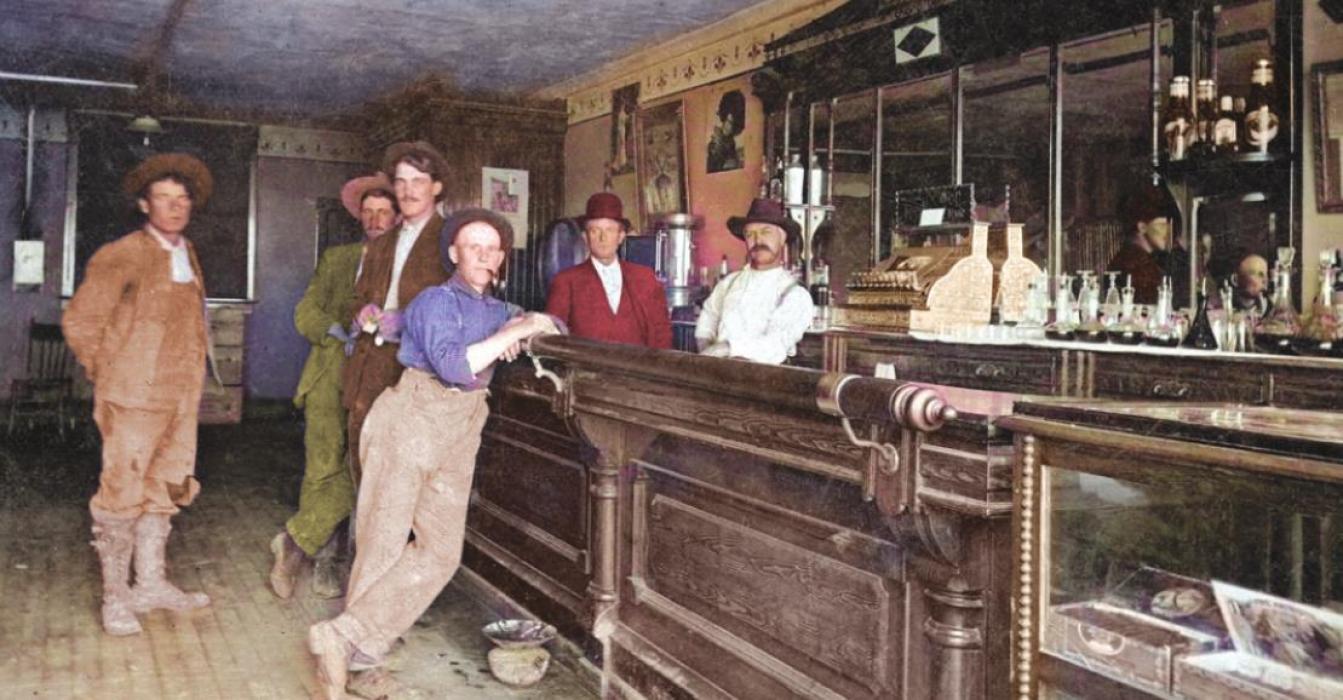
Second, the whole idea behind the law was to prevent disease by safely ensconcing sputum in the spittoons. As is evident in the saloon photograph, spitters weren’t always hitters. In fact, most of the time, their aim was off. They mostly missed. So much for keeping the floors clean. And, it should be pointed out, the spittoons themselves were open containers and the tobacco juice was concentrated in one place, giving germs freer rein.
Ordinance 320 finally died a slow death, while even until the 1950s, the El Paso Courthouse still displayed regularly-used spittoons.
Fast forward to 2022, when each Supreme Court justice is still issued a spittoon, but they are now used as wastebaskets. But chewing tobacco itself is still here. Six million Americans buy tins, cans and pouches of it, their favorite brand being Co penhagen. And it was only in the 1990s when Major League baseball banned chewing tobacco, which almost every player had used in every inning of every game since the game began. Thus, each baseball diamond served as one gigantic spittoon for voluminous expectorations. Most famous? Babe Ruth, who had his own brand of chewing tobacco, “Pinch Hit.” He died of throat cancer from his own product. To this day, people are unaware of the dangers of the seeming harmlessness of “smokeless” chewing tobacco--from addiction to tooth decay, tooth loss, gum loss, lesions and deadly salivary gland or oral cancer.
In olden days, chawers would mostly miss spittoons. Today, except for the quaintness, we don’t miss spittoons at all.
Randolph W. Hobler is the author of 101 Arabian Tales: How We All Persevered in Peace Corps Libya and of numerous magazine and newspaper articles.