

A Deep Dive Into Tomatoes

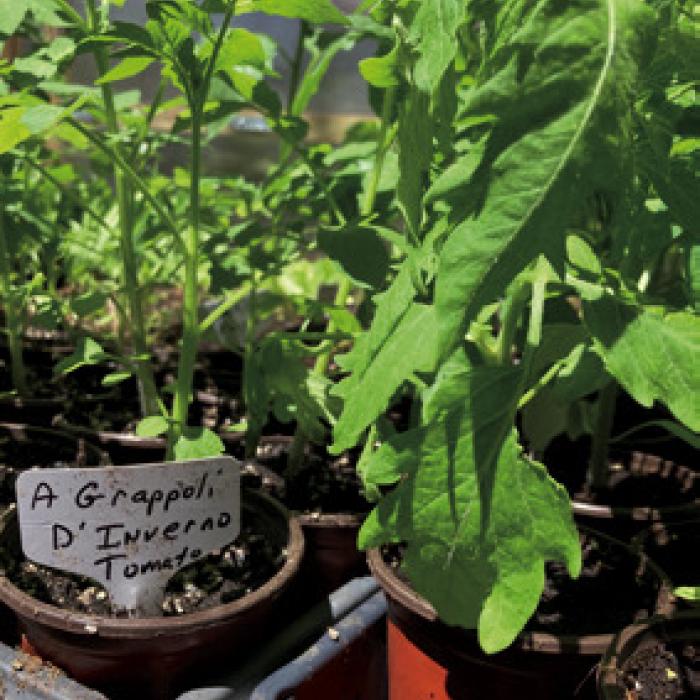
We’re getting towards the end of the prime season to plant tomato transplants. If you plant them much later than now, especially largefruited indeterminate varieties, they may not produce much of a crop before the heat of the summer arrives and they stop setting fruit.
There are two basic types of tomatoes – determinate and indeterminate. Determinate tomatoes set most or all of their fruit at one time. These plants grow into short bushes instead of long vines. You should not prune determinate tomatoes. Once it produces a crop, gardeners typically dig them up and plant something else in the spot. Determinate tomatoes also work well in pots because of their more compact size.
Indeterminate tomatoes grow into long vines and set fruit throughout the milder parts of the year. You should prune the “suckers” to train the plants into one long vine attached to a trelis, tomato cage, pole or some other supporting structure. Tomatoes tend to drop their flowers when nightime temperatures remain above 80 degrees. Production decreases during the hottest parts of the summer. But when temperatures dip in the late summer and fall, these tomatoes will often return to production.
Tomatoes are susceptible to many diseases, pests and fungal problems. You can eliminate some of these problems by selecting disease-resistant varieties. Many of these varieties are hybrids. Heirloom, open-pollinated varieties typically develop much better flavor and color than hybrids. I’m growing one hybrid variety this year – ‘Big Boy.’ The rest are all heirlooms. I started all of my heirloom tomatoes from seed in my parent’s greenhouse, and I have way more plants than I need. I’m offering them for sale for $4 each. They are all in four-inch pots and are ready to transplant. They are all indeterminates. You may not be able to find these varieties anywhere else:
• ‘A Grappoli D’Inverno’ - this Italian variety is sometimes known as the ‘Winter Grape.’ It produces abundant grape-size red tomatoes throughout the season. The fruits resemble a small Roma tomato. Italian gardeners traditionally allow the plant to load up with green fruit towards the end of the season. Just before the first frost, they dig up the entire plant, roots and all, and hang it in a dark, dry place. Any green fruits will ripen slowly and can be harvested throughout the winter. I have 62 of these plants.
• ‘Golden Jubilee’ - this old-fashioned golden-colored tomato is one of the best for growing in our climate. I grow it every year because it performs better than most other varieties in our extreme heat. Golden jubilee will continue to set fruit for several weeks after others play out during the hottest part of the year. Like most yellow tomatoes, it has a milder flavor. I have 33 of these plants.
• ‘Costoluto Fiorentino’ – this Italian heirloom comes from Florence where it is prized for eating fresh or cooking into sauces. The word ‘costoluto’ refers to its ribbed shape. I grew this variety a few years ago and was blown away by how many fruits it produced early in the season. As I recall, they were among the best tasting tomatoes we grew that year as well. Heavy rains flooded the patch of garden where they were growing, and I lost them. So I don’t know how they would have held up during the summer. I decided to try them again this year. I have 15 of these plants left.
• ‘Brad’s Atomic Grape’ this newer open-polinated variety is a fantastic grape-type tomato will dazzle you with its color - lavenders, purples, red, browns and green with striking stripe patterns. The fruits are slightly larger than other grape types. The foliage is a little wispy and susceptible to storm damage, so protect them appropriately. I have six of these plants left.
To place an order, email me at andy@fayettecountyrecord. com. I can arrange pickup in La Grange or Schulenburg.