


Tomatoes Played Out, Now Here Come The Hot Peppers
-
 Tomatoes Played Out, Now Here Come The Hot Peppers
 -
 Tomatoes Played Out, Now Here Come The Hot Peppers
 -
 Tomatoes Played Out, Now Here Come The Hot Peppers
 -
 Tomatoes Played Out, Now Here Come The Hot Peppers
This is that sad time of year when the tomatoes play out just as the peppers start coming into production.
Every year I tell myself I need to plant more tomatoes. This year is no different. I thought 18 plants would be enough. It wasn’t enough to save any for canning, at least. I could plant more hybrid varieties for better production. But they just bore me. I love experimenting with different heirloom varieties each year. What they lack in production, they make up for in flavor, color and aroma. Oh well, I’ll just have to plant more next year.
All of the varieties I planted this year are indeterminate. These varieties grow in a vinelike habit unlike determinate tomatoes, which grow into a bush. Determinate varieties generally produce all their fruit at one time. Indeterminate tomatoes produce gradually throughout the growing season.
My plants are not dead. They are in the summer dormancy. When nightime temperatures stay above 80º F, the plants stop flowering. If you can keep them alive through the hot, dry summer, they will usually return to production in the fall. Last year, my fall harvest was much larger than in the spring and summer. The plants will eventually die with a hard freeze.
So if you are growing indeterminate tomatoes, don’t dig them up yet, unless you really need the space in the garden.
But I’m sad because I only got to make a few batches of fresh garden salsa before the tomatoes stopped fruiting. First, the cilantro bolted and died. That’s to be expected. Cilantro hates the heat. I saved some seed and will plant more in the fall. But for now, H-E-B provides for my cilantro needs. And then the pepper plants take forever to start producing. They’re much slower to mature than tomatoes. I picked a few serrano and jalapenos early in the season. But now that the tomatoes have played out, the peppers are loaded with fruit.
That’s just the way the seasons go each year. So if I want fresh salsa throughout the summer, I’m going to have to can some tomatoes. And that means I’ve got to grow more tomatoes.
So what am I going to do with all these peppers? I guess I’ll just have to stuff them with delicious things, wrap them in bacon, and fire up the grill. Poor me.
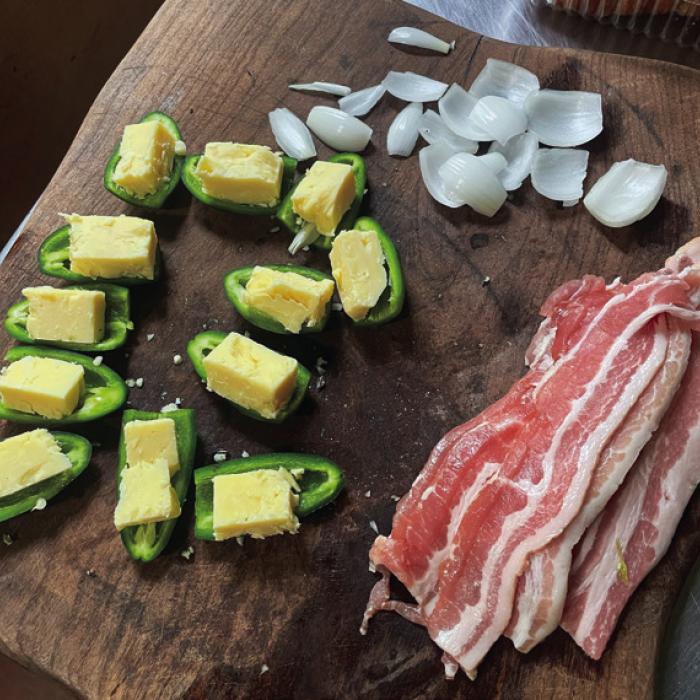
That’s what I did a few days ago. Here’s how I do it: Pick six plump jalapenos from the garden (or grocery store) and cut off the stems. Leave a little flesh on one of the stems and taste it. How hot is the pepper? How hot do you like it? How hot does your company like it? You’ll have to make a judgment call.
There are a couple of ways to “lower” the heat of a jalapeno. First, slice them in half. The white pith inside the fruits contains most of the capsaicin – the chemical source of the pepper’s heat. The seeds don’t really contain that much heat. It’s more in the pith.
You can scoop out some or all of the pith and seeds to lower the heat. If the fruits are still too spicy, you can rinse and scrub them under hot running water. The longer you wash and scrub them, the less spicy they get.
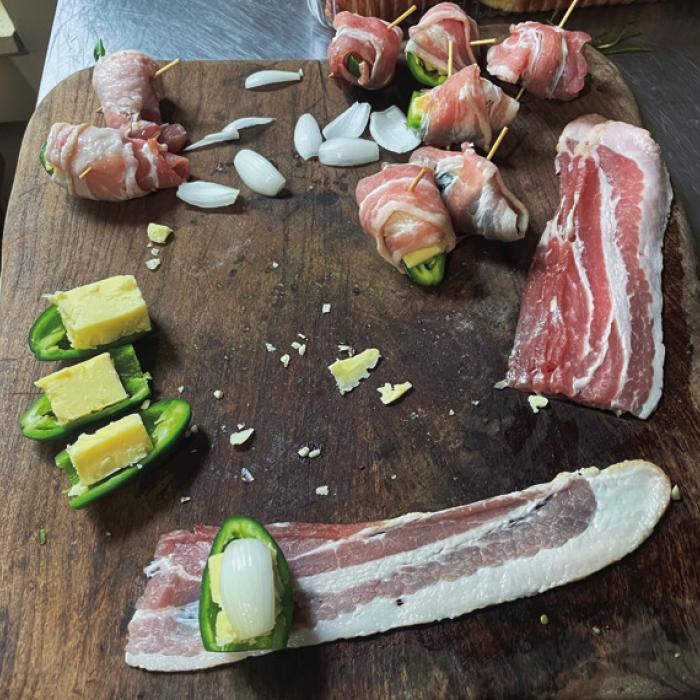
So now you have 12 clean jalapeno halves. What would you like to fill them with? The possibilities are nearly endless. Cream cheese is a classic. You can use just about any cheese, really, hard or soft, as long as it melts.
But dove season is almost upon us – just a month away. Dove breast and onion make an excellent filling for stuffed peppers.
Leftover brisket and cream cheese, shrimp, crab stuffing, boudain, fresh sausage – stuff the peppers with whatever you like.
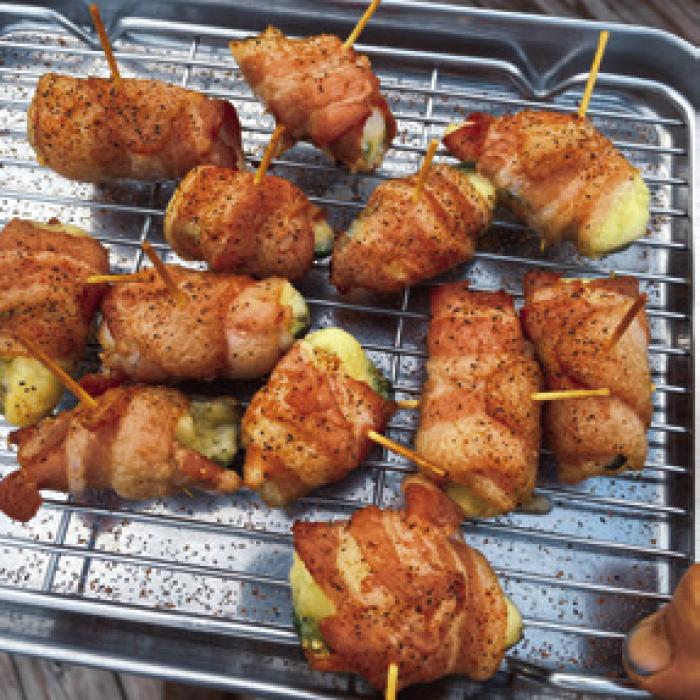
Next, you have to wrap the popper. I prefer the cheap, thin bacon for this. Thick cut bacon is harder to wrap. It tends to unravel on the grill. Thin bacon seems to stick to itself better. Completely wrap the pepper and stuffing with the bacon, and stick a toothpick through it to hold it together.
The trick with cheese “poppers” is to thoroughly cook the bacon on the outside before all of the cheese melts out. To prevent this, I like to place the poppers in the freezer for a half-hour or so before I grill them.
I like to cook them under indirect heat. If you’re using charcoal, set the fire to one side of the pit and cook the poppers on the other. I often cook them on my Traeger pellet grill, and they always turn out great. I aim for a cooking temperature of 250º F. You might want to use a probe thermometer to check the temperature of the stuffing. Generally, though, they’ll be done when the bacon turns a golden brown color.