


Texas History Talks to Resume at Archives
-
 Texas History Talks to Resume at Archives
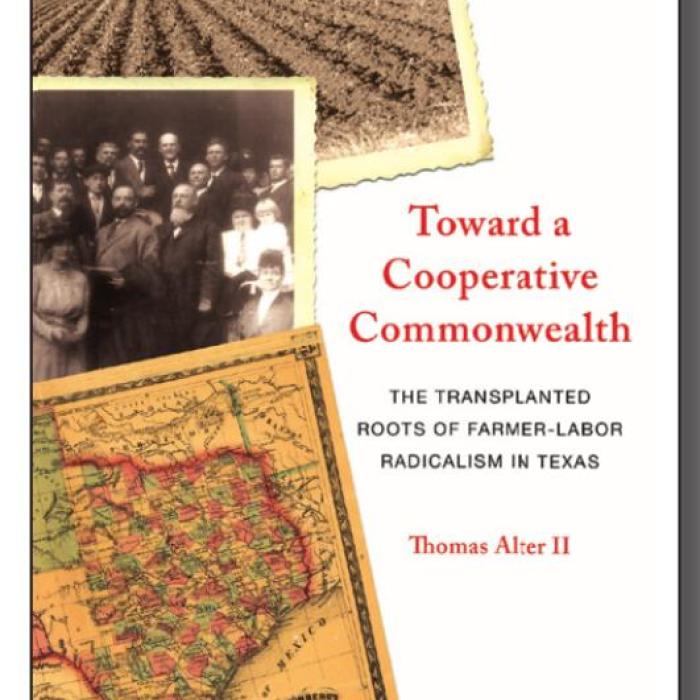
The staff of the Fayette Heritage Museum and Archives is excited to resume its series of Texas history programs with a book signing and talk at 6:30 p.m. on Thursday, May 19, by Thomas Alter, II, associate professor of history at Texas State University, who specializes in labor and Texas history.
In his new book, “Toward A Cooperative Commonwealth: The Transplanted Roots of Farmer-Labor Radicalism in Texas,” Dr. Alter follows three generations of German immigrants in Texas to examine the evolution of agrarian radicalism. The story begins with Otto Meitzen, who left Prussia and settled in Fayette County in the wake of the failed 1848 German Revolution, and follows his family as Fayette and Lavaca counties became hotbeds of farmer-labor radicalism.
Dr. Alter opens his book with this paragraph:
“I was born in Fayette County, from German parents, and who fled from the reaction of the 1848 revolution. I think that I inherited some of my revolutionary qualifications. I am not responsible for them. I can not help it.” So testified E.O. Meitzen before Frank Walsh’s Commission on Industrial Relations in March 1915 as to why he involved himself in the political struggles of working farmers. At the time, Meitzen was a veteran leader of the Texas Socialist Party. Nearly thirty years earlier, Meitzen’s inheritance had led him to help organize and lead the Fayette County Farmers’ Alliance. When the Alliance failed to bring relief to farmers, Meitzen joined the Populist revolt becoming a statewide leader of the People’s Party. The Meitzen political legacy extended to E.O.’s children, in particular his son E.R., who was a leader successively in the Farmers’ Union, the Socialist .pdf 1 3/23/2022 8:58:51 PM Party, the Nonpartisan League, and the Farm-Labor Union of America. Overall, for three generations, from the 1840s to 1940s, the Meitzens participated in numerous movements and organizations that fought for the economic and political rights of laborers and working farmers.
The Fayette Heritage Museum and Archives staff invites you to hear Dr. Alter further explain why he chose the Meitzen family to illustrate this workingclass movement. He will speak in the meeting room of the Fayette Public Library, 855 S. Jefferson, La Grange. Signed copies of his book will be available for purchase.