


TCHCC Plans for Texas Brethren Church
-
 TCHCC Plans for Texas Brethren Church
 -
 TCHCC Plans for Texas Brethren Church
 -
 TCHCC Plans for Texas Brethren Church
 -
 TCHCC Plans for Texas Brethren Church
 -
 TCHCC Plans for Texas Brethren Church
Unity of the Brethren was first organized in Bohemia in 1457 by the followers of Jan Hus, born 1369 in Husinec. In 1402, he was elected rector of the university in Prague and became the preacher of Bethlehem Chapel. The four pillars of Jan Hus’s concept of patriotism were “love your neighbor as yourself.” His measure of an individual was based not on race or status, but rather upon one’s character. The second pillar is the willingness to stand up for what was right, honest and just. The third was seeing every nation as a portion of the whole of humanity, having the right to possess its own land with freedom to conduct its own affairs. The fourth was a compassionate interest in all people being sensitive to the oppressed.
One tragic consequence of the Thirty Years War (16181648) was the complete legal extinction of the original Unity of the Brethren. After 1620, the Brethren were forced to become either Roman Catholic or go into exile. Finally ending in 1781 through the Edict of Toleration. This meant that they could become either Lutheran or Reformed (Presbyterian), but not Brethren.
In the late 1800s, immigration began from the Czech Lands to America. Following are four early pastors of the Brethren Church in Texas whose dedication and tenacity are striking examples of the sacrifices made and hardships endured by these early pioneers.
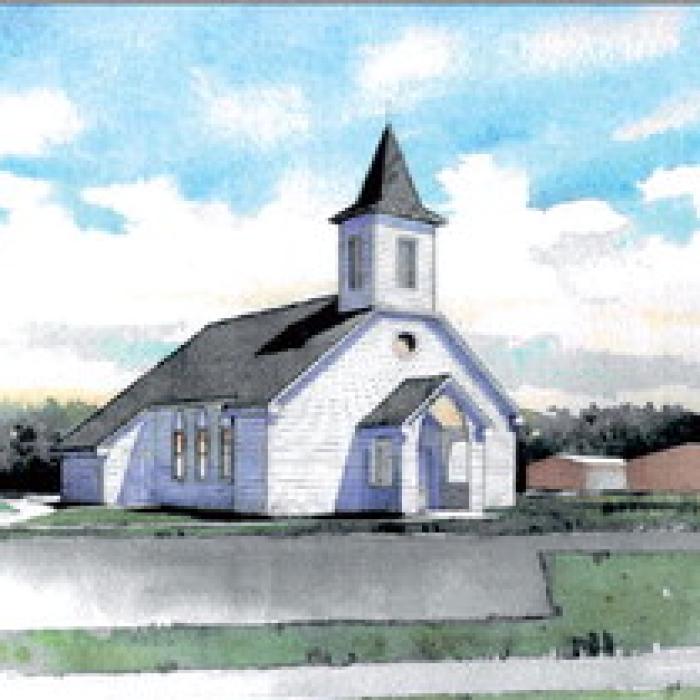
Texas Czech Heritage & Cultural Center (TCHCC) in La Grange, Texas, has plans drawn to build a typical Texas Brethren Church to honor these four and all those who supported them.
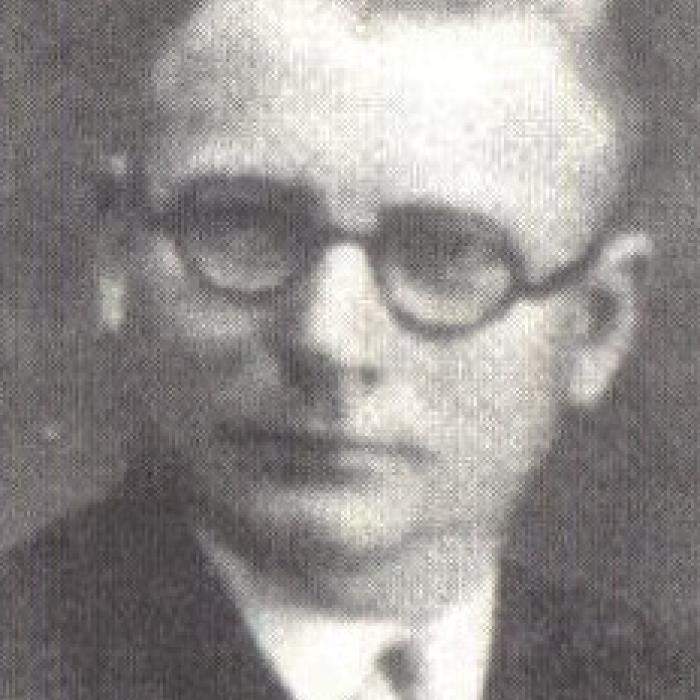
Rev. Joseph Barton
If there ever was a pastor who suffered much in the course of his ministry, certainly the Rev. Joseph Barton was one. He experienced almost complete blindness in the early years of his ministry and he lost two sons in combat during World War II. Yet he never seemed to feel any bitterness toward God or have any doubts about the validity of his faith.
Rev. Barton was born in Hodslavice, Moravia, on September 16, 1886. At the age of fifteen, he confirmed his Christian faith, together with twenty-four other teenagers, six of whom became ministers. Among these was his cousin, Joseph Hegar. After hearing about the renewal of the Ancient Unity of the Brethren on Texas soil in 1903, he immediately became interested in becoming one of its ministers. At the age of eighteen, he left his homeland and came to America, temporarily settling at West, Texas.
Upon the recommendation of his uncle, Jan Hegar, he was formally accepted as a ministerial student of the Unity, along with Joseph Hegar. Soon thereafter, the two headed north to pursue their studies at Elmhurst College in Illinois and later at Eden Theological Seminary in St. Louis. Following his ordination, Rev. Barton became the pastor of four congregations. These were Granger, Taylor, Buckholts and Dime Box.
In Granger, he married Miss Albina Mikulencak, who not only became his wife, but also a very important helpmate during his ministry. He helped establish congregations in Robstown, Temple, Houston, Danbury, Midfield, Smithville and at the University of Texas in Austin. In 1935, he became the pastor of the Nelsonville Brethren Church.
Rev. Barton assisted in the publication of Bratrske Listy (The Brethren Journal), served as a member of the Synodical Committee beginning in 1910 and as Vice President of the National Union of Czechoslovak Protestants in America during its convention in Chicago. Rev. Barton Died August 28, 1945.
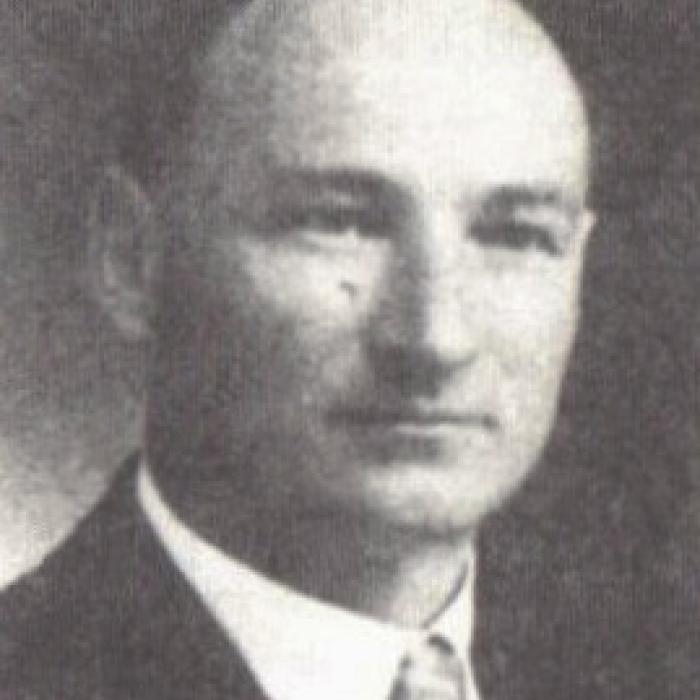
Rev. Joseph Hegar
The Rev. Joseph Hegar was many things to a variety of people, but most definitely he was a friend of the youth. Serving as principal and teacher of Hus School for many years was perhaps his greatest contribution to the Brethren Church in Texas.
It was through the joint efforts with his cousin and brother-in-law, the Rev. Joseph Barton, that this eight week Christian leadership training course for young people was originally established. It was first held in Granger in 1914 and moved to Temple in 1924. It continues to be held today as part of the Brethren’s camp program located at the Hus School Encampment near Caldwell.
Rev. Hegar was born in Hodslavice, Moravia, on August 5, 1887. On his fourteenth birthday, his father gave him a special gift of two gold coins with the suggestion that he spend them wisely. He purchased a book entitled “The Life and Martyrdom of John Hus” together with some pamphlets on the experiences of the Ancient Brethren.
After completion of Slavhurst College and seminary studies, he and Rev. Barton were ordained together at West Brethren Church on July 6, 1910. His first two congregations were West and Ennis, then adding, Mt. Calm, Tioga, Crockett, Dime Box, Buckholts and Cooks Point. The rigors of so much travel resulted in a relapse of typhoid fever. Because of his fragile health and insufficient income, he left the ministry and enrolled at the University of Texas for a teachers certificate. He taught from 1918 to 1924 when the Temple congregation called him as pastor and Hus School moved to Temple and he served as principal and teacher. Rev. Hegar died on May 2, 1948.
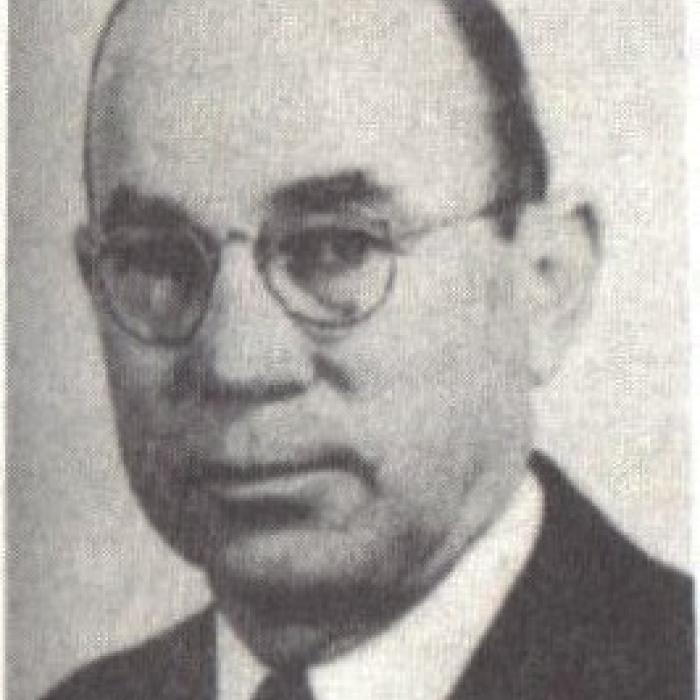
Rev. Frank H. Horak
Rev. Frank H. Horak, born March 26, 1892 on a farm near West, Texas, was the first native son of the Unity of the Brethren in Texas to be ordained as a pastor in the West Brethren Church on July 6, 1918. It was Rev. Henry Jurun who lead the ordination assisted by Rev. Joseph Barton. Rev. Horak received his college education at Elmhurst College in Illinois graduating in 1915. He then went to Eden Theological Seminary in St. Louis where he completed his studies in 1918.
Rev. Horak was called to serve the congregations of Cooks Point, Dime Box and Snook. He married Katherine Wirtel on September 17, 1919. He expanded to serve congregations inAlief, Rosenberg and Caldwell. Through the years he also served the congregations in Buckholts, Rosebud, Blessing, Danbury, Crosby and Houston.
Perhaps one of the most significant contributions to the long-term well being of the Brethren Church was his diligence in leading the effort to purchase the Wedemeyer Academy in Temple. It was this building which serviced for many years as the home of the Hus School.
Rev. Horak retired from the Brethren Church on February 14, 1936 due to failing heath but continued his ministry in the Evangelical and Reformed Church (now United Church of Christ) in La Grange and Robinson. He died April 19, 1953.
Rev. Henry Ernest Beseda, Sr.
The Rev. Henry E. Beseda, Sr. was born January 7, 1888 on a farm near West, Texas. His mother brought him to be baptized by the Rev. Henry Juren of the Czech Moravian Brethren Church of West, Texas. She told the minister she was dedicating her son to the Lord’s work. He received his Bachelor of Arts degree at the University of Pittsburgh.
White at the University of Pittsburgh, Henry E. Beseda responded to his call to be a minister and proceeded to study at Western Theological Seminary in Pittsburgh from 1908 to 1910. For his senior year, he transferred to the Austin Presbyterian Theological Seminary at Austin, Texas. He was ordained on June 18, 1911 in the Penelope Presbyterian Church by the Waco Presbytery.
In August, 1911, he married the former Miss Julia Chernosky, a well-educated young lady. Rev. Beseda’s first pastorage was the little Czech Presbyterian Church at Six-Mile, near Port Lavaca, Texas. During 1922, Rev. Beseda served as Interim Pastor at Sinton, Texas. From 1923 to 1926, he was Pastor of the Presbyterian Church at Robstown.
Then in 1926, the Besedas moved to Alice, Texas, where their ninth child was born. Rev. Beseda loved this rugged frontier country with its staunch townspeople, farmers and ranchers. In particular, he enjoyed his visits to the nearby great King Ranch.
In 1928, he accepted a call to the Hunter Memorial Presbyterian Church at Holdenville, Oklahoma. Here he contracted malaria and other health complications and his doctors advised him to return to Texas to be near his relatives. He became the Pastor at the English and Czech Presbyterian Church at West, Texas.
In 1937, Rev. Beseda was invited to join the ranks of the Czech Moravian Brethren Church in Texas. The Brethren Church maintained a close relationship with the Prebyterians and many of its pastors received their training at the Austin Seminary. The family moved to Caldwell and served as full or part time Pastor of Brethren Churchs at Caldwell, Cooks Point, Dime Box, Wesley, Snook, Industry, Fayetteville, Alief, Smithville, Buckholts, Crosby, Houston, Rosenberg, New Tabor, and Pasadena.
In 1957, upon his partial retirement he wrote: “In journeyings oft, in labors abundant - 45 years! It seems but a moment in the pages of history. Yet it is long enough to plant a seed that shall produce fruit for centuries to come; long enough to kindle a light that shall shine far into regions of darkness and brighten a path for generations yet unborn.”
In late 1958, Rev. Beseda suffered a heart attack followed by a major stroke that left him paralyzed. He passed away on May 8, 1959, and was buried where the pulpit once stood at the little chapel at the Brethren Church Cemetery at Cooks Point, Texas.
TCHCC
Architects John Cameron of Monument, Colorado, grandson of Rev. Frank H. Horak, and James Recek, native of La Grange have coordinated to create drawings for the TCHCC Brethren Church. Drawings may be viewed on the website of TCHCC at www.czechtexas.org.
Contributions to the building fund are tax deductible and payable to TCHCC a 501c3 charitable organization. Early estimates set the building costs at $459,155. Over $61,000 has been donated to date and pledges have been received to match the next $75,000, so double your gift by being part of this early campaign.