


Tall Okra and Strange Squash
Gardening
-
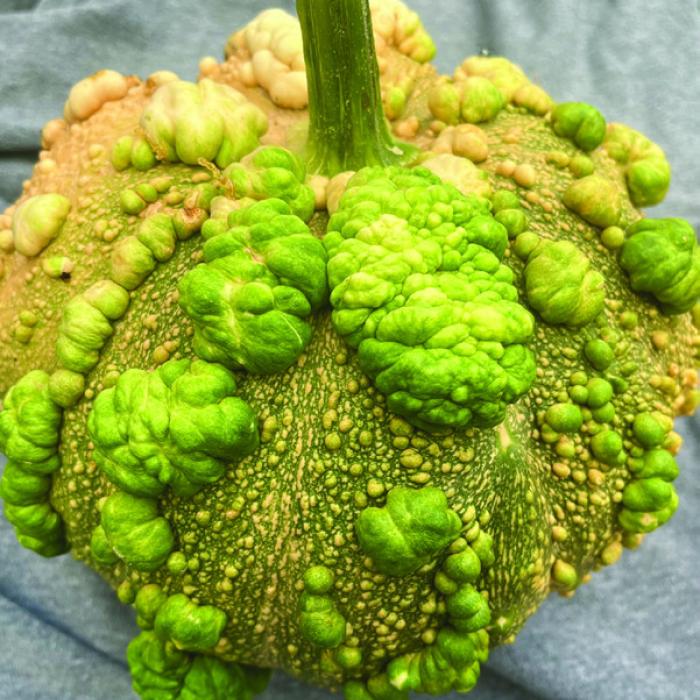 This year I grew a variety of warty winter squash called “Musquee De Maroc.” I can’t wait to find out how it tastes.
 -
 Tall Okra and Strange Squash
By ANDY BEHLEN
The Fayette County Record
A reader wrote to me this week about their okra plants.
“My okra has gotten so tall that it is now top-heavy, bending and falling over,” he said. “Would it bush out if I topped it off, or is it too late in the season to do that now?”
Many varieties of okra grow quite tall. I’m growing a variety called “Louisiana Green Velvet,” and they’re approaching six feet tall.
I kind of like growing some tall plants in the vegetable patch. I like the way they add an architectural element to the garden. But when they grow so tall that they get topheavy and fall over, that can be a problem. You could plant a stake in the ground and tie the okra trunk to it, but that could disturb the roots.
Instead, a better solution is to “top off” the plant. By pruning the top, you’ll encourage the plant to grow more side shoots, which result in more flowers and more fruit. Some sources say you can prune the okra trunk down to just 12 inches without any ill effect. That seems a little extreme to me. I would prune them back to about two feet tall.
On Tuesday, I harvested a winter squash from a strange variety that I’m growing for the first time this year. It’s called “Musquee De Maroc” and supposedly comes from the French-influenced regions of North Africa. I’ve read that it is grown commercially in Morocco. I bought the seeds from Baker Creek ( rareseeds. com).
This warty pumpkin-type squash produces fruit that weigh between five and 13 lbs. They take 100-130 days to mature. I think I planted them around April or May. The species name is Cucurbita moschata, which includes the famous butternut squash.
I have no idea what it will taste like, but I hope it tastes like butternut squash, which is one of my favorite winter squash varieties.
Before I eat it, though, it needs to cure. Many winter squash and pumpkins benefit from curing. They taste quite bland if you don’t. But first, they must be properly harvested. Cut the vine leaving about two to four inches of stem on the fruit. Squash with short, broken or loose stems will not store well. Don’t use any water to clean the squash. Instead, use a small brush or dry towel to remove dirt. Leave the squash outside on a rack or in a way that air can flow around it. As water evaporates from the squash over time, natural sugars will concentrate in the flesh, making it sweeter. Let it sit like this for 10 to 14 days. After that, you can store the squash in a cool place inside your house. They will often store well through the winter, which gives rise to the name “winter squash.”