


St. Mark’s: A Look at Its Private Not-For-Profit Hospital Model
-
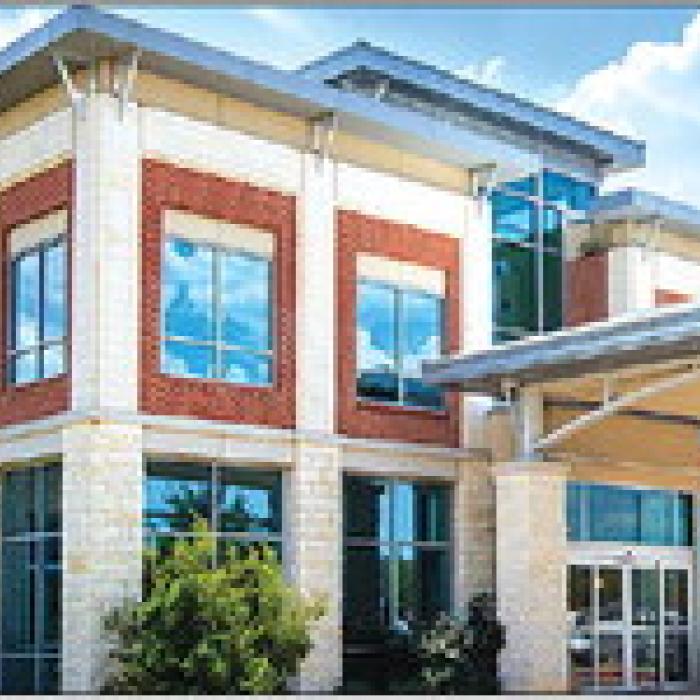 St. Mark’s Medical Center in La Grange has been plagued by financial issues for years, which prompted a slashing of staff and services earlier this year.
This is the first in a series of articles sharing public information and insight on St Mark’s Medical Center, the needs for health care in Fayette County, and a path forward.
St. Mark’s Medical Center is a privately owned not-forprofit hospital. What does that mean? There are numerous classifications for the roughly 13,000 hospitals in the United States. There are numerous types and classifications of hospitals, including short-term acute care, long-term care, critical access, rural emergency, independent, urban, rural, and even specialty hospitals. In Texas, there are approximately 464 hospitals with a total bed count of just under 60,000 beds.
Throughout Texas there are three main types of ownership structures. First, there are 110 government-owned hospitals (24%) that are federal, state or local-owned and operated hospitals in Texas, according to the Association of Healthcare Journalists who track hospitals in Texas by ownership type. There are approximately ten state hospitals in this category and they are operated by the Texas Department of Health and Human Services. The Veterans Administration (VA) operates numerous hospitals and clinics all over Texas. There are 84 government-owned hospitals that are part of a hospital district with independent taxing authority.
Second, there are approximately 235 privately or independently- owned for-profit hospitals (51%) in Texas. These hospitals are physician, investor or corporatelyowned private hospitals that are in business to provide quality health care services and make a profit in doing so. St. David’s Medical Center in Austin is an example of this private ownership structure. Like any other private business you patronize, any profit from the products or services they provide that is made after expenses and taxes are paid is distributed to its shareholders who generally are individual investors. If there is a loss, that loss is absorbed by the hospital’s cash reserves from prior year profits, or covered by investors/lenders through short term loans or calls for additional investment. There is no public financial disclosure for these private hospitals unless they trade shares on a public stock exchange. HCA, Tenet Healthcare Corp, Acadia Healthcare Company, Community Health Systems and Universal Health Services are all publicly traded healthcare stocks with Securities and Exchange Commission (SEC) public disclosures.
St. Mark’s Medical Center (SMMC) is the third type of ownership structure, a privately owned not-for-profit hospital, that has recently changed its designation to a Rural Emergency Hospital (REH). In Texas there are roughly 119 (26%) not-for profit hospitals, 13 of which are actually faith based and owned by a church. The not-for-profit designation is a misnomer as not-for-profit hospitals must make a profit in order to remain viable. Those profits are; however, not distributed to the owners of the hospital, but instead are reinvested back into the hospital generally for growth in services, new facilities or equipment, or additional staff. In exchange for not distributing profit to its shareholders, the hospital is exempt from paying federal income tax as well as county property taxes and sales taxes. Those savings in taxes are significant.
Using the 2022 Fayette County tax rates and the current appraised value of the hospital property including the professional office building, the property taxes would be roughly $160,000 a year, plus the sales tax revenue on medical supplies would likely be over $300,000 a year. One reason the hospital is exempt from roughly $460,000 in taxes is there is an expectation that the hospital uses the savings from taxes to meet community needs for those that might not have the financial resources to access health care services.
In 2019, SMMC had $311,000 in unreimbursed costs from these Community Benefit Services as reported on their IRS Form 990. There is a community need! Those needing financial assistance are primarily the uninsured, individuals receiving Medicaid assistance, and those that fall under means tested programs. Although the Affordable Care Act of 2010 has seen a percentage reduction in uninsured residents, the recently released US Census reports that Texans without health insurance was 18.4 percent of the population in 2019, more than double the national average of 9.2 percent.
Not-for-profit hospitals fall under the Internal Revenue Code, section 501(c)(3). Providing exemption from taxes does not prevent the hospital from paying salaries, including executive level salaries and benefits compensation, and it allows the hospital to buy services from other notfor- profit or for-profit corporations. These services can include support services from local physicians operating on a for profit basis, general and administrative expenses for services like accounting, information technology consulting, and repair and maintenance support. The hospital can also buy management support from a for profit company and that management can include executive salaries for consulting that can cover a range of areas ranging from marketing, public relations, needs assessment surveys, and executives for “C-suite” management.
Not-for-profit hospitals can also have affiliations with other not-for-profit or forprofit hospitals. These affiliations are essential for critical access hospitals (CAH) and for the newly approved rural emergency hospitals (REH). St Mark’s Medical Center has a clinical affiliation with St. David’s HealthCare in Austin. The affiliation can provide assistance to SMMC by making it easier to coordinate care between hospitals, long-term care facilities, and physicians; providing the resources to recruit and retain top-quality physicians, nurses and technicians; and reducing administrative costs by sharing record-keeping services or electronic medical records. These hospitals maintain independent boards of directors, and SMMC has an affiliation agreement with St. David’s to provide clinical operational services.
SMMC is private hospital designated under tax code 501(c)(3) as a not-for profit private hospital that has officers and directors that SMMC installs, and these private citizens make operational and policy decisions. SMMC presumably has a management contract with Community Hospital Consulting Inc., (CHC) which is a for-profit consulting firm that provides a range of services including executive management to SMMC. St. Mark’s Chief Executive Officer (CEO) and Chief Financial Officer (CFO) are actually employed by CHC and they receive their executive compensation from CHC, via management fees paid by SMMC to CHC.
Tax returns for private forprofit companies like CHC are private and confidential. Fortunately not-for-profit corporations, while exempt from federal IRS taxes, must file an IRS Form 990 annual return, and this return includes information pertaining to number of employees, number of patient days and emergency room visits, inpatient and outpatient surgeries, associated revenues and expenses, executive compensation paid by the entity as well as by related entities, the entities balance sheet including assets and liabilities, amounts paid to related entities like CHC and the St. Mark’s Foundation (a separate unrelated 501(c)(3) entity), the revenues and costs associated with financial health assistance and Medicaid, as well as the costs and reimbursements related to Medicare services. These form 990s are available for all notfor- profit entities via a searchable database maintained by the IRS at www.irs.gov.
With types of hospitals better understood, the next article will look into the new designation as a Rural Emergency Hospital (REH) and what that means for St. Marks’s Medical Center and the residents of Fayette County.