


So You Wanna Grow Peanuts? They Used to be Common Here
-
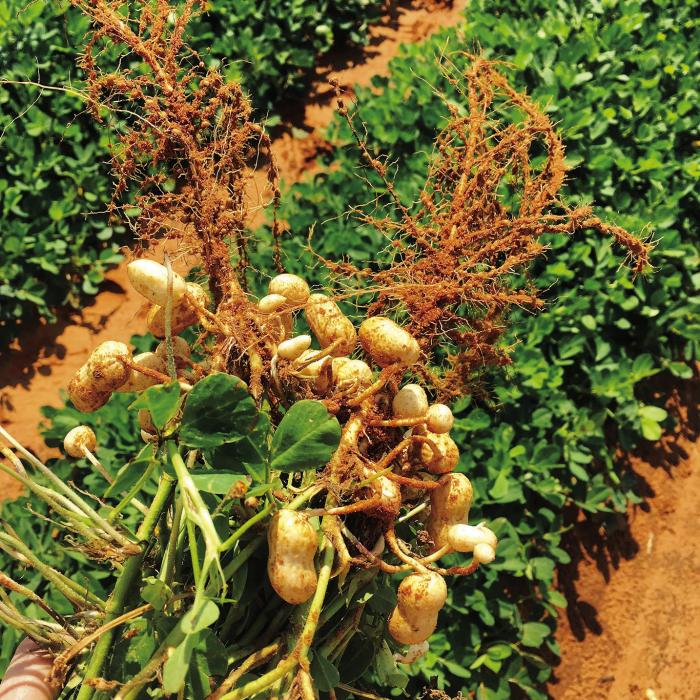 Peanuts are legumes like beans and peas, but they grow pods below ground instead of above ground. Photo by Texas A&M AgriLife Research
 -
 So You Wanna Grow Peanuts? They Used to be Common Here
A reader called me this week to ask about growing peanuts. I’ve never grown peanuts, so I can’t speak from experience. But I promised I would do some research and write a column about it.
Fayette County AgriLife Extension Agent Scott Willey said he doesn’t know of anyone growing peanuts as a row crop in Fayette County. But at one time, many farmers in Fayette County grew peanuts, mostly in the sandy areas around Winchester and Warda, for reasons I’ll explain below.
“Most of the peanuts have disappeared from Fayette County,” said Levi Garlick of the Farm Service Agency Office in La Grange.
Garlick attributed the decline to the end of federal price support for peanuts.
“We used to have a peanut quota program from the federal government,” Garlick explained. “Each producer had a quota assigned to them, and they could buy and sell quota from other producers. There was an established base price. I’m speaking in rough numbers, but let’s say it was $600 a ton. If the market price was more than $600, that’s what you got paid. But if the market brought $400 a ton, the government would pay the producer an extra $200. When they did away with the quota program under the Freedom to Farm Bill, it made it to where it wasn’t feasible to grow peanuts anymore.”
David Lehmann of Warda grew peanuts until 2006.
“I was the last one still growing peanuts around here,” Lehmann said.
Lehmann said peanut farming became popular in the 1940s in order to support the war effort during World War II. Lehmann said his father started growing peanuts at that time.
“They were using peanut oil to make explosives for the war,” Lehmann said. “Before the war, one peanut farmer could probably grow enough for all human consumption in a county. But then the government needed millions and millions of tons for the war effort.”
Lehmann said peanuts took the place of cotton as a cash crop for a lot of farmers. The federal government’s price supports continued for many decades after the war “This County was big into cotton at one time,” Lehmann said. “I can’t think of a farm around here that didn’t have cotton on it at one point, from the late 1930s to early 1940s. But when peanuts came along, it was something else they could grow. The land was depleted because of the cotton, and people used a lot of commercial fertilizer. But peanuts didn’t need a whole lot of fertilizer. It was a different crop. It was a lifeline for a lot of farms around here.”
Not everyone in the County could grow peanuts commercially. It depends on the soil. Peanuts will grow in just about any soil. But they are much easier to harvest in sandy soil. Peanuts are a legume like beans and peas. But unlike those plants, which grow pods above ground, peanuts grow their pods below ground. To harvest, the farmer digs them up and allows them to dry out for a few days on top of the soil. Then they use a combine to pick up the pods from the field.
Sandy soil easily falls away from the pods during harvest. Stiff clay soil, on the other hand, clings to the pods, making them more difficult to harvest and less desirable for sale.
Lehmann said the peanut foliage left over after the harvest provides excellent organic matter to incorporate back into the soil. However, he said many farmers fed their peanut stubble to cattle. This led to poorer soil on many farms, which may have also contributed to the decline in peanut farming.
Wild hogs were the last nail in the coffin for Lehmann’s peanut enterprise.
“About the time they ended the quota system, the hogs moved into my place,” Lehmann said. “That was the end of it. Once a hog finds one peanut, they’ll dig up the whole place until they get all of them.”
For anyone growing a few peanuts in their garden, Lehmann high recommends planting them in an area fenced off by net wire to keep out the hogs.
Lehmann said he would prepare for planting by plowing his field with a mouldboard plow around the beginning of April.
“Once we got the soil turned over, we’d wait for a rain or two and go in and smooth it up and mark off some rows,” he said.
Lehmann said peanuts could be planted as early as May around here.
“The best time was usually around the end of May or early June,” Lehmann said. “That’s obviously the driest part of the year, so you hope for a little rain. But peanuts can go quite a while without rain, especially if you have a good soil profile built up with moisture. Eventually they need rain every couple of weeks to keep the pods going toward maturity.”
Lehmann said he and his father always planted in rows spaced 38 inches from center to center. He said peanuts required special seed plates in the planters. Peanut seed has a lower germination rate than many other crops. Lehmann said he would space the seeds about three inches apart.
“It’s different from corn, and the seeds are really tender, too,” he said. “You’ve got to handle them with care. You don’t want to split or mash them before you get them in the ground. So it took a special set-up to plant them.”
Lehmann said peanuts are sometimes susceptible to foliar diseases, especially when planted year after year in the same soil. These diseases can cause the peanut plants to lose their leaves. If this happens, photosynthesis stops and the pods quit growing. If the pods are close to maturity, and a heavy rain comes, the peanuts might sprout in the ground and spoil the harvest. Crop rotation can prevent these diseases, Lehmann said. For gardeners, he recommends moving the peanut patch to a different spot every year.
Harvest occurred during the late summer.
“The secret was to keep the leaves on all the way up until the time you dig,” he said. “Once you got them out of the ground, you would let them air dry for about three days, maybe more depending on the humidity. If you didn’t dry them all the way, you would have to pay a peanut company to dry them for you, and that costs money.”
Lehmann gave some advice for home gardeners who want to grow a small plot of peanuts.
“Pick a spot about twice as large as you think you need,” he said. “There’s only a handful of peanuts under each stalk. You have to allow for competition from trees near the plot. Anything around there will suck moisture away from the plot. You can water them. Rain water is best, but well water will do. You don’t want to over water them, either. Just watch the plants. When the leaves start curling up, it’s time to start watering. You shouldn’t have a lot of problem with disease, especially if its your first time. If you grow year after year in the same spot, you will have some disease set in. Obviously, try to plant them in sandy soil. It makes it a lot easier to get them out of the ground.”
As for varieties, Lehmann said Spanish peanuts varieties seemed to grow the best for our climate. He said some farmers grow varieties known as “runner” peanuts. Runner varieties produce higher yields, but they take longer to mature.
Home gardeners can buy peanut seeds from several seed online outlets including Southern Exposure Seed Exchange ( southernexposure.com) and Urban Farmer ( ufseeds.com).