


Smith-McMillan Chapter Hears About The American Bison
-
 Smith-McMillan Chapter Hears About The American Bison
 -
 Smith-McMillan Chapter Hears About The American Bison
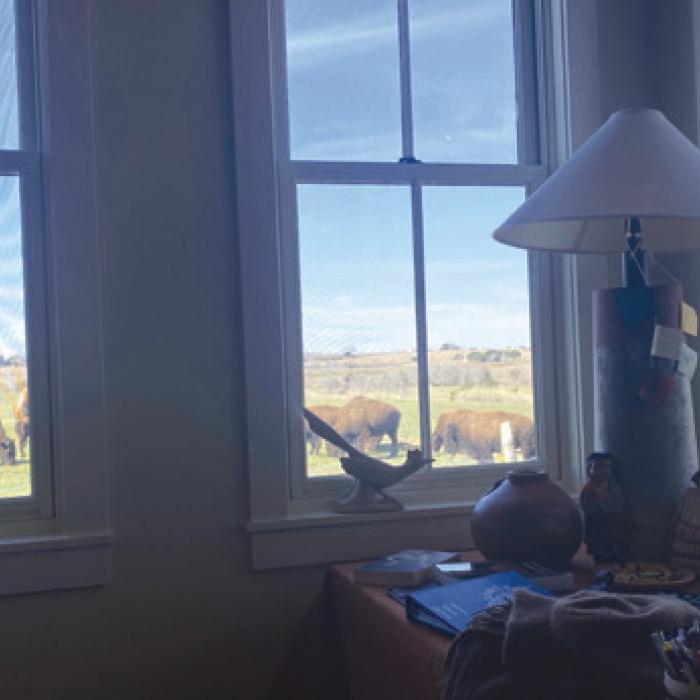
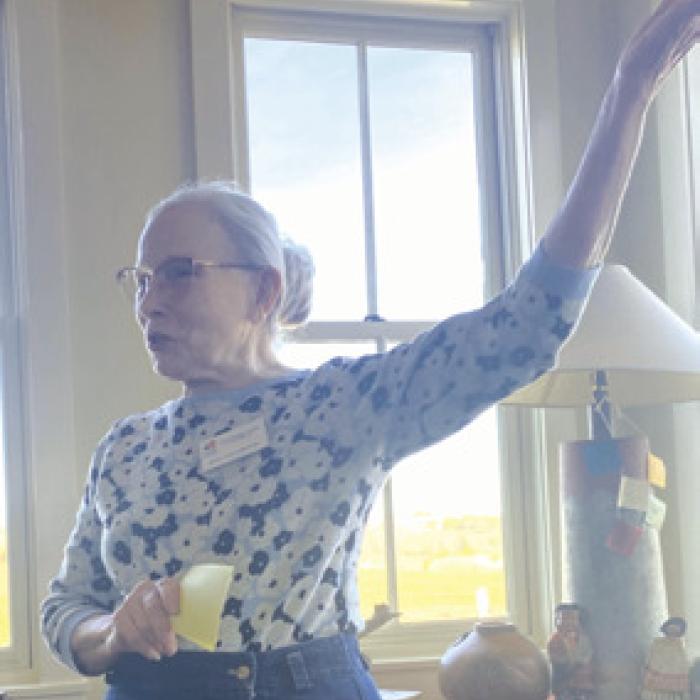
“Our National Mammal: The American Bison” was presented to the monthly Smith-McMillan Chapter meeting on Jan. 20, and the guests were served a bison chili entree with sides and Bison shaped gingerbread cookies and other treats.
It is estimated that as many as 40 million bison ranged across the North America prairies prior to the arrival of Europeans. The Euro-American buffalo robe trade, which began in 1810, instigated a killing spree which brought the number down to a few thousand by 1889, when William Hornaday, who was to become director of the Bronx Zoo, published “The Extermination of the American Bison.” The demise of an animal upon which the Native American population was dependent was at that time looked upon as beneficial to European expansion into the West. In 1905, Hornaday, Theodore Roosevelt, and other concerned citizens formed the American Bison Society to save the bison from extinction by establishing protected herds. They considered their work done by 1935 and disbanded. In 2005, the ABS was revived to secure the future of the bison. After four years of intense effort by the Wildlife Conservation Society, the Intertribal Council, the National Bison Association and over 60 Bison Coalition members, the United States Congress passed and President Barack Obama signed into law the National Bison Legacy Act on May 9, 2016. The American bison became the Official Mammal of the United States. The image of the bison is accompanied by the motto “Unity-Resilience-Health” reflecting the unity of the people as a herd, the resilience of an Ice Age survivor and the health of the nation. It is a symbol that is especially significant to the Indigenous Peoples who regard the bison as sacred and for whom it also a food source and an economic resource. National Bison Day is recognized on the First Saturday of November. November was signed into law as National Native American Heritage Month by President George H. W. Bush in 1990.
The bison is the largest native American grazing mammal. A mature bull may weigh over 2200 lbs., stand 6’ tall and have a body length of 12’. Bison can turn quickly and run as fast as 40 mph. It is wise to remember this when in their presence. Although our animals are counted by the USDA as domestic livestock, the bison remain just as wild as ever. They are herd animals who maintain a strict hierarchy by pushing each other around. A friendly human is no exception.
The Department of Interior Lands along with the National Park Service support 19 herds in 12 states with over 10,000 on 4.6 million acres. Large herds of bison may be viewed on the open range in most of these sites: Badlands National Park, Chickasaw national Recreation Area, Grand Teton National Park, Yellowstone National Park. Theodore Roosevelt National Park and Wind Cave National Park. Other sites include: Wichita Mountain Wildlife Refuge Custer State Park, Antelope Island State Park, and the Bison Range on the Flathead Indian reservation.
Eric Batchelder of Swiss Alp Bison developed his interest in the bison as a child while spending time at his grandmother’s cabin at Bluebell Lodge in Custer State Park. He first purchased animals which were pastured at the Attwater Prairie Chicken Refuge in hopes of contributing to the restoration of the land and the bird. He and his wife, Suzanne Morriss-Batchelder purchased land at Swiss Alp in 2000 and moved the herd there in 2003 after Eric retired. Private producers own about 360,000 bison. Many are small producers like the Batchelders.