


Of Shorthorns and Vinegar
-
 Of Shorthorns and Vinegar
 -
 Of Shorthorns and Vinegar
Thank you to everyone who reached out to me after my column last week about Shorthorn cattle. I’ve learned a few things.
As I mentioned last week, I had always wondered how Schulenburg High School got the Shorthorn mascot. I think I may have heard this story before, but it slipped my mind. A reader from Schulenburg reminded me that Jane Knapik wrote a book several decades ago titled “Schulenburg: 100 Years on the Road 18731973.”
On Page 102, Knapik answers the question: “According to left guard Harry Vogelsang, the team was called ‘Shorthorns’ because they were short on everything – they had thirteen suits and eleven helmets for the whole team. The suits consisted of jerseys with no pads for protection.”
What a great story. I’ve also wondered why no one around here seems to raise Shorthorn cattle. They’re a British breed like Hereford and Angus, and plenty of folks raise those around here. So why not Shorthorns?
Well, it appears there were a few Shorthorns around here in the past. Another reader who grew up in Mullins Prairie said his family raised Shorthorns in the 1960s. He would pick a calf from his family’s herd and raise it for the junior livestock show. One time, he even won a first place blue ribbon.
“It was difficult showing against Hereford and Angus, but I have some really great memories,” he said. “I do not remember any difficulties with the breed. I bought one show animal for a rancher named Trigg in the Bastrop area, but I don’t know if they are still in the Shorthorn business at this time.”
Thank you to everyone who responded.
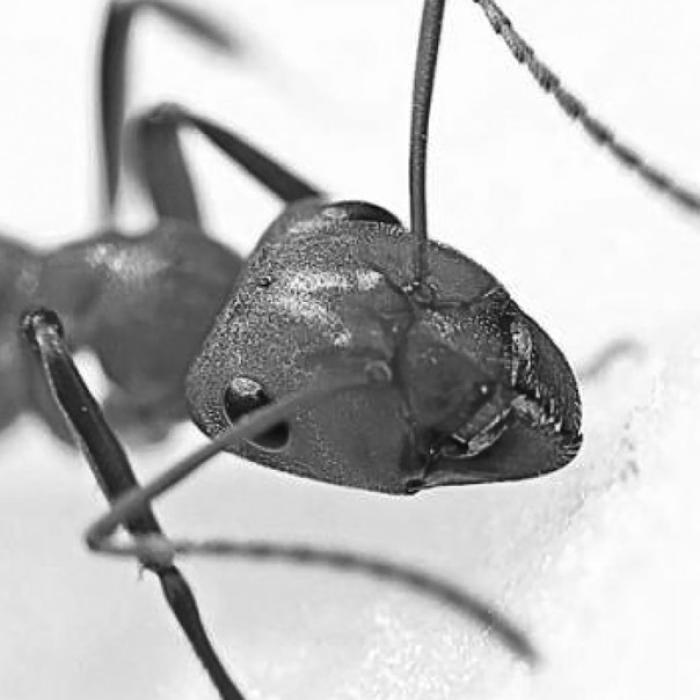
Now, back to the garden. I don’t claim to be any kind of expert about gardening. I just like to grow things and write about my experiences – sometimes good, sometimes bad. But lots of people ask me questions about gardening. The number one question I get asked the most is this: How do you get rid of fire ants without using poisons or toxic chemicals?
It’s actually really easy. You can use molasses to repel ants. It sounds counter intuitive, because sugary things typically attract ants. But something in the molasses repels them. Perhaps it’s the sulfur compounds. Most feed stores sell “dry” molasses. It’s actually a bran product that’s sprayed with liquid molasses. You can apply dry molasses using a push-type fertilizer spreader at a rate of around 1020 lbs. per 1,000 square feet. It does a pretty good job of keeping them away.
For individual mounds, you can kill ants with a mixture of water, liquid molasses and orange oil. Mix about four ounces of orange oil and four ounces of liquid molasses in a standard two gallon watering can, and fill the can with water. You want to use a watering can that has a removable shower head so it will pour a solid stream of water, not a shower head.
Once you mix the solution, gingerly walk over to the mound so you don’t disturb the ants. If you make a bunch of noise, the worker ants will protect the queen by moving her deeper down in the mound. You want to surprise them so you have the best chance at killing the queen.
Start by pouring a stream of the solution down the middle of the mound. Use about half of the two-gallon can. Then pour the rest in a circular motion out to the edge of the mound. It works nearly 100 percent of the time in my experience.
The orange oil kills all the ants that come into contact with it. The molasses, as mentioned above, repels any new ants from re-colonizing the mound.
The second most common question I get involves weeds. What can you spray to kill weeds besides toxic chemicals like glyphosate?
Strong vinegar kills just about all non-woody weeds. When I say strong vinegar, I mean 20 percent vinegar. Regular kitchen vinegar is around five percent acidity. That’s not strong enough to kill weeds. Ten percent vinegar, sometimes known as “cleaning vinegar,” works a little better. But 20 percent vinegar works the best for killing weeds.
Watch out for stronger products, such as 30 or 45 percent vinegar, which are available for purchase. They can burn your hands and eyes. They don’t seem to be any more effective than 20 percent vinegar, in my experience.
Use a pump-up sprayer to apply. Don’t dilute it – use it straight. You can also add an ounce or two of orange oil and a few drops of Dawn dish soap. This helps the vinegar to “stick” to the leaves.
Vinegar also kills grass, so be careful about spraying it around the yard. You will want to apply it during a sunny time of the day. Don’t try to spray when the sky is overcast – it won’t be as effective.