


Robert Tecumtha Browne: Forgotten Native Son
-
 Robert Tecumtha Browne: Forgotten Native Son
Part II
Footprints Of Fayette
Fayette County is one of the most historic counties in Texas. In this weekly feature from the County Historical Commission, a rotating group of writers looks back at local history.
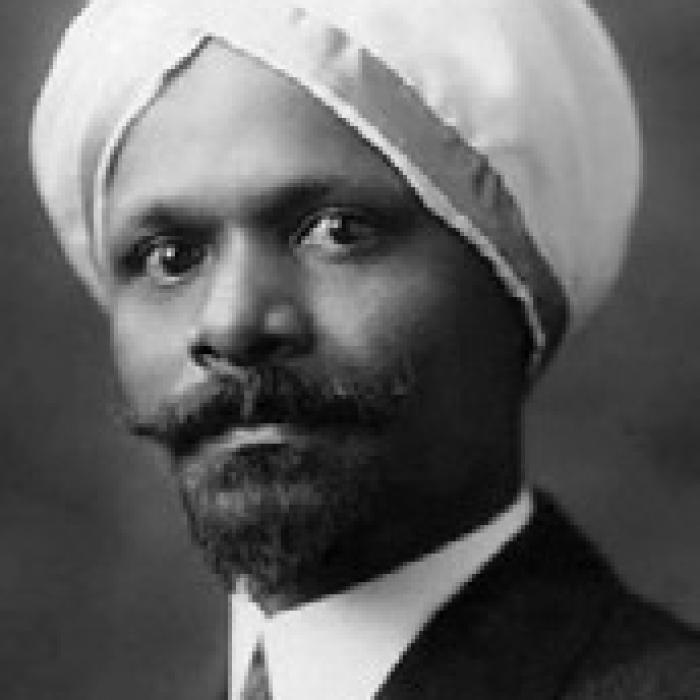
At this point we should note that there have been numerous articles written about Robert T. Browne, but they often have conflicting information. Some biographers even lost track of him after the publication of his book, The Mystery of Space, probably because Robert T. Browne appears to have intentionally distanced himself from the black community in an attempt to avoid the discrimination he met as an author after his race had been revealed. From 1922 to 1932 Browne lived in Brooklyn, where he wrote Cabriba: Garden of the Gods, a novel with a story that follows a mixed-race Indian living in London on an exotic trip that was a metaphor for his spiritual journey. It was written under the pseudonym, Mulla Hanaranda, and Browne began wearing a turban and passing himself off as being from India, including in the 1930 census where he listed his occupation as writer.
From 1928 to 1932 Browne served as editor of the Negro World magazine. It’s unclear whether he had ever given up his government job as a purchasing agent, but in December 1932 that position sent him to Manila in the Philippines where he lived and worked until the Japanese invasion in January 1942. At that point Browne was rounded up with several thousand American and British nationals into the crowded Santo Tomas and later the Los Baños internment camps.
In the camps Browne gave lectures on Asian philosophy and did what he could to lessen the suffering as malnutrition and eventually starvation set in by teaching mind-over-matter visualization techniques to the other internees. To get past the depression their deprivation was causing, he asked them to visualize the flavor, aroma and texture of food and how its nutrients were making their bodies stronger. He encouraged them to collect recipes, paying attention to each ingredient, a practice that was widely followed in the camp and was credited with diminishing or at least delaying the psychological pain of starvation. After a terrifying battle between American paratroopers and their Japanese guards early in the morning of February 23, 1945, Browne was liberated from Los Baños. In the three years he spent captive, his 6-foot 1-inch frame had shrunk from 212 pounds to only 120.
Browne returned to New York and in 1947 he married Cecilia Mitchell Weis, whom he had met through his lectures in the Santo Tomas internment camp. They are found together in the 1950 Census as a white couple living in New York City, along with their foster daughter, Luz Martin, who was born in 1931. His occupation was listed as real estate agent and owner. Luz, a Filipino, who some sources say was Cecilia’s step-daughter, soon changed her name by court decree to Jyotish Martin Browne as part of her naturalization process. Robert Browne is said to have renamed her in honor of the ancient Hindu science of astrology and divination. Oddly, Browne’s race had been listed as American Indian in 1948 documents allowing the family a six-month stay in the Dominican Republic. In 1947, while in his mid-sixties, Browne outlined his plans for leading humanity to realize its true potential in a new book he titled The Pantelicon and, in 1950, formed the new spiritual “Hermetic Society for World Service” with Edgar M. Kneedler. Through his lectures, he attracted a devoted international following who were required to follow a strict code of conduct. This eventually included perfect obedience to the master, Browne himself. Kneedler later became disenchanted and referred to the Hermetic Society as a cult. We won’t attempt to outline their beliefs here, but this religious organization still exists today.
Robert Tecumtha Browne died in New York on October 15, 1978 at age ninety-six. He was a visionary who sought broader horizons, so by leaving his humble origins to make his mark in the world, he left few footprints here in Fayette County.
Sources: Census records, draft registration cards, travel documents, and other articles and information in Robert Tecumtha Browne file, FAM BROWNE 2023.5.20, at Fayette Heritage Museum and Archives Black Bibliographies, 1863-1916, NY: Garland Publishing. Fikes, R. (2017, October 04). Robert Tecumtha Browne (1882-1978). www.blackpast.org. https://www.blackpast.org/ african-american-history/browne-robert-tecumtha-1882-1978/ Fikes, Robert Jr. “The Triumph of Robert T. Brown: The Mystery of Space,” “Postcript to ‘The Triumph of Robert T. Brown: The Mystery of Space’,” APA [American Philosophical Association] Newsletters, Volume 6, Number 2, Spring 2007 Mather, Frank Lincoln, ed. Who’s Who of the Colored Race. Chicago, 1915.
Moore, Christopher Paul. Fighting for America: Black Soldiers – the unsung Heroes of WWII, 2005.
“Robert T. Brown,” es.wikipedia.org The Romantic Story of Samuel Huston College, accessed at https://www.jstor.org Wilkins, Carolyn. “The Mystery of Robert T. Browne: Episodes One – Four.” www.youtube.com