


Preparing for The Freeze
-
 Preparing for The Freeze
 -
 Preparing for The Freeze
 -
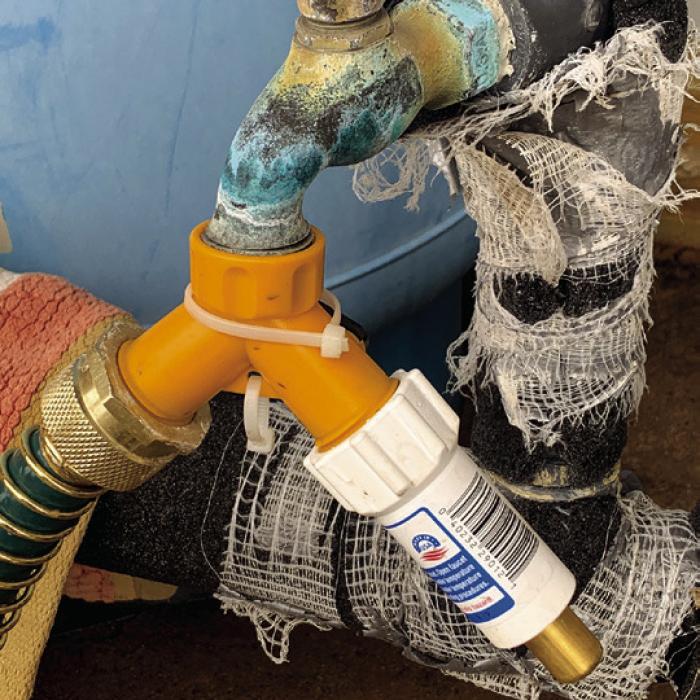 A Freeze Miser attached to one side of a “Y” adaptor allows a water hose to remain hooked up to the faucet while providing freeze protection.
I’m sure everyone was busy wrapping their water pipes in preparation for the blizzard that’s supposed to arrive this week.
Of course, wrapping pipes is important. But the best way I’ve found to protect water pipes in cold weather is the Freeze Miser. It’s a temperature-sensitive freeze protection device. It attaches to any standard threaded water faucet.You turn the faucet on, and if the temperature drops below freezing, the valve inside the Freeze Miser opens and allows water to drip.
The colder it gets, the more the valve opens. It works much better than dripping your water faucets. When the temperature warms above freezing, the Freeze Miser stops dripping. You’re not wasting a bunch of water or making a muddy mess under the faucet.
Plus, the company is based right down the road in Kingsbury and their products are made in the U.S.A. I’m a big fan. And no, they’re not paying me. I doubt they know who I am. I’ve bought all the Freeze Misers I own. I just really like this product.
M-G in Weimar carries them. I have three of them and I needed to buy two more, so I went to M-G on Monday. Actually, I wanted to peruse their gun case, so the Freeze Misers gave me a good excuse for the trip. But they were sold out of Freeze Misers. One of the workers said they ordered a bunch and were hoping to get them back in stock by Wednesday.
La Grange Farm and Ranch and Sutherlands in La Grange carries them. La Grange Farm and Ranch had a pretty good supply when I went there Tuesday. They cost $27 and some change. The investment is well worth the trouble of crawling under my house and repairing broken pipes. If you had to hire a plumber, the Freeze Misers easily pay for themselves.
If you own a tankless water heater mounted to the outside of your home, I highly recommend the Freeze Miser. You can install one on the cleanout valve and keep the valve open. I’ve had one set up like that for two years on my tankless water heater, and it has never let me down.
For outside faucets, I usually install a “Y” adapter and connect the Freeze Miser to one side. That way, you can leave a water hose attached to the other side of the “Y.”
They come with a two-year warranty. I recently experienced my first failure. Sometime during the spring, I unhooked the Freeze Miser from the faucet in my well house so I could use both sides of the “Y.” It had been hooked up for a few years. This week, while preparing for the freeze, I reattached it. When I turned the faucet on, water came gushing out of the end. Something came apart inside. They might last longer if you leave them hooked up to a faucet with the water turned on.
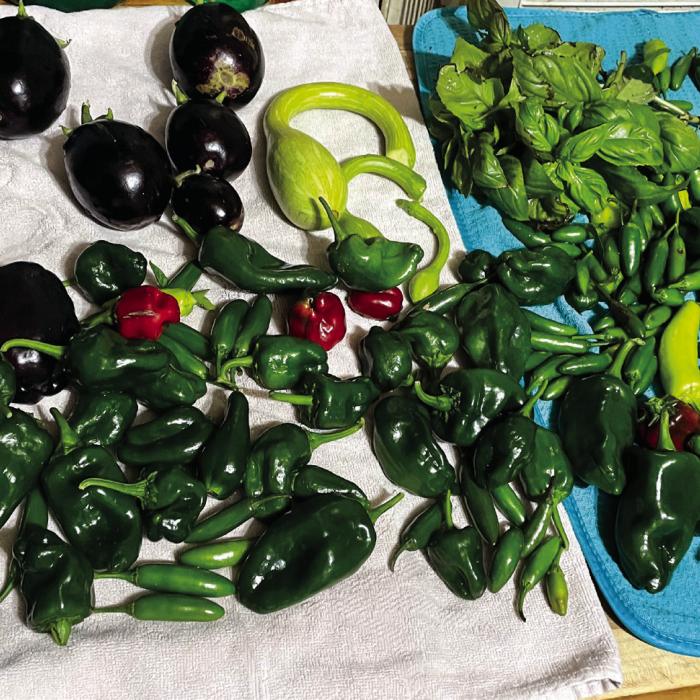
Tuesday night, Janessa picked all of the peppers, eggplants, squash and basil that were still growing in our garden. We were pretty sad about it, because they were finally starting to produce a lot. We barely kept them alive through the heat and drought this summer. But after we started getting some rain a few months ago, they really took off. We covered them up during the frost last week, but seriously doubt they’re going to make it through the cold weather forecasted for Thursday night. I’m going to try, though, because I’m a sucker for punishment.
I’m also a little worried about our winter crops. We’re growing bok choy, Chinese cabbage, Savoy cabbage, regular cabbage (both green and red), mustang greens, kale, carrots and beets. I’m not worried about the beets and carrots. They can survive extremely cold temperatures. I’m not too worried about the kale, either. During the hard freeze of February 2021, I was surprised at how the kale survived those cold temperatures.
Other brassicas such as cabbage and mustard are supposed to withstand temperatures as low as 25. But the weathermen are forecasting a low of 18º. I’m going to cover as much of it up as I can.
If you read my column last week, you’ll remember I planted some ryegrass and forage turnip seed in a pasture for my cattle two weeks ago. It all sprouted this week. I’m worried about losing it to the cold. Turnips are supposed to withstand cold down into the teens. But these seedlings just sprouted. I’m even more worried about the ryegrass. I should have planted it a few weeks earlier.
You can’t fight mother nature. You just have to learn from her and move on.
There is one product that can help plants better tolerate freezing temperatures – seaweed extract. Spraying your plants with a mixture of seaweed extract (one ounce per gallon of water) can provide two to four degrees of frost protection.
How does this work? Freezing weather kills plants because the cold causes ice crystals to form in the cells of plants. Sharp ice crystals cut through the cell walls, killing the cells and thus the plants. Seaweed extract encourages plants to produce more sugars and salts in their cells. These chemicals act as antifreeze in a car engine. They lower the freezing temperature of water within the cells.
Some citrus orchards also use molasses to prevent freeze damage. They spray citrus trees with a 10 percent mixture of liquid molasses. The layer of molasses seems to act as an insulator.