


Lester Petitioned for State Capital in Fayette County
-
 Lester Petitioned for State Capital in Fayette County
 -
 Lester Petitioned for State Capital in Fayette County
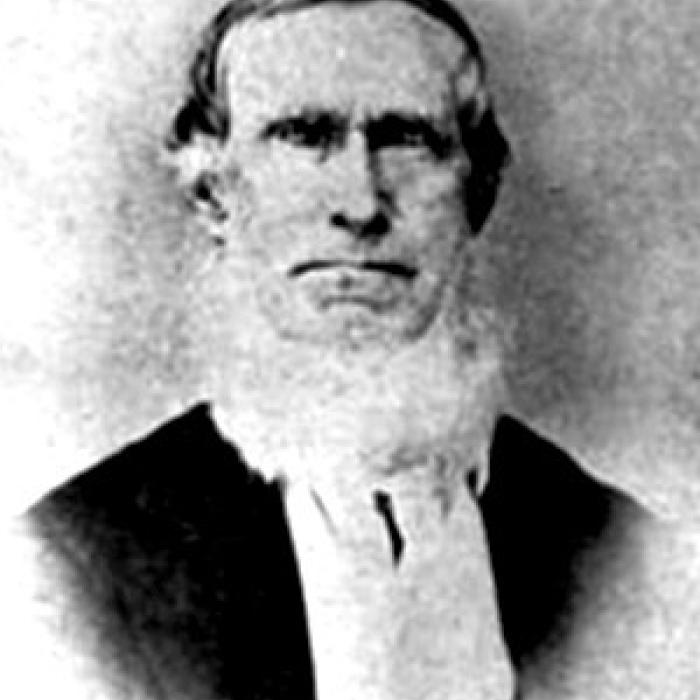
James S. (Smith or Seaton) Lester was born in Virginia in 1799. He was well educated, studied law, and became a Virginia lawyer in 1831. He came to Texas in 1834 and received a land grant of one-half league (about 2,214 acres) in what would become Fayette County. Soon after his arrival, he served with the area’s famed Indian fighter, Colonel John Henry Moore, in expeditions against raiding Indian tribes. Lester served as a delegate to the General Consultation of 1835 and was on the committee that created a provisional government for Texas independent from Mexico. In early 1836, he served in Mina (Bastrop) as a recruiter for the Texas army, seeking volunteers to send to San Antonio de Bexar to join the men who would attempt to defend the Alamo against the advancing army of Mexican dictator General Lopez de Santa Anna. A colorful band of 13 heavily armed marksmen from Tennessee rode into Mina, led by a buckskin-clad former United States Congressman named David Crockett. Knowing that the Army desperately needed all the sharpshooters it could find, Lester sent them on their way to the Alamo.
After the tragedy at the Alamo, Lester vowed that he would be with the Texas Army until Santa Anna was defeated. He was on the battlefield at San Jacinto on April 21, 1836 (his 37th birthday) where Texas won her independence and the Republic was born.
James S. Lester began his long political career in the fall of 1836 when he was elected as a Senator to the First Congress of the Republic of Texas representing the District of Mina and Gonzales. He went on to serve as a Senator in the Second, Fourth and Fifth Congress and as the Fayette County Representative during the third Congress. While serving in the Second Congress, on Dec. 14, 1837, he joined withAndrew Rabb and John Henry Moore in sponsoring the petition for the creation of Fayette County. He also sponsored a bill to locate the Capital of Texas in Fayette County. The bill passed in both the House and Senate but was vetoed by President Sam Houston.
Lester settled in La Grange, established and surveyed as the county seat of newly created Fayette County. When town lots were offered for sale, Lester bought quite a few until he owned nearly 3/4 of the entire town. He was one of the original five “Town Proprietors.” He partnered with William Mosby Eastland in several ventures and “Lester and Eastland” became one of the area’s leading businesses. In November 1838, the partners provided the county with its most vital asset. The first county courthouse was a former grocery store purchased for $250 from Lester and Eastland and moved to the public square.
After his tenure in the legislature, Lester turned to local politics and served four years as the Chief Justice of Fayette County. Faith and education were also important to Lester and he served as a founding trustee to both Rutersville College (Methodist) and Baylor University (Baptist) during the 1840s. He served on the Baylor Board of Trustees for 21 years.
James Lester owned property on the outskirts of La Grange where a cemetery was established in 1840. In 1853, Lester officially gave the land where the Old City Cemetery is located to the citizens of La Grange to use as a burying ground.
Lester’s last official service was as one of three Fayette County delegates to the 1861 secession convention in Austin that approved Texas’ withdrawal from the United States and join the Confederate States of America.
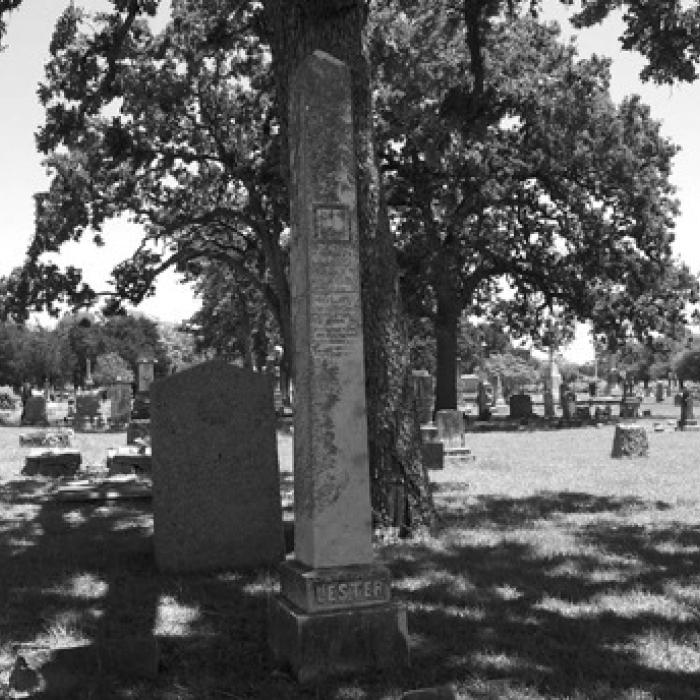
James S. Lester died a bachelor, in December 1879 and is buried in the Old La Grange City Cemetery. On his tombstone it reads “Citizen of Texas for 45 years.” His grave is also marked with a red granite monument erected by the State of Texas in 1962.
Footprints Of Fayette
Fayette County is one of the most historic counties in Texas. In this weekly feature from the County Historical Commission, a rotating group of writers looks back at local history.