


I’m Going to Try Planting Potatoes in the Fall
-
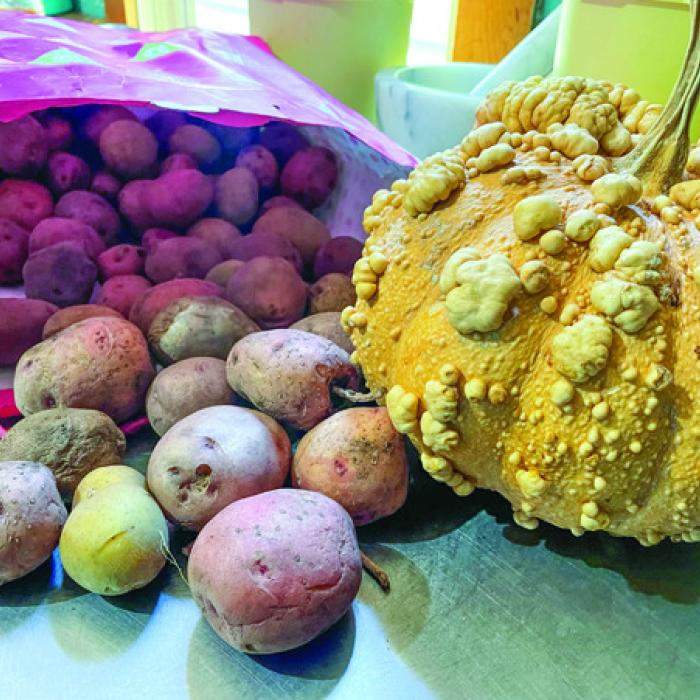 My wife Janessa recently acquired some seed potatoes from a fellow gardener, which we plant to plant sometime in the next month. The warty pumpkin is a variety I grew this year called “Musquee de Maroc.”
 -
 I’m Going to Try Planting Potatoes in the Fall
For most of the country, spring is the best time to grow potatoes. Potatoes prefer moist soil and cool weather. So most suppliers of seed potatoes only offer them for sale in the late winter and early spring.
When you plant potatoes during the spring in this part of Texas, it can get too hot and dry for them by the time they’re ready to harvest. Fall can be a much better time to grow potatoes, but seed potatoes are nearly impossible to find this time of year.
A few years ago, I grew my best crop of potatoes ever from a fall harvest. That time, I planted some potatoes that I grew during the spring time. This year, our spring potato harvest was pretty meager. We had eaten them all by the start of summer. I didn’t think we’d be able to plant potatoes this spring. But a few weeks ago, my wife acquired some seed potatoes from a fellow gardener. I’m excited about planting them soon.
Timing is probably the biggest factor for a successful potato harvest in the spring. If you plant too early, hot and dry conditions will hamper their growth. In my experience, potatoes do not like to be watered. They grow much better when nature provides the right amount of rainfall. This is true for all plants, but even more so for potatoes, I think. It seems that the more I rely on irrigation for my potatoes, the more of them rot in the ground. .
If you plant them too late, on the other hand, an early frost can kill the top foliage and stop their growth. Growers in some states to the north of us sometimes plant their potatoes in the middle of the fall for a spring crop. I have read these fall-planted potatoes will start to grow before the first frost arrives and kills the top foliage. The tubers supposedly go dormant and then begin to grow again in the spring. If the tops emerge from the soil before the last expected frost, these northern growers cover them with straw or compost until the weather warms up. The potatoes can then be harvested much earlier than spring-planted potatoes in those environments.
That seems like a risky strategy to bank on for me. I would worry about the potatoes rotting in the ground over the winter. But perhaps those areas don’t have as much pressure from the soil-borne pathogens that cause potato rot. However, I have seen volunteer potato plants pop up in my garden in spots where I planted potatoes the year before. So it’s certainly possible for potatoes to go dormant for months at a time in the soil and then spring back to life.
This might provide another benefit for planting potatoes here in the fall – if an early frost kills the tops before the tubers have finished growing, I could harvest a few new potatoes and then leave the rest in the garden over the winter.
So when will I plant? Most of the seed potatoes we have appear to be Red Pontiac, which typically take 90 to 100 days to mature after planting. According to the Old Farmer’s Almanac, the first frost typically arrives around Nov. 15. Ninety days before then is this week. It’s too dry to plant right now, I think. I would have to water them, and like I said earlier, I worry they would rot in the ground.
The Texas A&M Horticulture Program publishes a map that shows Dec. 16 as the first frost date for this area. I think I’m going to trust the Aggies on this one. That gives me another month to plant my potatoes. Hopefully we can get a shower before then. Besides, I’ve got to make room for them in the garden.