


Historical Commission to Hear from David Collins
-
 Historical Commission to Hear from David Collins
 -
 Historical Commission to Hear from David Collins
Footprints Of Fayette
Fayette County is one of the most historic counties in Texas. In this weekly feature from the County Historical Commission, a rotating group of writers looks back at local history.
The Fayette County Historical Commission’s purpose is to identify and document local historical sites, persons and occurrences; attempt to preserve those sites that are endangered; and to promote local history.
Historical commission members are volunteers who are appointed by the Commissioners Court every other year for a two year term. The office is located within Founder’s Park on West Colorado Street across from the courthouse and is open by appointment only. The commission meets every odd month at 6 or 6:30 p.m. at locations arranged by members. For more information about the Historical Commission, visit their Facebook page: https://www.facebook.com/ FayCoTxHistoricalCommission,
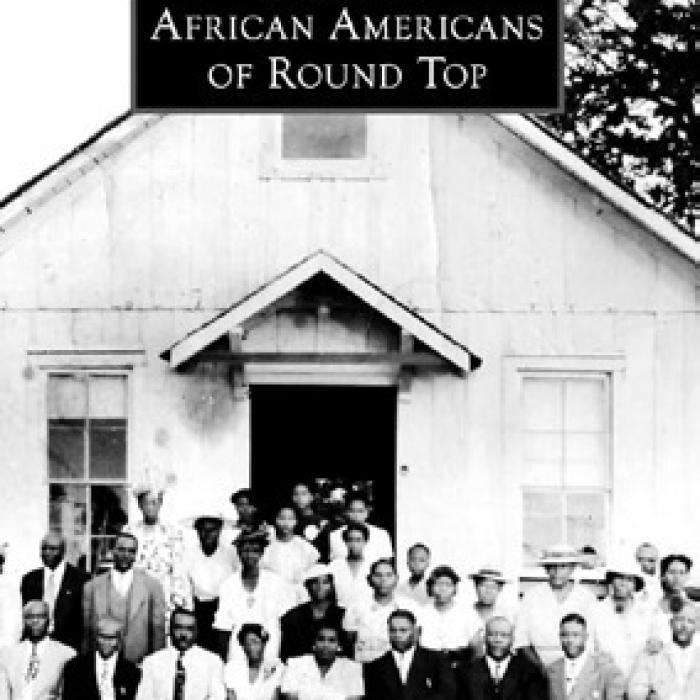
or through the county judge’s office at(979) 968-6469. The meetings are open to the public. The next meeting is March 18 at the Texas AgriLife Building located at 255 Svoboda Ln., Room 134, La Grange. The annual potluck dinner starts at 6 p.m., with a quick meeting in order to enjoy hearing from David Collins about his new book “African Americans of Round Top” part of the Images of America series published by Arcadia Publishing. Information about the book follows: Round Top, Texas is home to one of the many untold stories that illustrate how African Americans in small Texas towns built and grew prosperous communities’ post-slavery. In 1821 Round Top was an incorporated part of the Mexican empire known as Provincial de Texas. Some of the original Round Top Black pioneers were bought into Texas in 1825 when the Texas legend, Stephen F. Austin, bought 300 Anglo-Americans, and the people they enslaved, into Tejas for the purpose of colonizing the area. Soon afterwards, many more enslaved pioneers were brought into Tejas from other slaveholding states. After the Civil War ended, the descendants of these original Round Top pioneers began building their own community. After leaving the plantations and farms they had been enslaved on, many began earning money by toiling away in the cotton fields for the very men who had once enslaved them. Others earned money working as Cowboys, Washerwomen, Barbers or Blacksmiths, etc. On Sundays, these pioneers would gather together under brush arbors in the woods to practice their religion. In 1867, just two years after Slavery ended, a group of these pioneers organized themselves and founded the historic Concord Missionary Baptist Church. They founded this church as a communal space for them to come together and pool their resources to buy their own land, build their own homes, and to hire teachers to teach both them and their offspring. Because of southern anti-literacy laws, many African Americans came out of Slavery illiterate. After the Freedman Bureau teachers left the area, African Americans needed a safe place, untethered by the restrictive laws of Jim Crow or the Black Codes of the South, to educate their children. Black churches such as Concord Missionary Baptist Church provided that safe place. Concord built its own parochial school. The school was officially named the “Concord Missionary Baptist Church Colored School”. During the early part of the 20th century, many schools in Texas began to consolidate into different school districts. Black schools, such as Concord, because of Jim Crow laws, were not included in that consolidation. They were also not included in that consolidation funding. Instead, they were consolidated under the auspices of a County colored school system which is why Concord School was often referred to by the locals as the Round Top Colored School. In the late 19th and the early 20th century the Round Top Colored school brought literacy to the formerly enslaved and their offspring. The earliest known educator in this school was a man named Calvin Lindley Rhone. Calvin was born enslaved in 1861 in Natchez, Mississippi to a man named Charles Rhone. His wife, Lucia J. Knotts-Rhone was also an educator in the school. She was born in Texas in 1866. Because of the lack of adequate County funding to Black schools, Calvin and his wife Lucia sometimes had to dip into their own pockets to help keep the school running. They were remarkable in that their efforts helped create the first generation of Blacks in the Round Top area who were literate. A few of these literate Blacks, some during Reconstruction, were sent by their families to Black colleges in Texas such as Paul Quinn, Wiley and Prairie View A&M. The Rhones created a family generational legacy of Black educators in Round Top that lasted well into the late twentieth century. Some of the Rhone descendants elected to stay in the area and were responsible for educating a generation of children born to black sharecroppers and Black farming families who owned their own farms. One of the Rhone offspring, Urissa Rhone-Brown, had an educational career that saw her transition from teaching in a segregated school system to becoming Principal of the historic Round Top Colored High School during the desegregation era of the 1970s. There are many more pioneering Black families, such as the Dobbins, who were not educators, who contributed to making the Round Top, Texas Freedom Colony a success story.
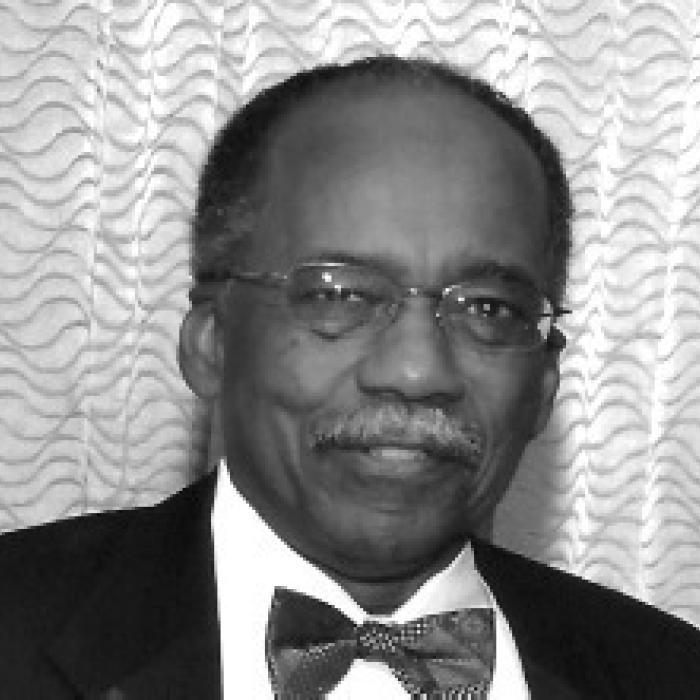
The Images of America book series celebrates the history of neighborhoods, towns, and cities across the country. Arcadia Publishing is proud to play a part in the preservation of local heritage making history available to all. “Images of America: African Americans of Round Top” This book is written by David L. Collins Sr. who is a civil engineer who lives in a suburb of Houston, Texas. An avid researcher, Collins is passionate about preserving African American history in Lee, Bastrop, and Fay-