


Gardening: Growing Squash and Zucchini for a Fall Harvest
-
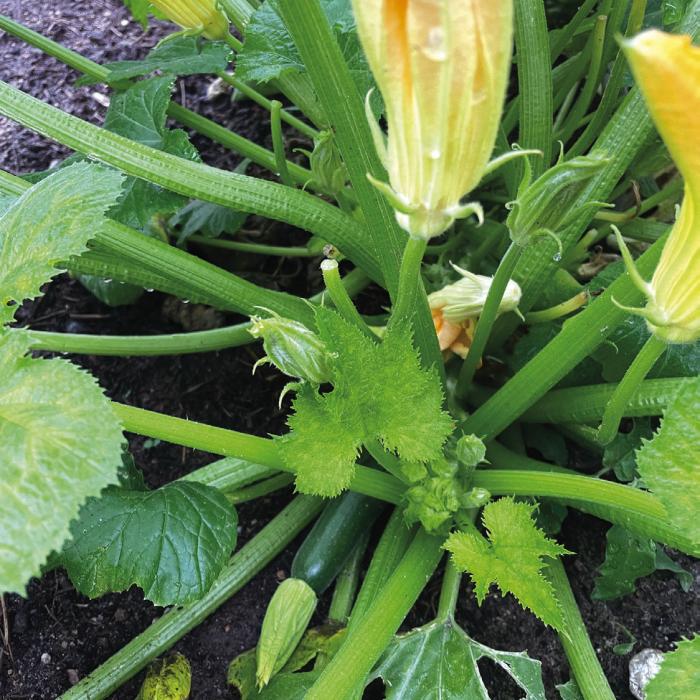 The first fruits on our zucchini plants appeared this week.
 -
 Gardening: Growing Squash and Zucchini for a Fall Harvest
It looks like we might get some zucchini and squash this fall.
Wait a second, isn’t zucchini a spring vegetable? It is, except it’s a fall vegetable, too. But you plant it in the middle of the summer. Then you fight the heat, grasshoppers, and lack of water. And if you’re lucky, you too can eat zucchini from September until it freezes.
My wife Janessa couldn’t remember when she planted these zucchini seeds, but I think it was mid-July (every gardener should keep a journal, that’s part of the reason why I write this column – so I can remember when I planted stuff). We also planted some pumpkins and winter squash around that time, and they’re starting to flower now. Speaking of winter squash, that’s another funny name, because they don’t grow during the winter. Instead, these thick-skinned squashes are meant to be harvested in the fall, stored, and then eaten throughout the winter.
Back to zucchini – we didn’t get any rain until this week. Janessa kept them alive with our well water. The zucchini began flowering a week or two ago. When I checked them this Tuesday, I found a couple of threeinch long fruits. They’re loaded with female flowers, too. So we should get a good harvest.
(You might ask, what’s the difference between male flowers and female flowers? The female flowers are the ones that grow into a fruit. They usually appear with a tiny, primitive-looking fruit attached at the base of the flower.)
It looks like the time of planting may have allowed us to miss the squash vine borers (SVB), which is, I think, one big benefit of planting squash and zucchini in the late summer. Squash vine borer adults are beautiful orange and black flying bugs that look kind of like a wasp. The females lay eggs on the under side of squash and zucchini leaves in the spring. The adults die soon thereafter. The eggs hatch into larvae. The larvae bore into the stems of squash and zucchini plants near the soil level. Once inside the stem, they are very difficult to kill. No chemical insecticide will work. The only effective treatments are mechanical - run a thin wire down the burrowed hole to kill the bug, or by using a syringe to inject the stem with the organic insecticide BT. Both of these methods are very time consuming. They’re only worth doing if you catch the SVB infestation soon enough before the plant starts showing signs of stress.
Left untreated, the larvae will form a cocoon in the soil after the plant dies. The pupa overwinters inside the cocoon and emerges from the soil as an orange and black flying adult. If you don’t treat them and somehow kill the burrowing larvae, you should pull up the plant, break the stem open, find the larvae, kill it, and then compost the plant. You might have fewer SVBs next year.
The adults are pretty to look at, though.
I haven’t seen a trace of SVB damage on any of my squash or zucchini plants. I think this is because the bugs are all in their late larvae or early dormant stage.
We also had to fight the grasshoppers. Janessa accomplished that by covering the plants with tulle for the first month of growth. This mesh fabric does a great job at keeping the grasshoppers from destroying the young plants. She took the tulle off once they started flowering, because squash and zucchini need bees and other insects for pollination. She took the tulle off the winter squash and pumpkins at the same time, but these varieties seem to grow a little slower. They’re just beginning to flower this week. Once the plants are big and established, the grasshoppers don’t seem to bother them much. Also, I think grasshoppers attack young growth and stressed plants more than they attack mature, healthy plants.
Elsewhere in the garden, we planted some kale and carrots seed this week. Now is a good time to start planting all types of greens in addition to carrots. If you’re planting carrots for the first time, try growing them in a raised bed with loose soil. Be sure to cover the seeds just ever so lightly with soil, not too deep. And don’t let the soil get too dry. Fresh carrots are one of the garden’s greatest treasures.
If you plant some zucchini and squash now, you just might get a harvest before the first frost, especially if it’s a late first frost. This week, Janessa just planted some seeds of an Italian variety of squash that’s somewhat rare in the United States - “Zucchino Rampicante.” Baker Creek, the company I bought the seeds from, says this strangely-shaped variety can be eaten young and green as a summer squash or left on the vine to mature as a winter squash. We’ll see how it goes.