


Find Your Inner Peas in the Garden
-
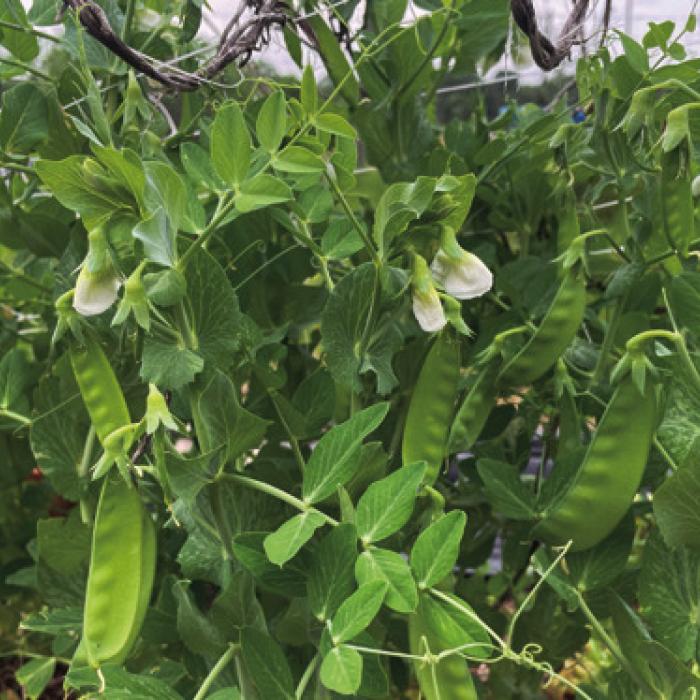 A patch of snow peas that I grew last year.
 -
 Find Your Inner Peas in the Garden
I happen to think gardening is one of the most subversive, radical acts a free person can do.
It’s an act of unplugging oneself from the matrix. No one has to know what you are growing. You can treat yourself with plant medicines, unbothered by gatekeepers in white robes. Of course, this requires education and experience. You can certainly harm yourself with powerful herbs. But you can also cure yourself. It’s up to you. And no one is stopping you.
You can make your own compost from kitchen scraps instead of buying petroleum- based fertilizers sold by companies who’ve infiltrated government regulators and universities. You can rip those stupid safety nozzles off your gas cans and replace them with gray-market free-flow nozzles. You can kill weeds by spraying them with diesel. You can drink raw milk. You can act. You can find the natural order.
Everyday I strive to become ungovernable. So this week I’m planting some peas.
The first harvest of fresh, green garden peas marks the ascendency of spring and the defeat of winter. These sweet morsels from the garden offer more utility than those bought at the grocery store. They don’t have much shelf life when fresh. So more often than not, you find them for sale frozen or canned.
But fresh, they can be eaten raw in salads. I love snipping a few of the curly tendrils to toss in a salad. Growers have bred some varieties exclusively for tendrils, which can be quite tasty stir-fried, if you have enough.
But first, they need to be planted.
I’ve never had great success growing green shelling peas. I prefer growing the varieties known as snow peas or sugar snap peas, which have edible pods. Snow peas are generally flat while sugar snap peas have plumper pods.
Peas really need some kind of trellis. I once planted a thick patch of peas without a trellis. They supported themselves well enough. But it was a pain to harvest. They grew in a tangled, jumbled mess. I ended up always damaging several plants every time I picked peas.
It doesn’t really matter what kind of trellis you use. I’ve used cattle panels, chicken wire, tomato cages and even wooden stakes. This season I’m planting them along a cattle panel arch I made last year.
When you buy seed, pay attention to the label. Some varieties will grow vines taller than a man, if given the opportunity. Other “dwarf” varieties only reach a couple of feet tall. So design your trellis accordingly.
Peas don’t really require any special fertilizers or nutrition. They’ll grow in any good garden soil. A good application of rich compost or earthworm castings should provide all the nutrients they need.
When growing along a trellis, I like to plant them in two rows, one on either side of the trellis, about eight to ten inches apart. Space the seeds about one to three inches apart in the rows, about an inch to an inch and a half deep.
The plants emerge in a week to a week and a half. They germinate the best when temperatures are around 68 degrees F outside. They germinate slowly at lower temperatures. Make sure the soil stays moist until germination. Then water them whenever the soil dries. Don’t overwater them, though, because this can lead to fungal problems. You can prevent fungal disease by applying some cornmeal around the plants.
The first harvest usually comes in about 50 days after germination, depending on the variety. Enjoy them while they last, because green peas die out as summer approaches and the temperature warms up.