


Emulate Nature by Planting Cover Crops in the Garden
-
 Emulate Nature by Planting Cover Crops in the Garden
 -
 Emulate Nature by Planting Cover Crops in the Garden
 -
 Emulate Nature by Planting Cover Crops in the Garden
 -
 Emulate Nature by Planting Cover Crops in the Garden
 -
 Emulate Nature by Planting Cover Crops in the Garden
 -
 Emulate Nature by Planting Cover Crops in the Garden
I say this often, but it bears repeating: nature abhors uncovered soil. You almost never see barren soil in nature, except in extreme environments like deserts or toxic spill areas.
Many folks plant a garden in rows and then spend a lot of time pulling weeds and cultivating between the rows. This goes against nature. Nature has lots of time on its side. And in the long run, nature always wins.
Why work so hard against nature? There’s an easier way. I believe we should observe nature and find ways to make it work in our favor. Covering the soil is the biggest lesson I have learned.
Think about your garden like a forest. A forest floor is never barren. Tall trees that require lots of sunlight form a canopy that shades the floor. Bushes, shrubs and vines grow in spots where some light breaks through the canopy. You don’t really see “weeds” growing out of control on the forest floor. That’s because the trees drop leaves year after year. Old trees die, fall over and decompose. The leaves and dead organic material form a thick nutrient-rich mulch on the soil surface, which helps to preserve moisture in the soil.
I try to replicate this type of biome in my garden. I like to plant multiple species of plants next to each other in the garden, such as marigolds and basil alongside tomatoes. I then spread a layer of mulch or compost on top of the soil around the plants. The tomatoes grow tall. Marigolds and basil tolerate light shade from the tomatoes. The mulch and compost feed the plants while keeping moisture from evaporating.
You can also think of your garden as a native prairie. You never see a native prairie covered in only one species of plant. There may be a dominant species of grass. But there are always other grasses, wildflowers and forbes growing in the prairie. Some have shallow roots and hug closely to the soil surface. Others grow tall with roots that dig deeply into the soil.
I try to keep this model in mind when establishing a new garden plot. Janessa and I try to constantly expand our garden. Eventually, I want to get rid of all the grass around our house. I want the whole yard covered in orchards, perennial gardens, vegetable plots and flower beds. But removing grass is quite a battle.
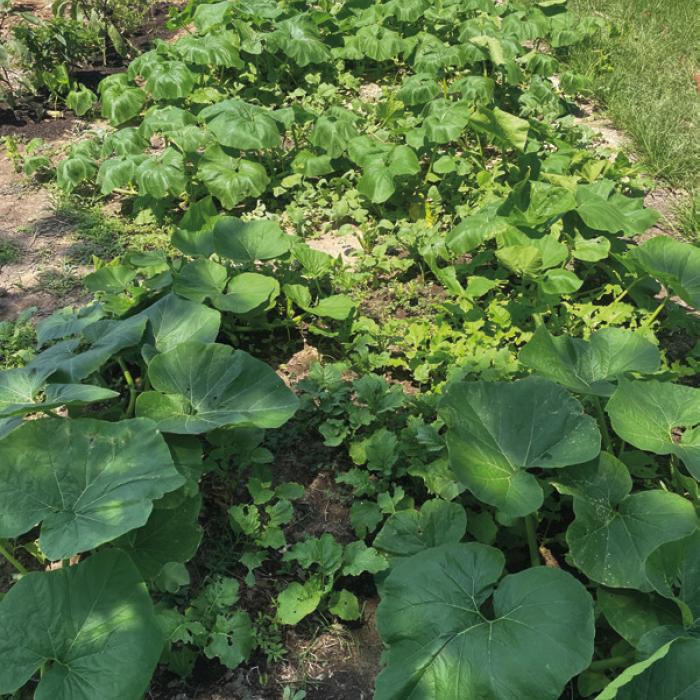
Solarizing is the easiest way we have found to remove the grass. We simply cover the ground with black plastic. After a couple of months, all of the vegetation under the plastic dies and decomposes. We then remove the plastic and immediately plant the area with a diversity of crops. We recently started a new garden plot in this manner. The idea is to completely cover the new garden spot with vegetation – a living mulch, so to speak. If not, grass and weeds will quickly re-colonize the area.
We didn’t till the soil. This never happens in nature. Tilling disturbs all of the microscopic life in the soil. Instead, I used a four-pronged garden fork to punch holes in the soil throughout the new plot. I added organic fertilizer and lots of compost to the top of the soil. About a month and a half ago, I seeded the plot with a bunch of old seeds we had laying around.
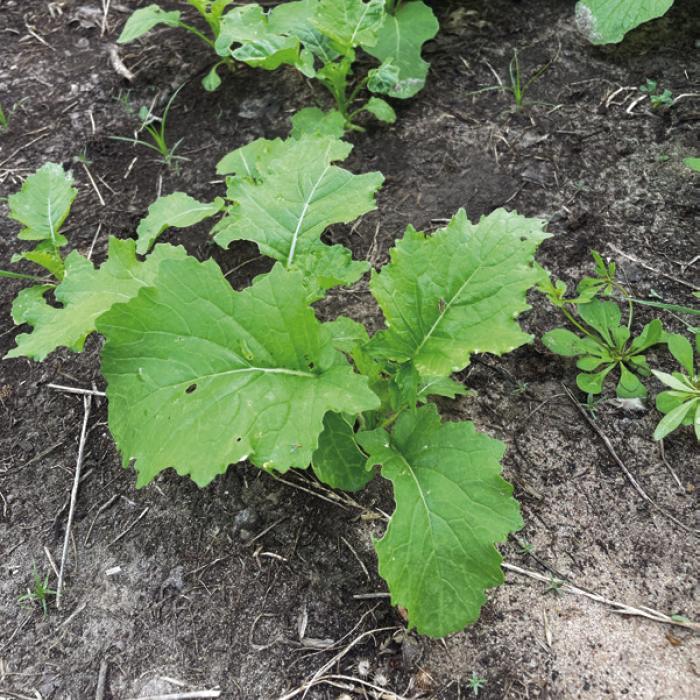
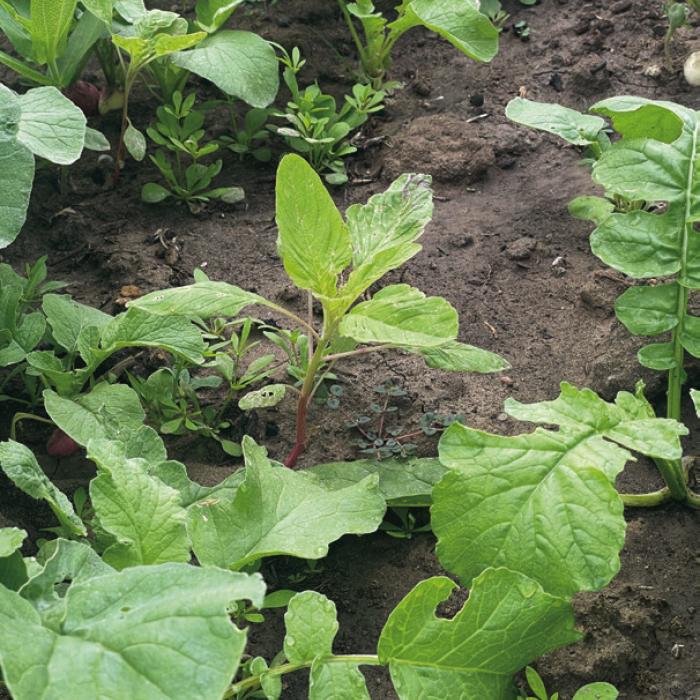
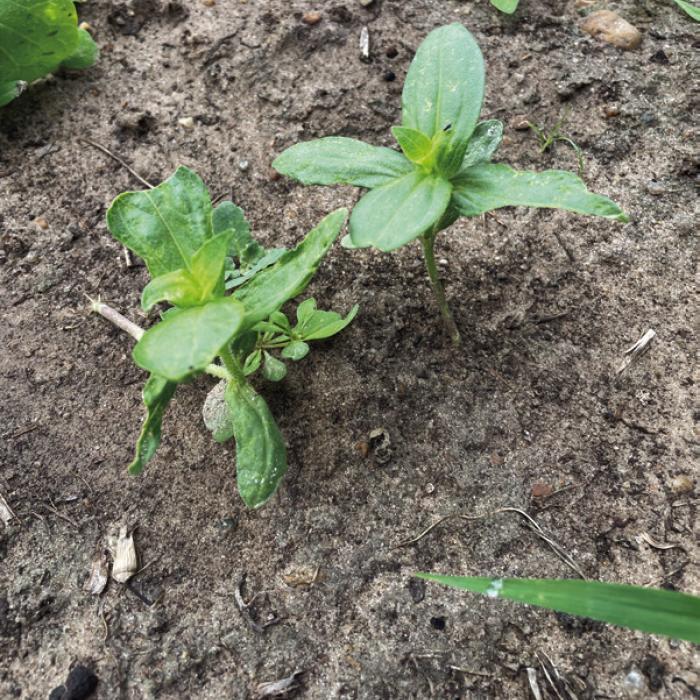
I planted radishes that will do some tilling for me without disturbing the network of life in the soil. I also planted zinnia flowers to attract butterflies and other pollinators to the garden. In addition, I planted amaranth – and ancient grain with leaves that can be eaten like spinach. Amaranth grows well during the heat of the summer. But I also wanted some kind of vegetable crop to harvest, so I planted some pumpkins and broccoli rabe.
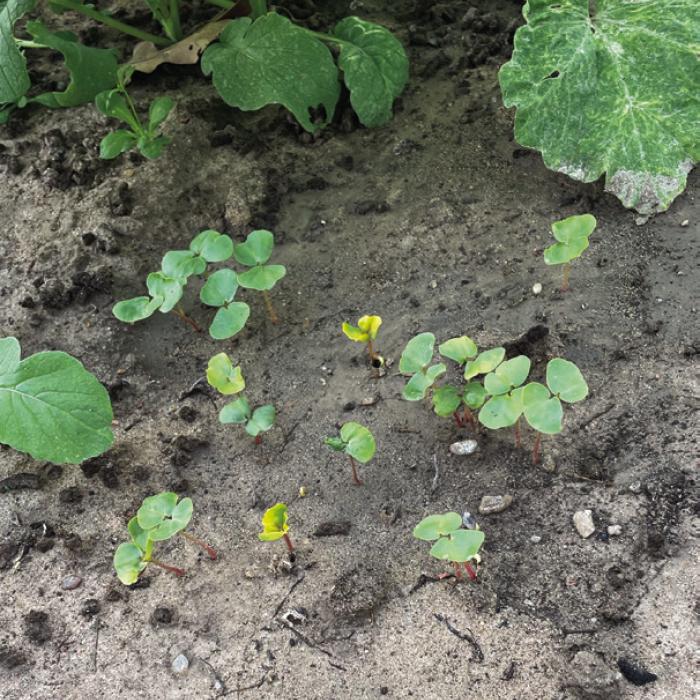
After everything sprouted and started growing, I noticed a few bare spots. I seeded some buckwheat into these open areas and it’s now starting to grow. I love planting buckwheat as a cover crop. It germinates quickly in heat as high as 105 degrees. Buckwheat’s large leaves serve to block out the sun from the surface, preventing weeds from encroaching into the plot. Its hollow stems and ample vegetation provide organic matter after the plant dies and decomposes. Plus, you can harvest the grain and grind it into flour for pancakes or noodles.
So far, our new garden plot is teeming with lush vegetation. Now it’s just a matter of keeping the spot watered during this blistering heat. I hope to get a crop of pumpkins out of this effort. But the main purpose of this endeavor is to improve the soil for next season. In the fall, I plan to mow down the vegetation and use it to mulch the area for a fall garden.