


Celery-brate This Overlooked Garden Gem
-
 Celery-brate This Overlooked Garden Gem
 -
 Celery-brate This Overlooked Garden Gem
 -
 Celery-brate This Overlooked Garden Gem
I love surprises in the garden.
Sometime in back in November, my wife Janessa told me she planted some Chinese celery seeds around the border of a flower bed in our yard. Every day for several weeks I hovered over the spot looking for the seeds to germinate, but they never did, or at least I didn’t notice them.
I interrogated Janessa relentlessly about the seeds.
“Are you sure they were Chinese celery seeds? Did you get them mixed up with something else? Are you sure that’s the spot where you planted them?”
I pretty much forgot about it until this Tuesday, when I mowed the grass after work. I mowed past the flower bed and caught a whiff of something familiar in the air. It smelled like someone was cooking a pot of gumbo.
“I know what that is,” I thought to myself.
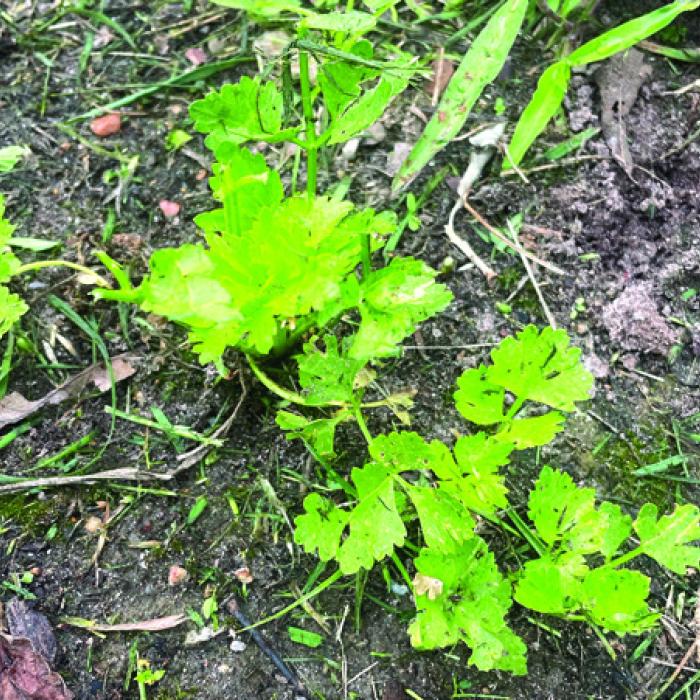
Sure enough. As I bent down and looked, I noticed a little tuft of celery that I just mowed across. The blade just barely nicked it. I looked closer and saw about seven or eight baby celery plants.
I apologized to Janessa, although it was a few months late.
Fresh celery from the garden, especially Chinese celery, actually tastes like celery. You don’t know what you’re missing until you try it. Celery sold in grocery stores tastes like water in comparison – even organic celery.
I have always struggled to grow western celery ( Apium graveolens). These are the varieties of celery we see at most grocery stores. Celery is in the same family of plants as carrots and parsley. Likewise, it seems to prefer cooler climates. Chinese celery ( Apium graveolens var. secalinum), in my experience, tolerates Texas heat a little better than western celery. Plus, the flavor is much stronger.
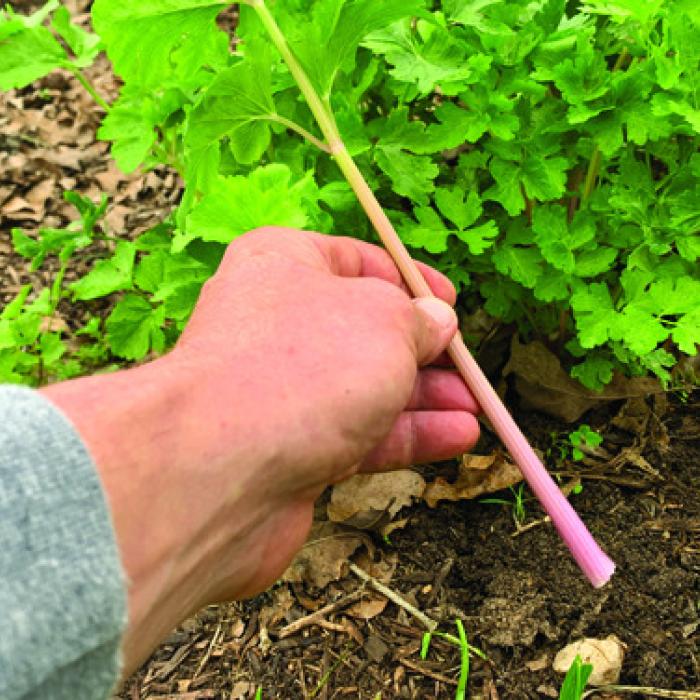
Chinese celery can also be quite colorful. Most varieties produce green or white stalks, but one variety grows stalks colored neon pink. I grew the pink variety two years ago and loved it. The color fades during cooking. But it looks incredible in the garden.
The stalks of Chinese celery do not get as big as western celery. But what they lack in size, they make up for in flavor. Commercial growers of western celery harvest the entire head at one time. But in the garden, you can snip only as many stalks as you need and leave the rest of the plant in the ground. It will continue to grow and produce. This is especially true of Chinese celery.
Chinese celery can tolerate growing in some shade. This is a great benefit to us Texas gardeners during the heat of the summer. I do not think it’s too late start some celery seeds, especially if you start them inside and then plant them out in a shady spot later. Give it a try!
Seeds for Chinese celery can be hard to find. You will probably have to order them online. I’ve never seen them in a seed rack at a store. Baker Creek Heirlooms Seeds ( rareseeds. com) sells both white and pink varieties of Chinese celery, along with several Western varieties (including a small-stemmed European variety called “Amsterdam” that I really want to try). Kitazawa Seed Company ( kitazawaseed. com) is one of my favorite seed suppliers for Asian varieities of herbs and vegetables.