


Apple Cider Vinegar and Molasses Make a Great Combo
-
 Apple Cider Vinegar and Molasses Make a Great Combo
 -
 Apple Cider Vinegar and Molasses Make a Great Combo
 -
 Apple Cider Vinegar and Molasses Make a Great Combo
I ran out of rainwater this week.
I use a bunch of old molasses tubs to catch rainwater off the roof of my house. I wish I had more tubs.
One day, I plan to install gutters on this old farm house and hook them to some 500 gallon totes that my cousin gave me a few years ago. But until then, it’s buckets and molasses tubs.
As we all know, it’s hot and dry. That makes it a real struggle to keep plants alive. Since I’m now resorting to well water, I wanted to share a few things I like to add to my well water. If you’re in town, you unfortunately have a bunch of chemicals that can be harmful to plants in the garden, primarily chlorine. Some of these suggestions might even be more important to gardeners who live in town.
The research I’ve read indicates that chlorine doesn’t really harm plants in small concentrations, such as that in city tap water. But it does kill microorganisms in the soil. Apple cider vinegar and liquid molasses are both very effective at stimulating microbial life in soil. Some folks might think that apple cider vinegar might make our local soils even more acidic than they are naturally. I think the small five percent concentration of acetic acid in grocery store vinegar is is too diluted to drop the pH that much.
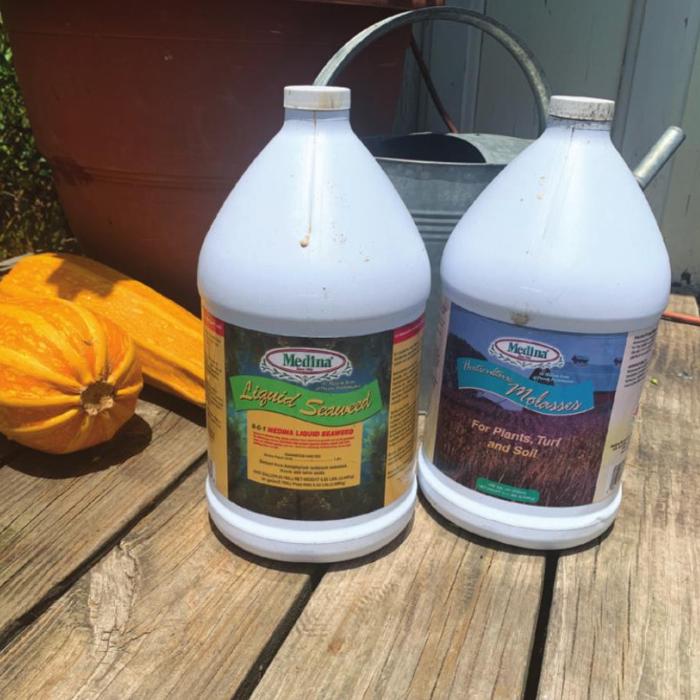
I like to mix two ounces each of apple cider vinegar and liquid molasses in a gallon of water. Water the soil thoroughly. I buy horticultural liquid molasses locally at La Grange Farm and Ranch and D&D Ace Hardware. You can find apple cider vinegar at most grocery stores. Any kind of vinegar will help, but apple cider vinegar has some beneficial probiotics that regular vinegar lacks.
Don’t use the strong 20 percent that you might see for sale in some garden centers. That stuff is a very effective organic herbicide when you mix two ounces of orange oil to the gallon with it. This strong vinegar, sometimes sold as cleaning vinegar, will kill just about all broadleaf weeds. It will also kill grass down to the surface, but grass will regrow after an application.
Lots of folks new to gardening ask how often they should water. There is no easy answer. All plants require different amounts of water. In these hot and dry conditions, I use the finger test to tell when I need to water. Stick your finger as far as it will go into the soil. If no dirt sticks to your finger when you pull it out, you need to water. You must also pay attention to the health of the plants. If they look wilted in the evening, they definitely need water. Plants that look wilted during the intense heat of the day are not necessarily thirsty, though.
As plants get stressed in the heat of the summer, insect damage also becomes a major problem. I have found that foliar feeding with liquid seaweed really helps my plants withstand insect damage. Liquid seaweed increases the level of carbohydrates in plant leaves. This promotes lush, green foliage, and makes the foliage harder for insects to eat. I mix liquid seaweed and water at a ratio of two ounces to a gallon. Mix in a pump up spray and spray foliage in the evening as the sun is about to go down. Never foliar feed during the day because droplets of water on plant leaves act like tiny magnifying glasses. You can end up with major sunburn on the plant leaves if you spray on a sunny day.
Oddities in the Garden
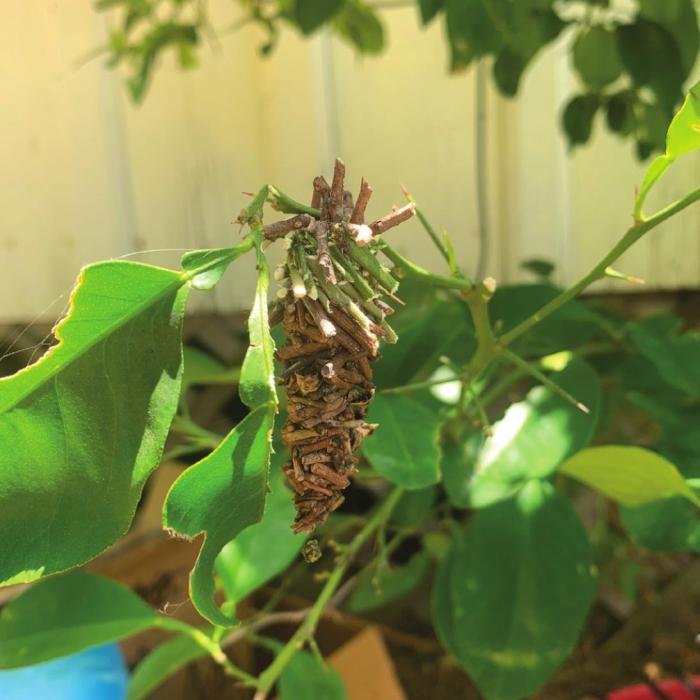
I ran across an unusual bug yesterday in the garden – a bagworm moth caterpillar. These critters make a bag-like cocoon and camouflage it with tiny sticks. They are not really that beneficial, since they like to eat the foliage of ornamental and fruit trees. I found this one hanging on a Kaffir lime tree that I’m growing in a pot.
If you have any questions or comments about gardening, please email me at andy@fayettecountyrecord.com.