


The Ultimate Mail Order Package & Other Tales of Old Round Top

-
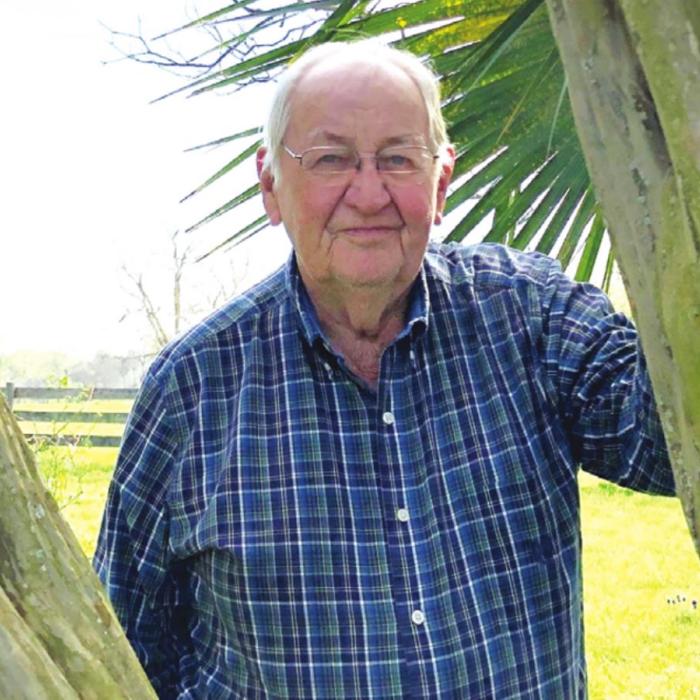 Cordell Levien of Round Top is framed by timeworn trunks of a crepe myrtle planted by his parents nearly a century ago. In the late 1930s, Cordell recalls traveling to La Grange with his father, Alfred. When Mr. Levien stopped to see his friends in the courthouse, they asked if the youngster he had by the hand was his grandson. “No,” Alfred proudly told the sheriff and the judge, “This is my youngest son, Cordell.”
 -
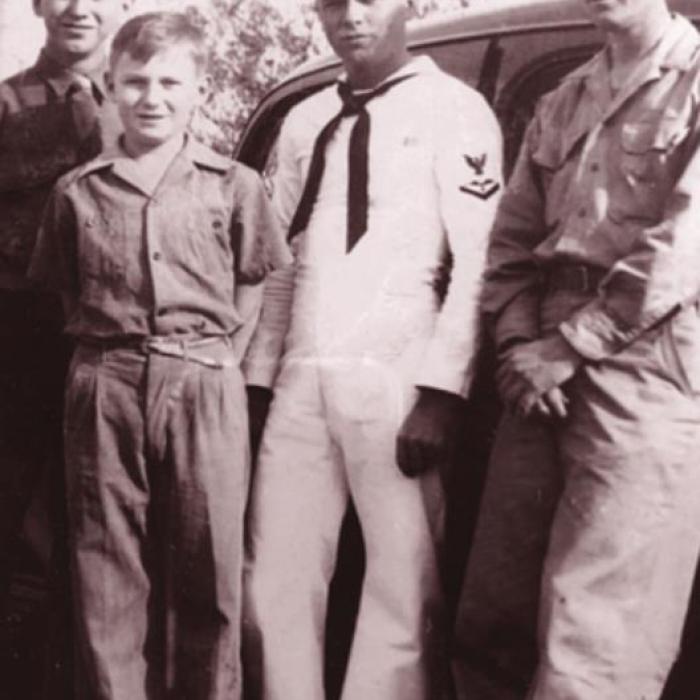 Cordell’s three older brothers served their country in World War II. The Levien brothers in about 1945 (left to right) are: Hershel, Cordell, Leroy and Kenneth.
 -
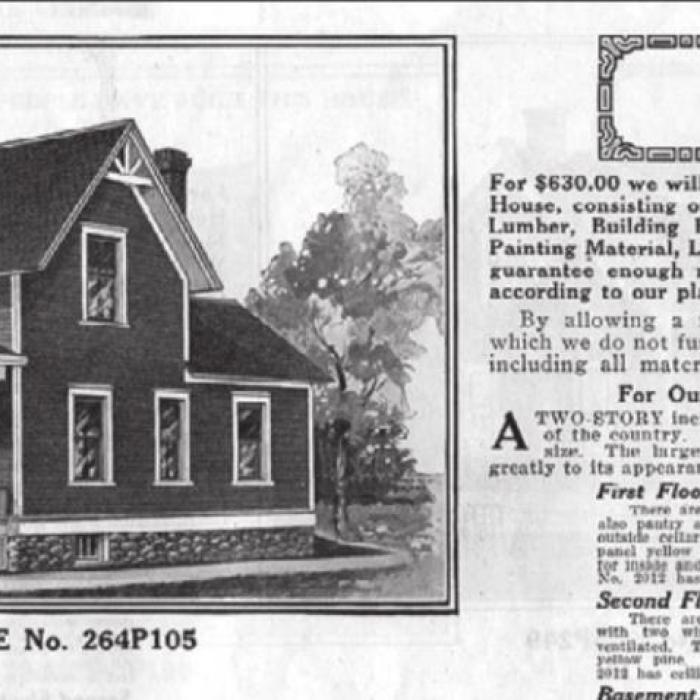 For generations, rural families placed orders for items not readily available locally. Cordell’s father, Alfred, was one of them. In 1916, he ordered a new home from Sears, Roebuck. The unassembled kit with instructions and materials arrived on a freight train at nearby Carmine. Alfred built his new home on one acre in the A.E. Baker League, across the road from the 96.5 acres in the James Winn League, where Cordell lives now. It was once the home of his Levien grandparents. The photo of the Levien’s Sears,
 -
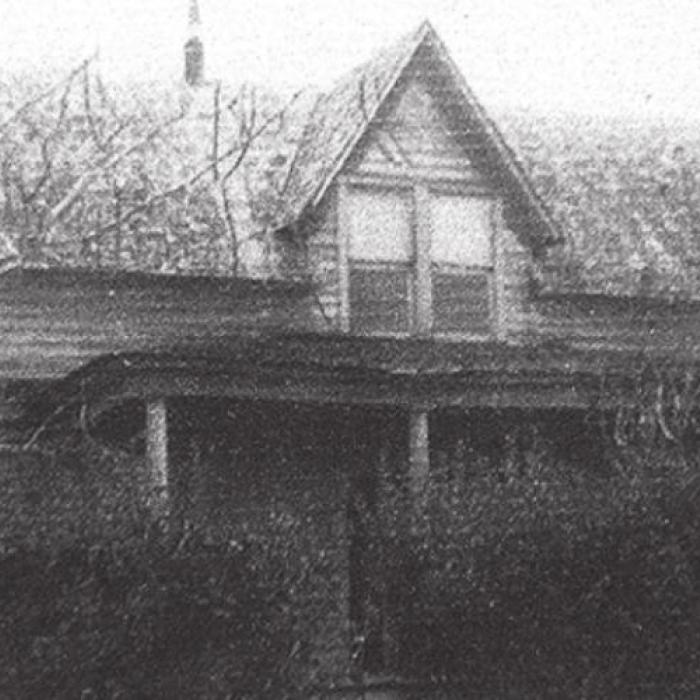 For generations, rural families placed orders for items not readily available locally. Cordell’s father, Alfred, was one of them. In 1916, he ordered a new home from Sears, Roebuck. The unassembled kit with instructions and materials arrived on a freight train at nearby Carmine. Alfred built his new home on one acre in the A.E. Baker League, across the road from the 96.5 acres in the James Winn League, where Cordell lives now. It was once the home of his Levien grandparents. The photo of the Levien’s Sears,
 -
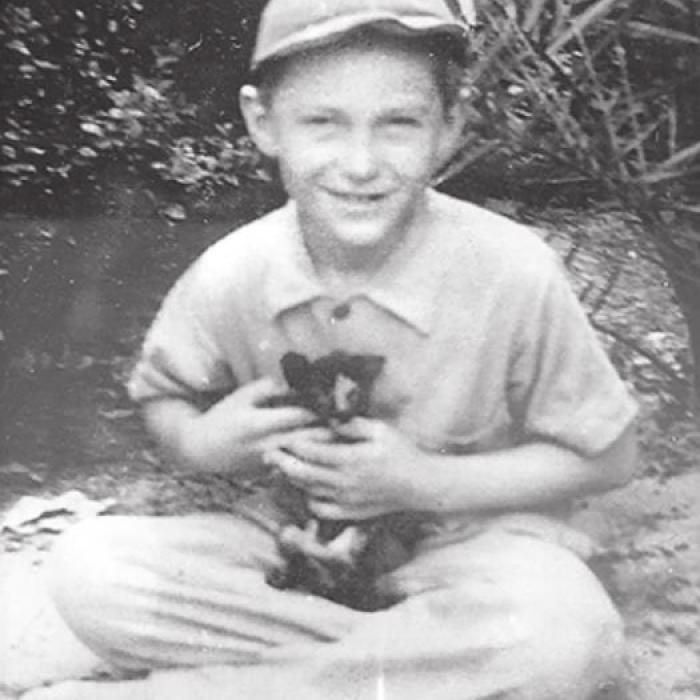 Cordell always has been naturally curious. In 1944, Texon Drilling Company moved a rig into the fi eld behind his parents’ house to drill a wildcat oil well. One day when the metal structure was covered in ice from a storm and very treacherous, he and a friend played all over the rig. He still marvels that neither he nor his pal was hurt.
 -
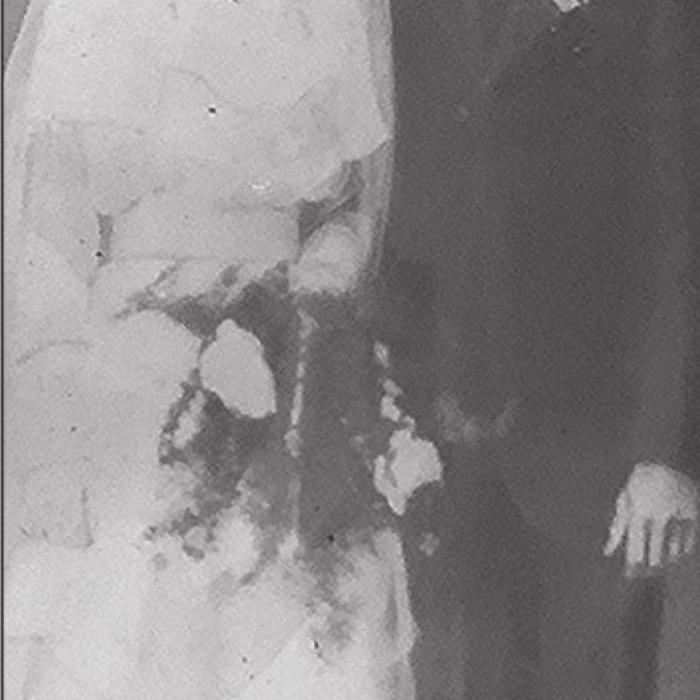 Cordell’s father, Alfred, a second-generation Round Top native, married Adele Ander on June 27, 1917. Cordell credits his father with the innate ability to analyze a situation and come up with a logical answer that could be relied upon.
 -
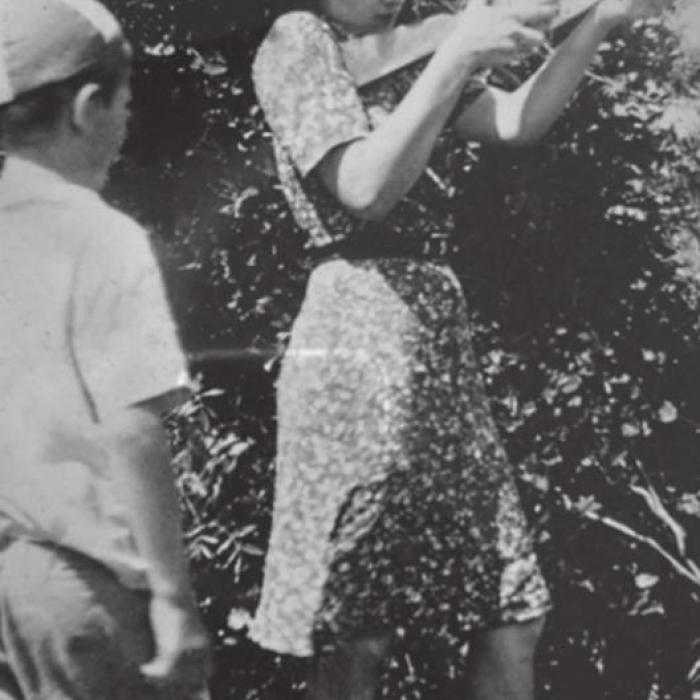 Cordell spent many happy hours plinking tin cans and homemade paper targets with the air rifl e that his sister, Novie, bought him in 1941. When Novie married and moved to Chicago in 1942, Cordell missed her a great deal.
 -
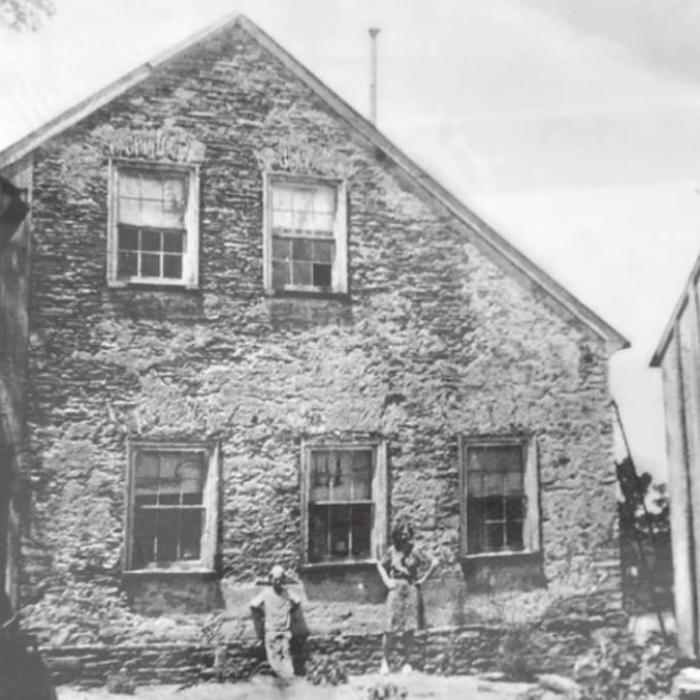 Cordell’s maternal grandparents, Carl and Caroline Ander, lived adjacent to the Rummel House in Round Top. Mr. Ander, who had served in the German military, came to America seeking the freedom of a new life. In 1937, when Cordell was sick with a fever, his grandfather, who never owned a car, walked out to the farm to check on his grandson. He left a $1 coin for Cordell, who has never forgotten that kind gesture. Like most people in those days, Cordell’s grandfather Ander had very few dollars to call his own
When Alfred Levien proposed to Adele Ander in 1916, he made her a solemn promise.
“My father told his future bride, my mother, that she wouldn’t have to live with his mother and sisters after they were married,” Cordell Levien says.
In 1916, Alfred placed an order with Sears, Roebuck and Co., which was headquartered in Chicago, Ill., for Modern Home No. 264P105. According to the catalog description, the two-story, five-room house measuring 22x27.6 feet was inexpensive, just right for a family of moderate size. Although the plans included a large 20x5-foot porch with colonial columns, indoor plumbing wasn’t taken into consideration.
A Package Deal
The millwork, siding, flooring, finishing lumber, building paper, pipe, gutter sash, weights, hardware painting material, lumber lath and shingles – all pieces of the Levien’s new house – were delivered as freight to the rail station nearest to the family’s place northwest of Round Top. That was Carmine. Alfred hauled the materials, plus the instructions, home in a wagon pulled by a team of mules.
The house kit price tag was $630. Sears, Roebuck estimated that the total cost would run about $1,233 ‘allowing a fair price for labor, stone, brick and plaster that were not part of the package.’
“I’m sure my father had to borrow money to buy the house kit, too,” Cordell says.
Between 1908 and 1940, it is estimated that Sears, Roebuck sold more than 70,000 kits representing 370 different designs in a wide range of architectural styles and sizes across the U.S.
“Dad was reluctant to build the new house on the 96.5 acres he purchased for $1,822.77 from his father’s estate because his sisters and mother carried the note. He swapped his neighbor a cultivator for one acre of land next door. He owned that acre where he built the house free and clear.
“My parents were married on June 27, 1917. My father made good on his pledge to my mother. They moved into their new home.
“I was born in that Sears, Roebuck house in 1933, with Dr. A.W. Kieke of Round Top attending my mother,” Cordell says. He and his older siblings, Kenneth, Virginia, Novie, Leroy and Herschel, grew up there.
Cordell was named in honor of Cordell Hull, who was appointed U.S. Secretary of State during President Franklin Delano Roosevelt’s administration in 1933. An American politician from Tennessee, Hull served 11 years, longer than any other secretary of state in U.S. history. He also was awarded the Nobel Peace Prize in 1945 for his role in establishing the United Nations.
Cordell recalls as a boy listening to his father talk politics on Saturday afternoons in Round Top. Sometimes Alfred and five or six other local men would meet in the beer joint on the side of Emil Schwartz’s store or gather at Robert Richter’s grocery store. The consensus was that President Franklin D. Roosevelt’s New Deal was positive because it gave people an opportunity to earn some money.
“They’d have a beer or two while they talked, but never got drunk. Although the men might have got a little tipsy, it was a social gathering. After all, each one had to get home to their farm to do the evening chores: slop the pigs, milk the cows, gather the eggs,” Cordell explains.
German Immigrants
Cordell’s great-grandfather, Henry Levien, emigrated from Germany about 1850. He started hauling freight with a team of mules and a wagon between Washington, Austin and Fayette counties and Galveston. During the Civil War, 1861-1865, he moved Texas cotton to Mexico markets, again with a team of mules and a wagon. According to family lore, on one trip, robbers attacked him and stole the money he had earned.
While many of the German families Henry had immigrated with settled in Washington and Austin counties, he moved on. The family settled on Cummins Creek close to Round Top, where there were abundant forests of post oaks that could be cut to make rail fences.
In 1852, Pastor Otto Haun, the first Lutheran minister assigned to Fayette County, performed the marriage of Cordell’s great-grandfather Henry and Margurite Duerr, an immigrant from Switzerland. The couple later acquired and farmed part of the Taylor Plantation at Round Top.
Their son, Charles, was Cordell’s grandfather. Charles (Charlie) and his wife, Selma, were farmers, too. They purchased some of the family’s land and raised their children, who included Cordell’s father, Alfred.
Cordell’s Dad Big on Education
An outstanding student at Round Top School, Cordell’s father went on to study at Blinn College in Brenham. He later was selected from among all the eligible Fayette County students to attend Southwest Texas State Normal School in San Marcos. Alfred was pursuing his training to be a teacher when his father died in 1909.
Alfred accepted responsibility for returning to the farm to care for his mother and unmarried sisters. Although he tried to teach for several terms, he found he needed to focus on the farm work. Alfred never completed his higher education, but maintained a keen appreciation for education, especially in Round Top where his children also went to school.
A glimpse into local education comes from a classified ad in the Sept. 11, 1919, edition of The La Grange Journal. ‘Teacher wanted – Assistant teacher for Round Top School; term eight months, salary $400 (annual). Applicant will please communicate with F. Kneip Jr., Round Top, Texas.’
Six years later, in May 1925, a news article in The La Grange Journal praised the school’s progress. It read in part, ‘No one will challenge the fact that a great deal was accomplished. No one could overlook the hearty cooperation of the patrons and children. Especially the children from large to small are to be complimented for their good attendance and good work. Even though they had to labor under crowded conditions, they are cheerful, and they are working for a better school next year.’
At the end of August the same year, John Marburger, who was in charge of the school, told The La Grange Journal that the school had been enlarged and, by a vote of the taxpayer, the school fund had been supplemented. Instead of two, three teachers would be employed for that term and the cramped conditions of the past had been eliminated.
In May 1934, Cordell’s father was elected president of the Round Top School trustees, while Dennis Etzel served as secretary. Willie Renck was the third member of the board. Teachers for that term were: John G. Banik, principal; O.A. Fiest, intermediate school; and Lona Braun, primary school.
In 1937, the board approved the purchase of the old Rev. Adam Neuthard home for $260.03. The property, which the Lutheran minister had erected in 1866, stood smackdab in the middle of the school’s footprint. Before the school board acquired it, Rev. Neuthard’s house had stood empty for decades following his death in 1902. Cordell remembers the dilapidated old two-story structure well.
“We were forbidden to enter it. My parents said it was haunted, but I think that was just to keep us kids away. I explored it anyway. The inside of the house was just the way Rev. Neuthard had left it decades before. His clothes still hung in the closet. I remember seeing many, many beds and understand that Rev. Neuthard had once run his own parochial school in his home.
“I was sorry to see the house torn down in 1938, but the school board didn’t have much choice. They needed the space for a playground,” he says.
Blood’s Thicker Than Water
Cordell’s father was a driving force behind the ‘grouping’ of small area schools in northern Fayette County in 1941.
“Some of the one and twoteacher schools came to Round Top including Bell Settlement, Haw Creek, Hills, Nassau, Nechanitz, Quade, Rock Hill, Round Top, Waldeck, Walhalla and Warrenton, Cordell explains.
“Our buildings weren’t much more than glorified chicken coops. Several of the one room buildings were moved to the Round Top School. We had four grades in one building, three in the next and three more in the third building. A fourth building became a lunchroom,” he recalls.
Others such as La Bahia, Boundary and Ledbetter were grouped at Carmine, which had a much nicer school than Round Top at the time. However, Carmine did not have as many students as Round Top.
After the Round Top-Carmine consolidation took place, Cordell recalls being very interested in the pretty girls from Carmine who started coming to his school. At that time, more buildings were added at Round Top to accommodate the influx of students.
“When our school began offering 11 grades, I skipped from the second to the fourth. I completed all my schooling there, graduating from high school 70 years ago this month, May 2020.”
In August 1941, Cordell’s father tendered his resignation as a Round Top School trustee for personal reasons. He wasn’t fed up and he wasn’t ill. Alfred made the tough decision to put the needs of his extended family first.
“Nobody can eat dirt. You may own land, but you have to raise something on it that you can eat in order to survive. A family member had such a poor farm that getting a paying job as a bus driver for the consolidated school was an answer to his family’s prayers. Dad resigned from the school board so there would be no perceived conflict of interest,” Cordell says.
It must have given Alfred great satisfaction to see the Round Top-Carmine Independent School District formed in 1944 even though he was no longer at the helm.
Banik’s Legacy
One of Cordell’s teachers, Round Top School Principal John G. Banik, was the true guiding force creating a better school system by merging the small schools in the area. After serving as principal for 11 years, he became superintendent when the county board of trustees formed a rural high school district that included the Round Top School in 1944. He served in that capacity for another 10 years.
After resigning from the Round Top-Carmine ISD, Mr. Banik accepted a teaching job in La Grange.
“Some of my cousins in La Grange told me Mr. Banik gave easy tests, but he was too strict. I was reminded of what Mr. Banik had told our class years before when he had taught me, ‘It’s a great and glorious feeling to know a test is coming up and you know the answers.’ Mr. Banik demanded his students pay attention,” Cordell says.
Mr. Banik would be proud. Cordell always has excelled at paying attention. Whether he is sharing family history that his father told him or recounting memories of visits with old-timers like his Grandfather Ander, Cordell is a remarkable storyteller.
That makes sitting at his table and listening to Cordell pass them along a privilege.
If you’d like to read more of Elaine’s stories, visit www.elainethomaswriter.com/blog/and sign up to receive new posts twice a month. You can also call Elaine at (979) 263-5031.
Stories I’ve Been Told
A Monthly Feature by ELAINE THOMAS