


The Squash Vine Borer Blues, But I’ve Got Plenty of Potatoes
-
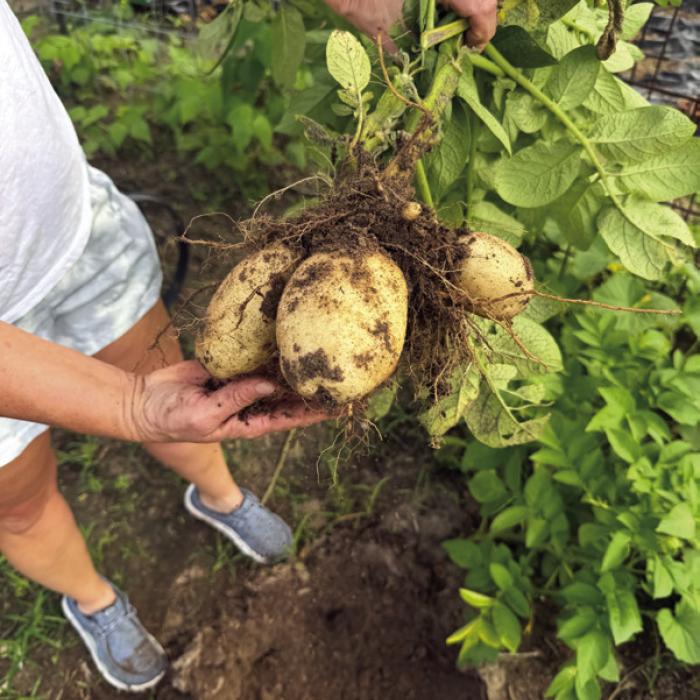 In more positive news from my garden, Janessa and I harvested a bumper crop of potatoes last weekend.
 -
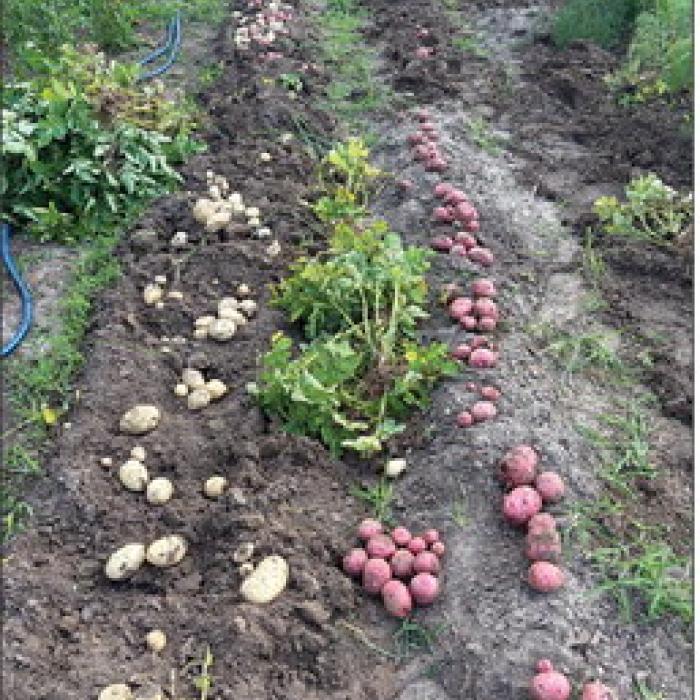 We planted a mix of white Kennebec, red Pontiac and Yukon gold potatoes.
 -
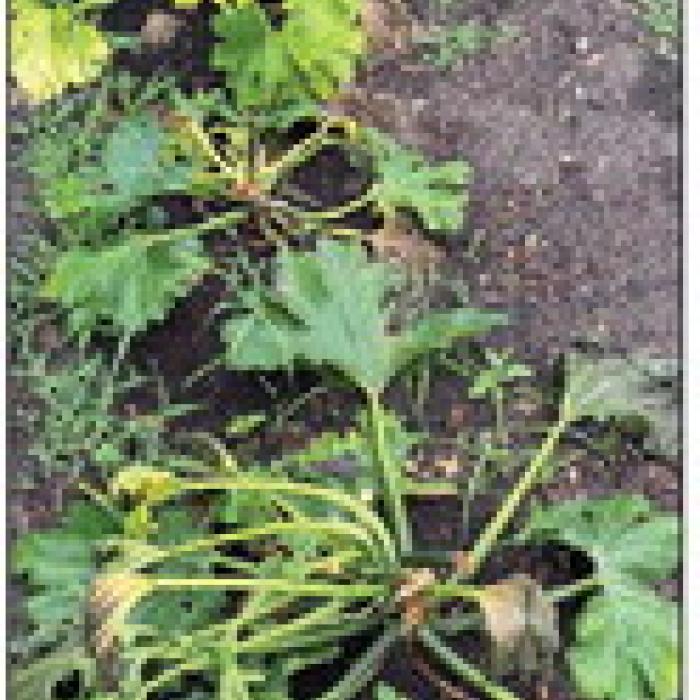 These zucchini plants have just about hit the dust after the squash vine borers moved in.
 -
 The Squash Vine Borer Blues, But I’ve Got Plenty of Potatoes
My garden has got the squash vine borer blues.
Everything else is thriving. But my squash looks like it got zapped by a space laser. I’ve decided there’s no point in trying to grow most varieties of squash with a few exception – which I’ll get to later.
This spring I planted a zucchini variety called ‘Inizia.’ It’s an heirloom that supposedly has some traits of a commercial- type zucchini – compact and productive. An early frost zapped my first planting. So I had to re-seed, which set production back a couple of weeks. By the time they started fruiting, the squash vine borer (SVB) moved in. I had about two weeks of production until this week. The plants are all but dead now.
Fayette County, unfortunately, lies in a part of the world where the SVBs thrive. These insects are a type of moth that looks sort of like a red and black wasp. They emerge as adults in the spring. The females lay eggs near the base of squash plants. Larvae hatch from the eggs and bore into the hollow stems of squash plants. They eat the plant from the inside out. There’s no good way to control them.
The organic insecticide BT ( Bacillus thuringiensis) can kill the larvae, but if you spray the outside of the plant, the larvae remain protected inside the stem. Some people find success injecting BT into the stems when the plants are young. Others wrap the stems in foil to keep the larvae out. Some people surgically remove the larvae by gently slicing along the stem and then burying it in soil. All of these methods have been hit-ormiss in my experience.
I’ve come to the conclusion that the best way to deal with SVBs is to plant squash varieties resistant to them. The best one I know of is ‘Tatume.’
Unlike most squash varieties, Tatume does not have a hollow stem. This makes it basically immune to vine borers. Its fruits are green and round. Pick them when they get to the size of a baseball for an excellent zucchini substitute. I like to cut them into wedges and grill them. Tatume is a large vining plant, so give it plenty of room. You can also grow it on a trellis. They get kind of seedy once they reach softball size. Tatume fruits eventually grow into a small, pale-orange pumpkin with a hard rind. They can be used as a winter squash when they get large, but the flavor is sort of bland in my opinion. Butternut squash are a better winter squash variety, and they are somewhat resistant to vine borers.
Other vine borer resistant varieties include Seminole pumpkin and the Italian variety known as Tromboncino or Rampicante.
Elsewhere in the garden, Janessa and I harvested a bumper crop of potatoes last weekend. The batteries in my electric scale were dead, so I wasn’t able to weigh my harvest. But I estimate it was about 50-60 lbs. – not too bad considering I planted about 7 lbs. of seed potatoes. I could have let them grow another week or two. The cooler weather this spring seems to have helped. But I needed the space in my garden for a patch of sweet corn.
We planted a variety called Buhl sweet corn on Tuesday just before the rain arrived this week. It’s supposed to be ready for harvest in about 75 or 80 days.