


Seaweed, Molasses & Cider Vinegar: A Potent Mix
-
 Seaweed, Molasses & Cider Vinegar: A Potent Mix
 -
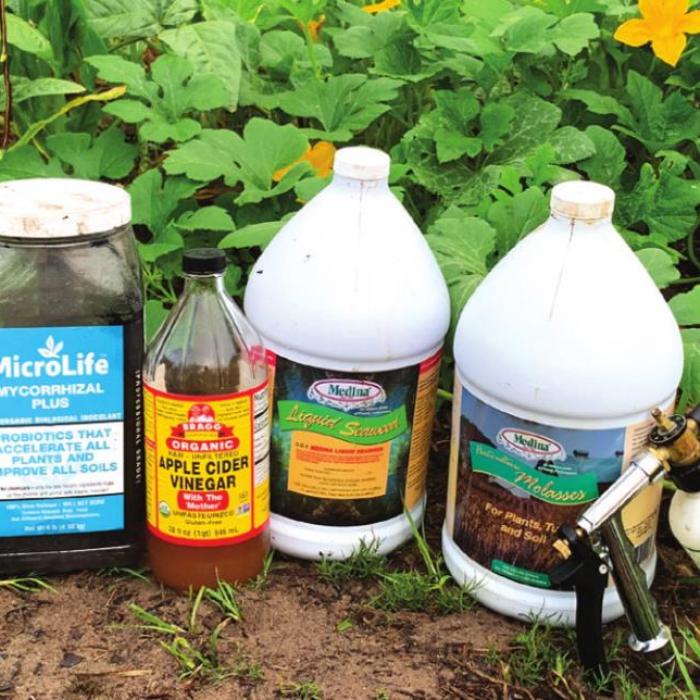 Essential organic gardening supplies: (from left) Mycorrhizal Plus by MicroLife, apple cider vinegar, liquid seaweed, liquid molasses and a hose-end sprayer to apply the vinegar, seaweed and molasses. In case you’re wondering, they’re hanging out next to my three sisters bed, which is growing Thai yard-long beans, a popcorn variety called “Strawberry,” and “Tatume” squash. Photo by Andy Behlen
Many of you are planting your fall garden right now (or at least you should be). Now is a good time to start applying what I believe is the backbone of a good organic gardening program - liquid seaweed, molasses and apple cider vinegar.
Most gardeners use some kind of balanced fertilizer, hopefully an organic one. Fertilizers come with an N-P-K label that describes the amount of nitrogen, potassium and phosphorus they contain. But plant health is so much more than N-P-K. Conventional fertilizers contain chemical salts that eventually burn away organic matter in the soil. Some organic fertilizers, especially nitrogen-rich products, can also do this if applied too heavily or if the soil does not already contain ample organic matter.
Of course, your soil needs organic matter and fertilizer for your plants to produce. You will be able to grow crops with just those two ingredients. But your plants will thrive, your fruits and vegetables will taste better and your flowers will explode with color by adding a few extra ingredients.
Most liquid seaweed products are made from kelp. Some of you health-conscious readers may know about the benefits including seaweed in your diet. These plants contain a myriad of nutrients, plant hormones, immune boosters and antioxidants that benefit health. Research indicates that seaweed promotes a healthy digestive tract by stimulating the good bacteria in our gut that helps us digest food. It also boosts our immune systems by stimulating production of white blood cells. Seaweed does the same thing in the soil. It stimulates microbial life. Those microbes are vitally important because they transform nutrients in the soil into forms that our plants can use. It also improves immune systems in plants. Some gardeners who have been using conventional fertilizers for years find their soil has become less productive. They get their soil tested and discover it has plenty of N-P-K, but their plants don’t thrive. Likely, the problem is that their soil is a moonscape barren of microbial life. The nitrogen, potassium and phosphorus are there, but the plants can’t access it. Use seaweed to build life back into the soil.
Seaweed works great as a germination booster as well. Try soaking seeds in liquid seaweed for about 10 minutes before planting. Do an experiment by soaking one batch of seeds and not soaking another. Plant them side by side and watch. You will be amazed at the results.
Foliar feed with seaweed by mixing two ounces to a gallon of water and spray the mixture all over your plants, including the bottom side of leaves. Do this in the early morning or late afternoon on a humid day for the best results. The best time is when a morning dew covers the leaves. Feeding in this way increases sugar levels in the plants, making the foliage more resistant to insect predation and making your fruits and vegetables taste better. It contains a lot of copper as well, which is an important nutrient used to fight off plant disease. You can buy elemental copper products for the garden, and some copper products are labeled for organic use. But elemental copper can be easily over-applied and cause even more problems in the garden that are hard to fix. You will never get too much copper in your soil from using seaweed.
Molasses serves a similar purpose. It contains sugar and carbon that provide a quick boost to the beneficial bacteria in the soil. You can use liquid molasses sold at garden centers mixed two ounces to a gallon of water, or you can apply dry molasses. You can find dry molasses as a feed additive at many farm and ranch stores. Apply dry molasses at a rate of 10-20 lbs. per 1,000 sq. ft. It works great on turf grass as well.
You can foliar feed with liquid molasses, but I more often use it as a soil drench. It seems to repel fire ants for some reason. It doesn’t kill ants, but I’ve found they tend to leave areas where I applied molasses in either liquid or dry form. It also helps eliminate nutsedge in the garden. Nutsedge is one of the main weeds in my garden. Molasses slowly kills it out.
Apple cider vinegar makes molasses more active in the garden. Add it to the molasses mixture at a rate of two oz. to a gallon of water. You can combine all three and apply at the same time, but I prefer seaweed for foliar feeding and molasses for the soil. Pure vinegar is a very effective organic herbicide, but it won’t hurt your plants at the diluted rate I recommend.
Buy 10 percent vinegar, sometimes called pickling vinegar, at grocery stores to use as an herbicide. Pour it straight into a pump-up sprayer and spray on anything you want to kill, especially on a sunny day. Adding an ounce or two of orange oil to a gallon of vinegar will make it even more effective at killing weeds.
Applying seaweed, molasses and applie cider vinegar doesn’t work overnight. It takes a few applications every other week or so to begin seeing results. If you are a new gardener, or if your soil is particularly poor, perhaps from past use of chemical fertilizers and toxic pesticides, there is a great product available locally that can help speed up the process of bringing your soil back to life. Mycorrhizal Plus by the company MicroLife contains 11 strains of mycorrhizal fungus along with 65 strains of other beneficial microbes and bacteria.
Mycorrhizal fungus is one of the most important soil organisms for plant health. The fungus has a symbiotic relationship with plant roots. The threads of the fungus cover the roots and act as a spear, breaking up the soil as the roots push deeper. It transforms nutrients in the soil into forms the plants can use. If you mulch with wood chips as I recommend, you will eventually introduce mycorrhizal into your garden, but that takes time. This product gives you a quick jump start. Best of all, it’s available at Sutherlands in La Grange. You can buy liquid molasses and liquid seaweed at many local garden centers and feed stores. La Grange Farm and Ranch sells both, and they also sell dry molasses. If you decide to pick up any of these products locally, tell them you read about it in the Fayette County Record.
If you have questions or comments about gardening, send them to andy@fayettecountyrecord.com.