


If These Walls Could Talk
A Look Back at the Legendary Swiss Alp Dancehall and the Family That Ran It

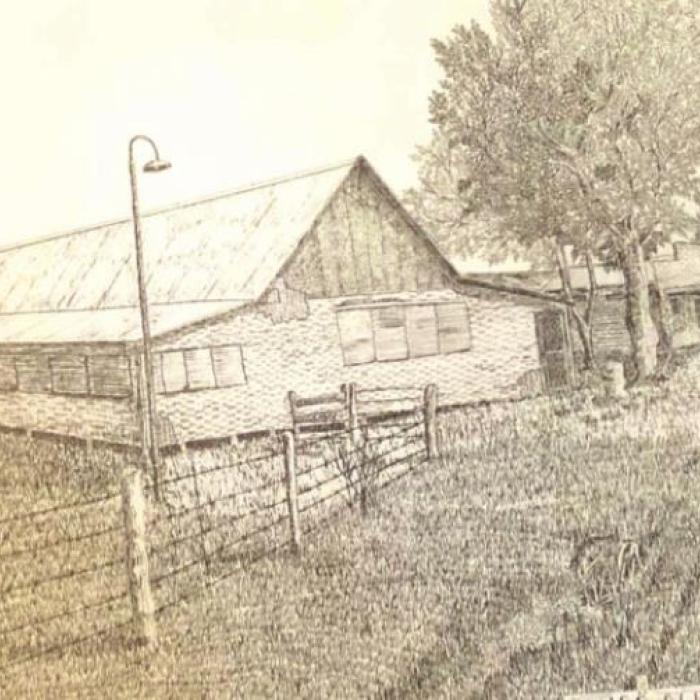
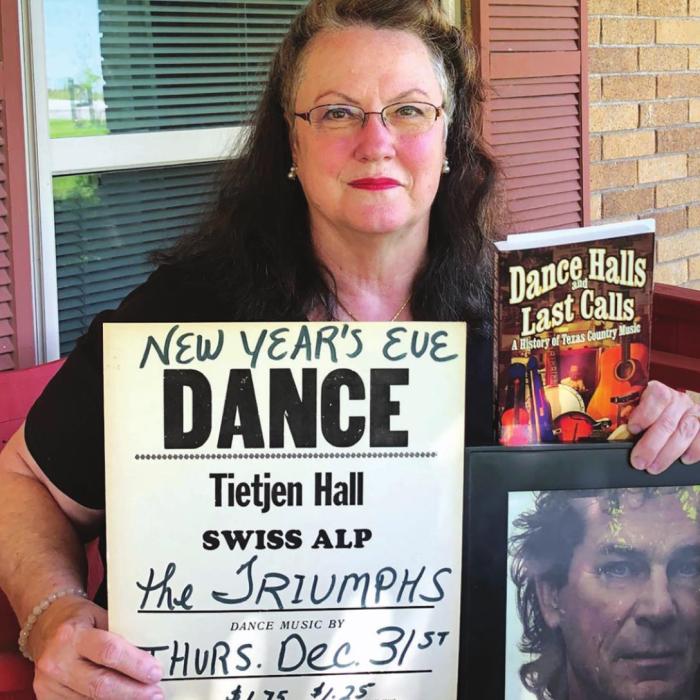
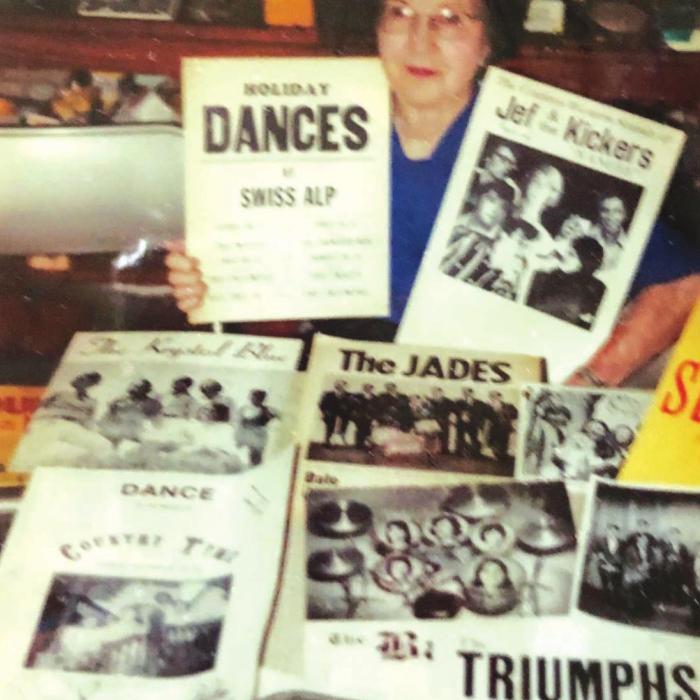
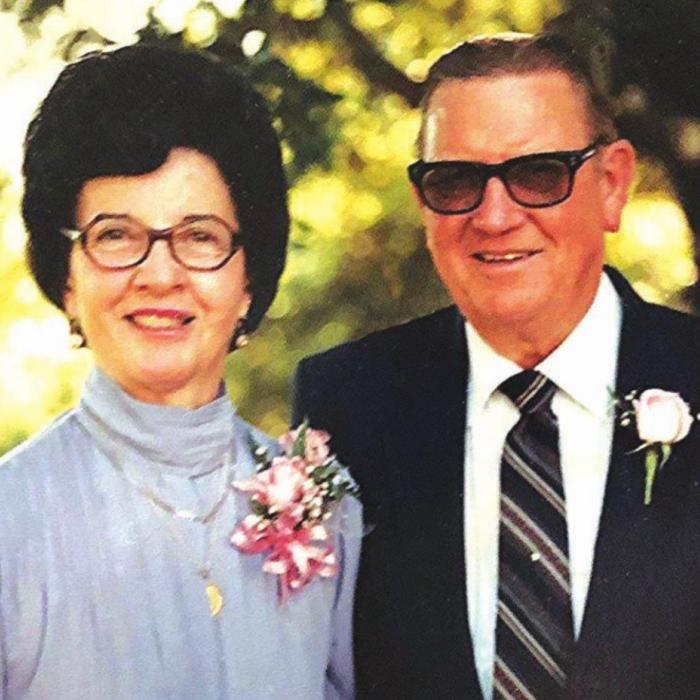
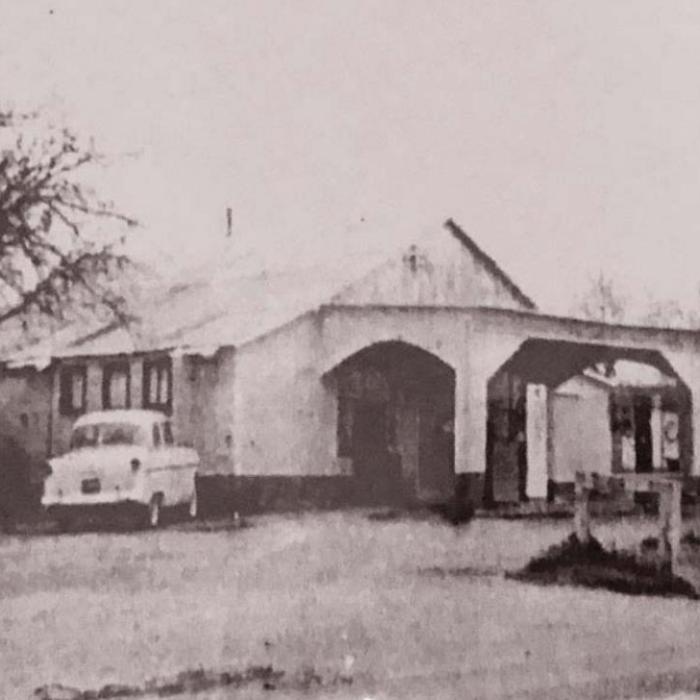
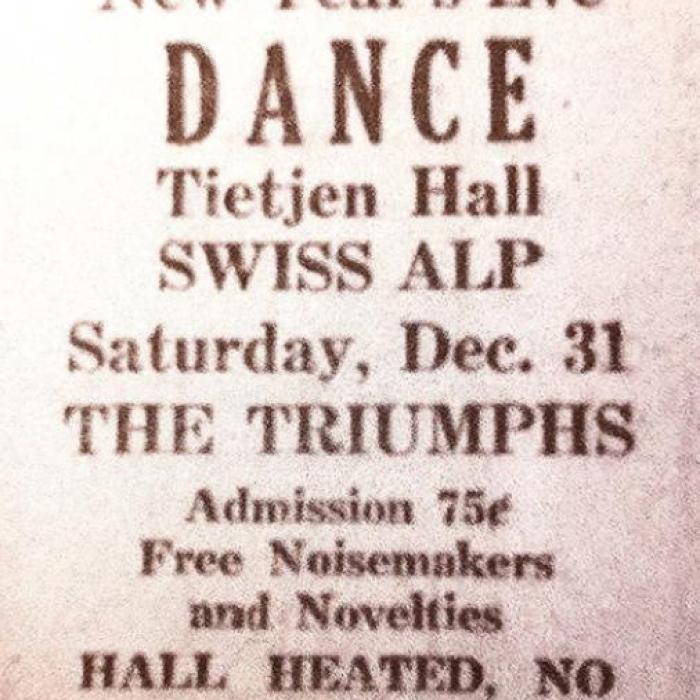
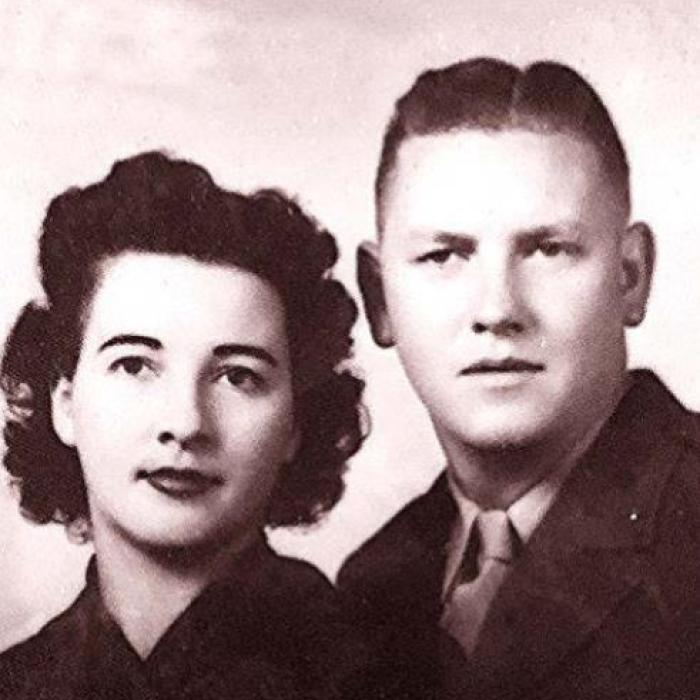
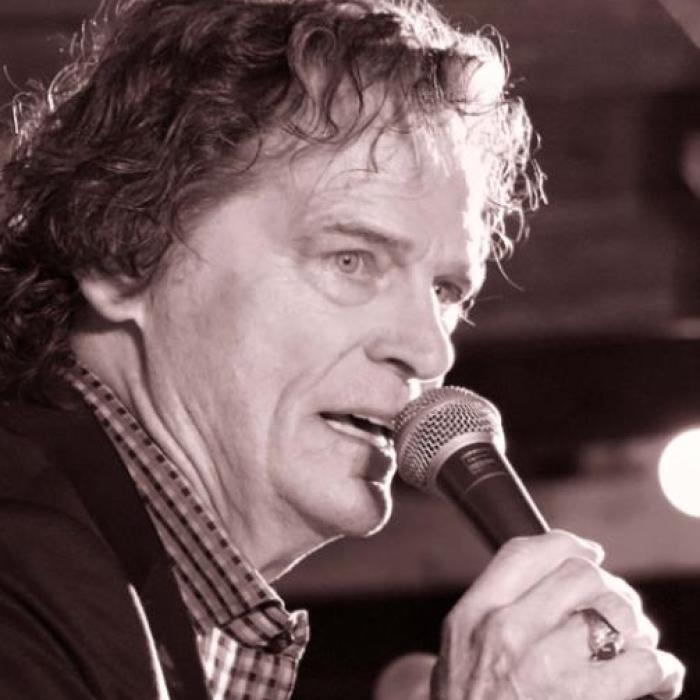
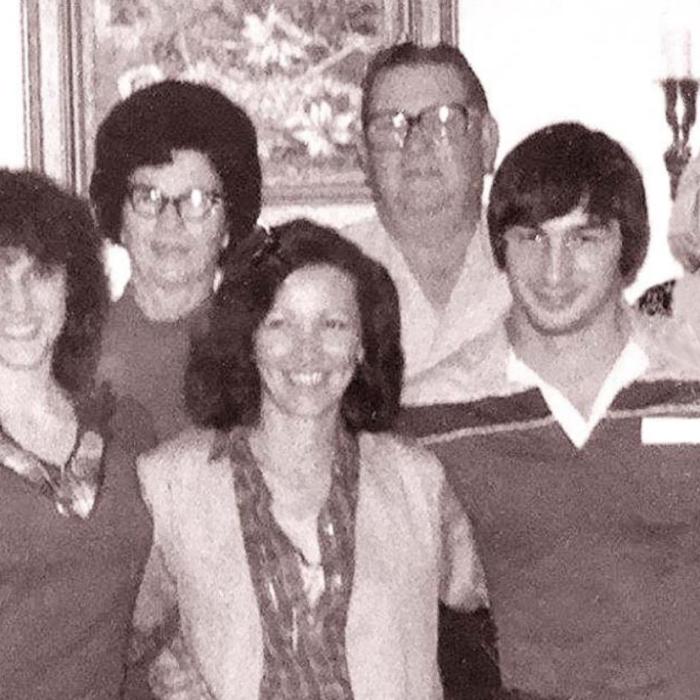
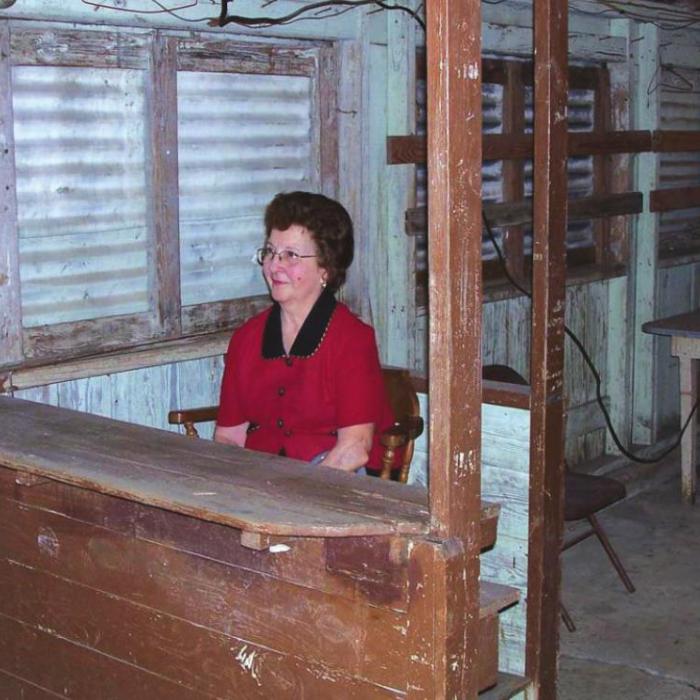
Also known as Tietjen Hall by locals, the old wooden dancehall was a cornerstone in the community for a century. In addition to dances, wedding showers, reunions and church events were held there. The Swiss Alp, Freyburg and Bluff Home Demonstration Clubs scheduled meetings and special family events. In 1945, educational courses on topics such as egg production took place. The Swiss Alp Farm Bureau had regular meetings in the hall with guest speakers addressing issues such as the operation of the new rural telephone cooperative in 1952 Although Glynis Tietjen Porter has a wealth of Swiss Alp Dancehall memorabilia, it’s memories of growing up in the iconic family business that give her the greatest pleasure. Her grandparents, Henry and Anna Tietjen of Rutersville, bought the building and store from August Bruns in 1933. Her parents, Egon and Marian Tietjen, met at the dancehall when her mother played the piano for the jazz band of her dad, Albert H. Lindemann. Egon and Marian purchased the hall in 1943 and made it famous. The family sold the hall and store in 2005. Marian Tietjen had a hunch that the 1960s rock and roll might appeal to young Fayette County and area dancers. Was she ever right! Mrs. Tietjen booked dozens of bands over the years for Saturday night shows that were held even on Christmas and New Year’s Day. Only a handful was a disappointment. From the day they met, Egon and Marian Tietjen’s world revolved around music and Tietjen Hall, which later was known as the Swiss Alp Dancehall. It was a favorite destination for young people from Fayette County and beyond, especially during its heyday in the 1970s. After Egon Tietjen was discharged from the service in 1946, he and Marian enlarged the old hall to accommodate a maximum of 1,400 people. They also tore down the old store and built a new one. The Triumphs played at the Swiss Alp Dancehall on New Year’s Eve on Dec. 30, 1960. Admission was 75¢ per person. Egon Tietjen was born in 1919 and raised in Rutersville, while Marian Lindemann Tietjen, who was from Willow Springs, was born in 1920. Marian was playing the piano in her father’s band at a Swiss Alp dance when they met. After their marriage in 1940, the young couple ran the Hill Top Cafe north of La Grange before buying the Swiss Alp Dancehall and general store from his parents. While Egon served in Europe during World War II, Marian lived with her inlaws, Henry and Anna Tietjen. Following his return, Egon and Marian worked side-by-side to operate the hall, store and farm. Egon died in 1995 and Marian passed away in 2012. A handwritten letter that B.J. Thomas sent Marian Tietjen in 1964 reflects the special relationship between the entertainer and the owners of the Swiss Alp Dancehall. When Mrs. Tietjen celebrated her 90th birthday in 2010, B.J. Thomas had planned to drop by and surprise her when he was in La Grange performing at the Fayette County Fair. Unfortunately, his plane ran so late he was unable to do so, but he sent Marian an autographed photo. It brought a smile to her face, reminding her of the old days at the Swiss Alp Dancehall. Photo courtesy of Gary McKee. Egon and Marian Tietjen (back row) passed their strong work ethic on to their children: Glynis, Brenda, Darryl and Jerlyn. This family photo was taken about 1977. Shortly before the hall closed in the early 1980s, Mrs. Tietjen still was taking her place at the door, greeting dancers and taking admission. Photo courtesy of Gary McKee
Stories I’ve Been Told
A Monthly Feature by ELAINE THOMAS
No reputable chronicle of Texas dancehalls would dare overlook Swiss Alp. Through the hard work of the Egon and Marian Tietjen family, the old wooden structure between Schulenburg and La Grange has earned its rightful place in state history.
“The mid-1960s through the early ‘80s were the big years for the Swiss Alp Dancehall. There would be 700 to 800 young people at a dance on a Saturday night. Even on a slow night, the crowd would be 100 to 200 people,” says Glynis Tietjen Porter, who grew up in that era and on the premises.
“The hall, which we think dates back to the late 1800s, wasn’t built on a slab, so that old wood floor would bounce. Dad always said the hall had good bones, though. Both the floor and the rafters were original. They never had to be replaced in the 72 years our family owned the building.”
Living the dream
Growing up, Glynis and her siblings, Brenda, Jerlyn and Darryl, lived, what to their teenage friends, seemed like a dream existence.
“It was cool to go to a dance with 700 people. It was especially cool when your parents owned the dancehall right next to our house and we got to meet all the entertainers!” Glynis says.
One of the best-known entertainers was renowned country and western artist Bob Wills. He was paid $300 to perform two 45-minute appearances on June 28, 1968.
“When Elvis Presley made rock and roll popular, Mom thought that new kind of music might appeal to a young rural crowd, too,” Glynis recalls. “Some people thought of it as “the devil’s music,” but Mom had great foresight. By booking rock and roll bands that the younger generation loved, the Swiss Alp Dancehall became ‘the’ destination on a Saturday night in Central Texas.
“We’d be packed in like sardines in a can. The noise in the hall was loud, especially after the bands started bringing in those big amps.”
A young Houston singer named B.J. Thomas started performing with The Triumphs, a band from Rosenberg, at Swiss Alp in 1960. Their first hit was a remake of the Hank Williams classic, “I’m So Lonesome I Could Cry.”
“Hooked on a Feeling”
Glynis gets a glint in her eye when she talks about B.J. Thomas. Not only was he a heartthrob, but his vocal style that helped him sell millions of records set him apart. His big hits were “The Eyes of a New York Woman,” “Hooked on a Feeling,” “Raindrops Keep Fallin’ on My Head” from the movie “Butch Cassidy and the Sundance Kid,” and “(Hey Won’t You Play) Another Somebody Done Somebody Wrong Song.”
With a huge number of devoted fans, The Triumphs were regulars at Swiss Alp for decades. B.J. Thomas, who struck out on his own, became an international success. Yet he never forgot the Tietjens, who treated him like family.
Other popular entertainers during the hall’s heyday were: The Barons, Telstars, Moods, Velvets, Jades, Traits and Jokers, as well as top national recording artists Roy Head and Johnny Winter. One New Year’s Eve in the 1970s, an enormous crowd of 1,300 people showed up to dance to the music of The Barons.
Get in line – rain or shine
Marian Tietjen sold tickets at the door, while a neighbor stamped the backs of hands. When some regulars got the bright idea of copying her stamp in an attempt to get in free, Mrs. Tietjen outwitted them. She began alternating several different stamps, including a happy face. When certain customers showed up with the wrong symbol stamped on their hands, their game was over.
“My mom loved, loved, loved people, especially young people and they liked and respected her. For Mom, the more people the better!” Glynis recalls.
Although the posters that the family put up every week all over the area didn’t list a time when the dances started, everyone knew it was 9 p.m.
“The last thing my dad did before the doors opened was sprinkle wax so couples could glide across the dance floor. Years before, he had used sawdust. That was like the icing on the cake; we knew when Dad was done, it was almost dance time,” Glynis says.
Each night, there were three 15-minute intermissions with the last slow song at 12:45 before the hall closed at 1 a.m. During the hall’s zenith, bouncers worked every dance. However, Glynis remembers very little trouble.
After the hall’s limited parking quickly filled up, the cars fanned out. In front of the building, they were strung out in each direction on Hwy. 77, as well as down the road to Ammannsville and the Swiss Alp Hall Road.
Some intrepid drivers parked in the pasture and surprise, surprise, after a heavy rain they got stuck trying to get out. Egon Tietjen would head out to his barn to fire up his tractor at 2 a.m. and pull the vehicles out onto the gravel road. The only time he charged for this special service was if it happened more than once to the same driver.
Make mine a Lone Star
Ample cold beer was always available at Swiss Alp as well as several soda water brands. Mr. Tietjen would rush ice for the beer and soft drinks from a big walk-in cooler in the store to the concession stand all evening long. At the same time, he kept an eye out for minors attempting to buy beer.
Glynis remembers gathering beer bottles to collect the 2¢ return offered on each.
During the 1960s, the hall only had wood-burning stoves for heat, but hundreds of bodies in close contact would soon banish the frigid outdoor winter temperatures. On the flip side of the coin, the Swiss Alp Dancehall had no air conditioning. However, the windows opened and if Mother Nature was kind, a cross breeze kept the stifling temperature at a bearable level.
“In the ‘50s and ‘60s, there was a sectioned-off area called the bullpen right next to the stage where the parents and very young children could sit and watch the teenagers dance. They didn’t have to buy a ticket for that,” Glynis says.
She adds the bullpen had disappeared by the 1970s. During that era, Glynis was in style wearing fashionable short skirts and go-go boots to the dances. She and her friends had fun gogo dancing on tables to the music as if Swiss Alp was a New York nightclub.
Several memorable incidents occurred during the 1970s. One night when a young fellow was paying his admission, he asked Mrs. Tietjen if he could ‘streak’ through the hall. At the time, the practice of running through a crowd in the buff was popular. Assuming he was joking, she agreed. A little while later, his personal performance created quite a sensation!
Another time, kids climbed
Another time, kids climbed on the roof and covered the top of the chimney, which sent wood smoke billowing back into the dancehall. Pandemonium reigned briefly as dancers fled the old wooden structure, afraid it was on fire. Once it had been determined that pranksters had caused the smoke, the dancefloor filled up again and the band went back to playing.
Mr. Tietjen built a reputation
Mr. Tietjen built a reputation for making the best tasting chili dogs in Fayette County. They’d sell several hundred at an average dance. Lukas Bakery in La Grange baked the delicious hotdog buns. Dancers still remember how good they were, especially after several hours on the dance floor.
What phenomenal people!
Most families who played host to a huge crowd of teens and young adults every Saturday night would have no time for anything else.
But most people were not the Tietjens.
In addition to staging popular dances every week, the family ran a general store attached to the hall. Selling a complete line of gasoline, food and supplies, it was open from 9 a.m. to 9 p.m. six days a week and from 9 a.m. to 7 p.m. on dance nights.
“After the dances, the band members would come into the store for some of those great hotdogs with Tietjen chili and get their payment for the night,” Glynis recalls. “I can remember Mom and Dad telling the band to turn the lights out when they left because my parents were going to the house.”
The Tietjens also operated a Grade A dairy. The 70 Holsteins were completely indifferent to the workload involved in staging weekly dances. The cows were milked daily at 4 a.m. and 4 p.m., fed and the barn cleaned out on a rigorous schedule.
In addition, the family managed 300 acres of farmland and ran 150 Hereford and Brahma cows. Mrs. Tietjen also managed seven rental properties.
“All four of us kids developed a very strong work ethic because we didn’t have a choice,” Glynis says with a big smile. “We helped milk the cows, make silage and bale hay during the summers. We cleaned and put up groceries in the store and also cleaned the hall before and after the dances.”
“But Mom cleaned the bathrooms,” she adds.
See you in church
No matter how late the Tietjens got to bed, the cows were milked on schedule early the next morning. Glynis estimates that she and her siblings only missed cleaning up the trash before heading to church three times in about 10 years. By 9 a.m. on Sundays, the entire family was lined up in a pew at the Lutheran Church in Swiss Alp.
“Dad served on the church council and was a director of Farmers State Bank in Schulenburg. Now and then, he liked to fish, bowl or play poker with friends,” Glynis says. “Mom was content taking care of her customers, doing the advertising and booking the bands. My parents also booked the bands for the Schulenburg Festival and volunteered at the event every year, too.”
So what did Egon and Marian do when they needed a change? They went dancing.
If you’d like to read more of Elaine’s stories, visit www. elainethomaswriter.com/blog/ and sign up to receive new posts twice a month. You can also call Elaine at 979-263-5031.