


The Great Tenacity of German War Bride Liane Hoffman
Although George Wagner of Round Top may only have been 18 years old when he met Liane Hoffmann, he recognized that she was the only woman for him
-
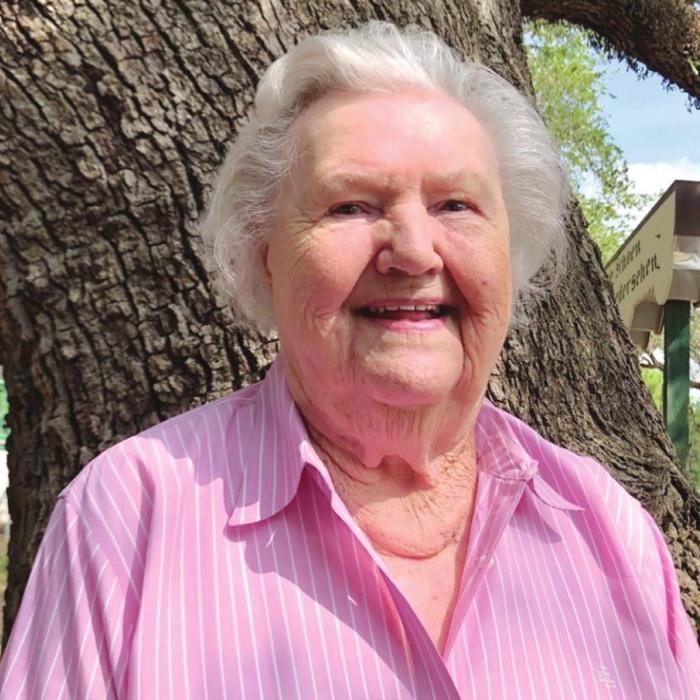 Liane (Leona) Hoffmann Wagner, who came to Round Top, Texas, as a German war bride in 1947, left her native land to marry a young American World War II veteran. At the age of 95, she still is a feisty woman whose ambitions are to go gambling in Louisiana this summer with her caregiver, Scotty, and live to be at least 100. Photo by Elaine Thomas
 -
 Although Liane Hoffmann liked the looks of the young American soldier at the Stork Club in Berlin in 1946, she was embarrassed that he heard her say so. By the time she reached Texas as a war bride, Liane’s name on official documents had appeared as Lione, Liona, Liono, Lia and Liane. The scrutiny of her immigration papers was haphazard to say the least.
 -
 Alt Text for Image
 -
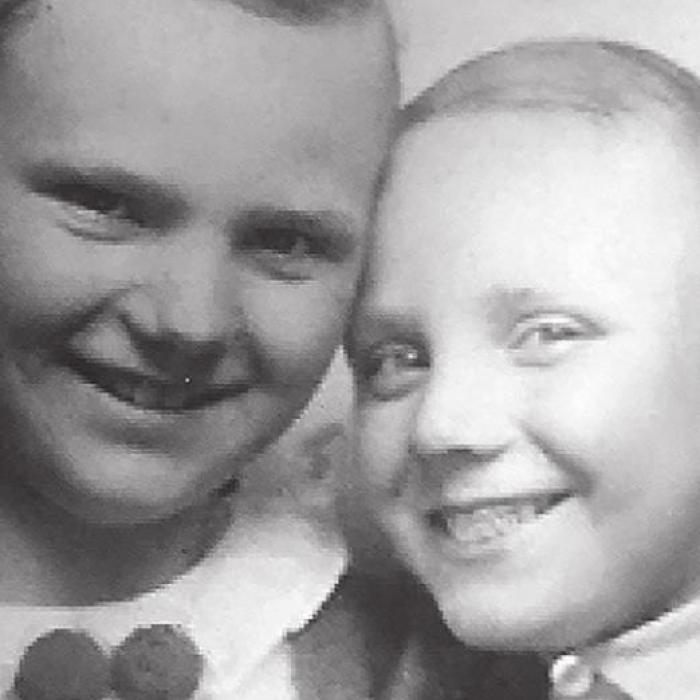 Liane and her brother, Monfred, grew up during Hitler’s rise to power in Germany and survived multiple bombings of Berlin and other World War II bloodsheds. At the end of the war, Liane made her way to a Russian prisoner of war camp to claim her brother who had been incarcerated there. He never spoke about his experiences as a prisoner. She later helped Monfred immigrate to the U.S.
 -
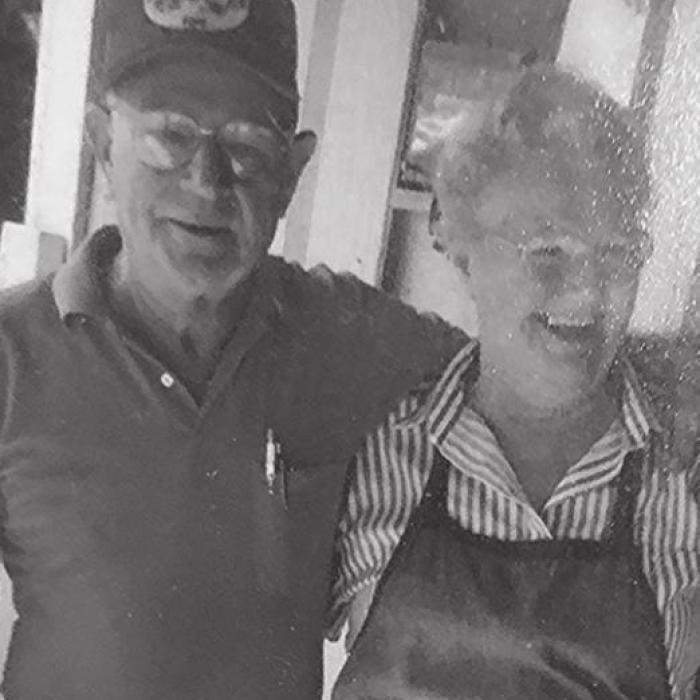 Although Liane had no idea of how difficult life could be on a Texas farm in the late 1940s, she was glad to be part of a community where German was spoken. However, it took her longer to become fluent in English.
 -
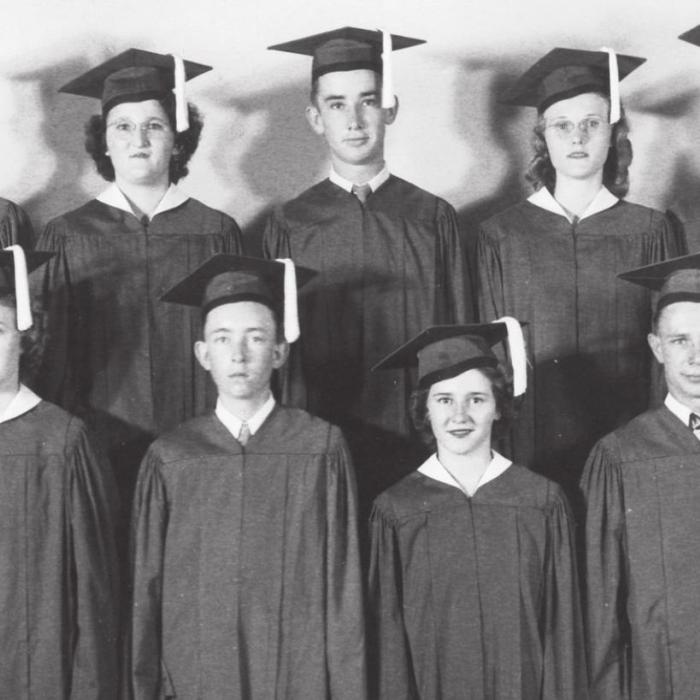 George Wagner was on the front row, second from right in the 1945 graduating class of Round Top-Carmine High School. The other students included (back row, left to right): Cleburne Schulze, Virginia Weikel, Howard Fuchs, Nevilie Fuchs and Alfred Wagner Jr. (Front row, left to right): Eldie Roski, Della Marie Rachui, Durwood Fuchs, Bonibell Bergmann and Eurline Weigelt. Photo courtesy of Fayette Heritage Museum & Archives.
 -
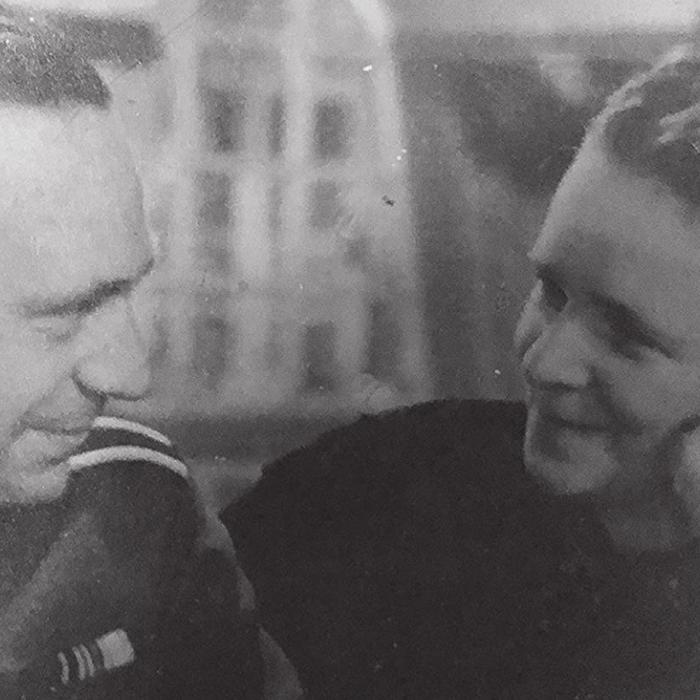 Liane’s parents were anti-Hitler. When her father, Willy Hoffmann, was drafted, he reluctantly left his hospitality industry post where he trained high-end restaurant waiters and staff. He had to turn his attention to training dogs for Nazi Germany. The last time Liane saw her father was in 1945 when he took her to the train station. He told her to be careful because a uniform hid everything underneath. After being sent to the Russian front, the family never heard of him again.
 -
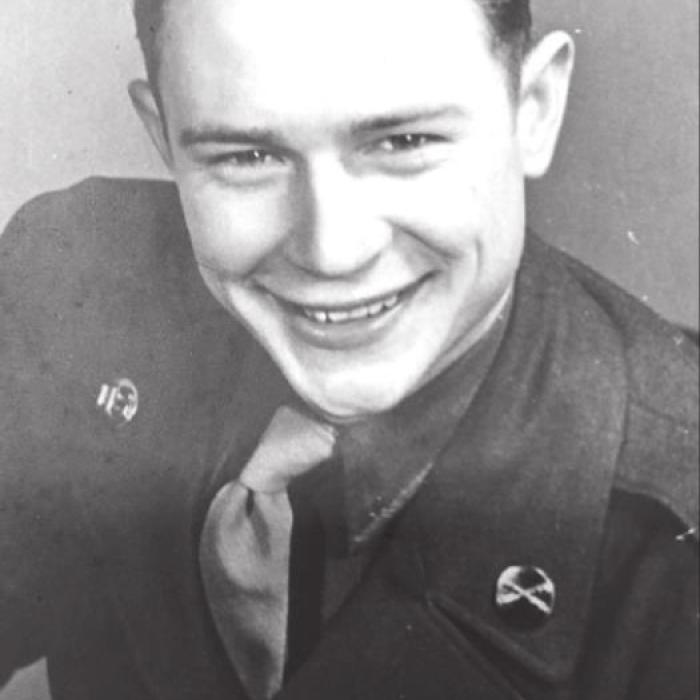 George Wagner, who entered the service shortly after graduating from high school, served in the U.S. Army of Occupation in the American sector of Berlin, Germany. There, he met his future wife, Liane Hoffmann.
By ELAINE THOMAS The Fayette County Record
Happy-go-lucky George Wagner, who was inducted into the U.S. Army shortly after graduating from Round Top-Carmine High School, arrived in Germany in December 1945. When the 19-year-old returned to his parents’ Round Top farm in October 1946, Walter and Ernstine Wagner immediately noticed their son appeared troubled.
Something had changed the young man during his time in Berlin, Germany, where he had served with the Army of Occupation in the American zone of the fragmented, war-torn capital city.
One day, Walter Wagner came upon his son staring at his reflection in the water trough, looking as if his thoughts were thousands of miles away. The worried father could no longer overlook his son’s unhappiness.
Their conversation may have gone something like this.
“What is it, George? What is wrong? I want to help you,” the old farmer likely said to his youngest boy in German.
George could no longer hide his despair. Turning to his father, he uttered four words that would alter his future and that of a young fräulein in Berlin named Liane Hoffmann.
“I am in love,” he told his father. Then the father and son talked.
“Do you want to bring her here?” Mr. Wagner asked. “And do you think she will want to come?”
“Yes,” answered George. “I want to marry her, but I don’t know if she will come.”
An unexpected invitation by mail
On behalf of his son, George’s father wrote a formal letter in German inviting 20-year-old Liane Hoffmann in Berlin to come to Texas. Mr. Wagner didn’t mention marriage, but the surprised Liane read between the lines.
The first time Liane had ever seen George was the first Christmas season after World War II in Europe had ended. Her younger brother, Monfred, who was a chef, got a job preparing vegetables for the American troops at the USO Stork Club. Somehow, he came up with two passes to an American army dance band’s Christmas performance there.
“My mother told me to take my friend, Mayana, and go. I carried my big purse because if there was some extra food, I could bring it home. We were almost starving at that time,” Liane says.
“Mayana and I sat at a long table on the balcony. The band was playing something we later learned was called Boogie-Woogie. There is no better band than an army dance band, let me tell you. At the other end of the balcony was a table of young, very young, American soldiers. I told Mayana that the fair-haired one looked like a sweet guy. Of course, I spoke loudly in German so she could hear me above the band.
“Then that soldier turned and smiled. I was so shocked!” Liane recalls. “He replied in German that he had to watch out that he didn’t melt.”
At the time, Liane had a boyfriend and didn’t think much about the chance encounter with the German-speaking American. Then she came in one evening to find her brother had brought his new friend, George Wagner, home to visit. From then on, George, who was serving with the 279th Station Hospital in Berlin, was a frequent visitor at the Hoffmann home. The whole family liked the young American who hung around their apartment.
George seemed exceedingly grateful to spend time with a German civilian family. He complimented Mrs. Hoffmann on her fried potatoes and she darned the holes in his socks. He brought small treats because even small luxuries were not available to ordinary citizens. George especially enjoyed chatting with the vivacious, blondehaired Liane.
Now George wanted Liane to come to Texas.
The Wagner men at Round Top didn’t waste time waiting for her response. They started the wheels slowly turning to make her immigration possible.
On Jan. 14, 1947, Fayette County Veterans Service Officer Oscar Grebe wrote to the office of the U.S. Immigration and Naturalization Service in San Antonio, Texas. He explained that veteran George Wagner of Rt. 1, Round Top, had entered into an agreement with Liane Hoffmann of Berlin, Germany.
“If he can have her here, they would be married and he now wishes to do everything he can to have her brought to his home,” the letter read.
A response directed George to prove that the woman he wished to bring to the U.S. would not be a financial burden on the country. On Feb. 28, 1947, the cashier at Round Top State Bank wrote a letter affirming the Wagner family’s ability to support the young German fräulein.
“We, the Round Top State Bank, are called upon to testify that Walter Wagner of RFD #1, Round Top, Fayette County, Texas, is competent and financially able to support his family and is competent and financially able to support, if necessary, the addition of Miss Liane Hoffmann, as the wife of his son, George Wagner, and has signified his willingness to do so as the occasions arise,” the letter read.
Mr. Wagner also furnished a detailed inventory of his assets, including his 312 acres of farmland near Round Top. He wrote Liane that the family grew cotton and corn, milked cows and raised cattle. His words meant little to her.
George wrote to Liane, too, never mentioning the word marriage. Since his letters were in English, she kept a dictionary handy to translate his words.
“I think my reason for coming was strictly family. I thought once I got over here I would be able to bring my family. We had nothing to eat in Germany. Absolutely nothing. We would stand in line for bread and by the time we’d get to the front of the line, it would be gone. We’d line up for hours for half a cup of sugar. It was still very, very bad in Germany in 1947,” she remembers.
Liane flies American Overseas Airlines
Liane flew to Dallas via New York on an American Overseas Airlines flight. She was thrilled when the flight attendant presented her with a small zippered travel bag of items that had been unavailable in Germany for years.
Liane was the first single German woman to travel alone to Texas to marry her World War II beau and only the second in the United States to do so. She draws a distinction between the young German women who married American soldiers in Germany and called themselves war brides. They either arrived with their husbands or reunited with them in the U.S.
When Liane’s flight arrived in Dallas, there was only one hitch. George wasn’t there to meet her. He didn’t know exactly when she was arriving until a deputy from Fayette County Sheriff T.J. Flournoy’s office drove into the Wagner’s yard at Round Top and delivered a telegram.
It read, “Liane Hoffman your bride from Germany will arrive in Dallas via American Airlines 12 midnight June 15. Contact American Airlines office at the airport, Love Field, Dallas.” An earlier telegram had been delivered to the wrong sheriff’s office somewhere else in Texas.
George hurriedly sent a telegram in response confirming that he would be in Dallas as soon as possible. Even though the Wagners were busy working in the field haying, he hopped on a train headed north.
Babbling in English, reporters and photographers with handheld lights anxiously waited to talk with Lena when she stepped off the plane at midnight.
“I would have enjoyed the attention if I hadn’t been so scared,” she says.
A Tarrant County sheriff’s deputy named Harry Goldberg stepped forward and offered his assistance. Since she had ample time until her husband-to-be arrived, he asked if he could drive Liane around Dallas to see the sights. Liane agreed, thinking it beat sitting alone and forlorn in a deserted airline terminal fretting about her future.
A Texas-size welcome
“There were so many lights! In Germany, even two years after the war had ended it was still so dark at night. Then I saw the flying red horse on a big building. I’ve never forgotten it. Years later, I learned it was the symbol of the Mobil Oil Company. We stopped at a light someplace and there a man was selling bananas. I must have looked hungry because the deputy bought me a whole stem of bananas!” Liane remembers.
When the story came out in the next day’s paper, Liane was pummeled with questions. “Can you tell me if so-and-so is still living?” “Do you know what happened to so-and-so?” “How do I contact so-and-so?” These anxious Dallasites with German family and friends were disappointed that Liane didn’t know their loved ones and was unable to help or reassure them.
Finally, George arrived. He and Liane were reunited and had their pictures taken. They spent a night in a hotel, in separate rooms, of course, and then caught a train south. They got off the train in Fayette County, west of La Grange at West Point. Liane doesn’t recall who took them to Round Top, but she does remember that the filling station was still open at midnight and some men were drinking beer when they arrived.
One of the men was George’s cousin, Arlen. He agreed to take George and Liane home to the Wagner farm. Liane recalls how she and George crowded into the vehicle with Arlen, his wife, Pearlie, and their baby. Slowly the car made its way down a bumpy country road in the middle of the night with not a single light in sight. Tall vegetation crowded both ditches on the narrow road, waving in the breeze. Lena later learned it was called bamboo.
“I thought to myself, ‘Pretty soon there would be a sign saying this is the end of the world.’ At night, everything looked so bad,” she recalls.
“When we turned in at the farm, all I could see were dogs and they were all yapping and running around.”
Liane had made a great effort to find new hosiery before she left Dallas so she would look presentable for her future in-laws, but immediately realized it had been unnecessary. There was nothing fancy about the Wagner home or its inhabitants. When George introduced her, Liane stepped forward to hug his mother, but Mrs. Wagner put her hands up in front of her. It was not customary for newcomers to embrace someone they’d just met, even if the stranger had arrived from halfway around the world.
“She was a kind, sweet woman, but reserved, very reserved, especially compared to me,” Liane says. “Every time she went to La Grange, she would buy a little orange, a great treat, and put it on the little table in my room.”
Another image from her arrival at the Wagner farm is Liane’s first visit to the outhouse. Nothing had prepared her for using the outdoor facilities in the dark and then finding her way back to the house with dogs sniffing her from every angle. She was shown to a little, narrow bed in a space about the size of a small bathroom with serviceable brown curtains hanging at the small window. Despite her growing misgivings about a new life in Texas, Liane was exhausted and slept soundly.
“In the morning, I looked out the window and saw nothing but beautiful crepe myrtles in full bloom. Behind them was a big peach tree covered in ripe peaches. Then I thought, ‘Well, it’s not that bad after all.’
“That good feeling stayed with me until I saw the white enamel water bucket on the kitchen table. Everyone drank from the same dipper. That was awful,” she remembers. “The first thing I added was a pitcher so I could pour water in a glass to drink.”
The subject of marriage came up a couple of weeks later when George announced that he and Liane needed to go to La Grange and get a license.
“My mother-in-law couldn’t stand the idea of having an unmarried young woman under her roof,” Liane says with a laugh.
“I never remember George formally asking me to marry him. It was just assumed that since I had traveled all the way to Texas that I would,” she says. At the Fayette County Courthouse, deputy county clerk Leona C. Giese welcomed the young couple and issued their marriage license. George and Liane were married in a German ceremony at July 17, 1947, at Bethlehem Lutheran Church in Round Top by Rev. Walter Kralik. No wedding pictures were taken.
Of course, the relatives, friends and neighbors turned checking out George’s bride into a major community social occasion. Although she was shocked at the preparation of an entire dishpan of chicken salad, no one had informed Liane why.
“George said to me, ‘We want to go somewhere, so put a different dress on.’ So I did and we went to Aunt Ella’s house. There were all these benches in the front yard and two decorated chairs on the front porch, one for George and one for me. When I realized I was the main attraction, I jumped out of the car and ran into the bushes. George had to come and find me!” Liane says.
“George’s mother was angry with him because he hadn’t told me what to expect,” she remembers. “We got lots of lovely gifts that night, but I would have enjoyed it more if I had not been so scared. Everyone was so nice to me and they all spoke German. They were kind. I think they put themselves in my place. I think there were 105 people there that night.”
When the crowd polished off all the food that had been brought, the hostesses hurriedly opened cans of sardines and mashed up the fish to make more sandwiches.
One guest who sticks in Liane’s memory was a big man wearing a huge hat. He walked around her, looking her over carefully from every angle.
“Since I came from Germany, I guess he wanted to see if I had an extra leg or arm. He made me really uncomfortable, but he didn’t mean anything by it.”
A strong, hardheaded German
Liane isn’t sure whether coming of age in a war zone forced her to grow up early or if she was born very independent. Either way, she has always been self-reliant, a trait that sometimes has gotten her into trouble.
Take for example, the day a pilot offered rides in his airplane for $5 per person at a gathering in Round Top.
“I said to George that we ought to go up, but he said no, he didn’t want to. But I did. So he gave me $5, I climbed into that plane; we went up, circled the ballpark and came back down. It was great fun! Would you believe my mother-in-law didn’t talk to me for at least four weeks afterward? She was horrified that I would go up in an airplane alone with a man that wasn’t my husband.
“That reminded me that I needed to remember to look before I leaped!”
A woman’s place was hard at work
Although Liane resigned herself to pulling a cotton sack in the field, she didn’t relish the manual labor expected of her. She soon realized that farmwomen were no better than hired hands, working hard from early morning to late at night in the house, in the garden, in the barn and in the fields.
“I found my mother-in-law trying to wipe the price off a can of asparagus, bless her heart. She liked asparagus but wanted no one to see how much it cost. I could not believe that she didn’t feel entitled to that small treat. I was glad when my sister-in-law saw some asparagus in a seed catalog and ordered it for her. Then my mother-in-law was able to raise her own.”
Liane and George’s daughter older daughter, Georgia, was born in 1948. Their second daughter, Diane, arrived in 1954.
During the early years of their marriage, Liane encouraged George to take a job in Houston. When he did, she was delighted at the prospect of making their home there. Even though he received a raise after his first week on the job, George was miserable in the city. The problem was Liane was miserable on the farm.
The young couple arrived at a compromise. George got a job as manager of the Gulf Oil service station in La Grange and the family moved to town. He later went to work for Brasher Motor Co. Meanwhile, Liane taught herself to type on an old green army typewriter and worked for John Schroeder at the Fayette County Abstract Company in La Grange for many years. Then she joined Lee Mueller’s insurance company and learned about that business. George and Liane later opened their own venture, La Grange Cleaners.
“You had to have something going on up here for that work,” she says, tapping the side of her head. “But you didn’t need to know anything to get your sack in the morning and pick cotton all day or sit on the tractor pregnant while they harvest the corn or you wash heavy milk cans. I wasn’t brought up to that.”
When Liane sent a picture back to Germany of helping the Wagner family dress a hog, her mother was horrified. The harsh reality of life in rural America sent many German war brides home to their families as fast as they could travel, but not Liane. She always has taken life in stride.
“I loved my husband. George Wagner was a good, good man. And he loved me. What more could I have asked for?” asks Liane (Leona) Hoffmann Wagner.
If you’d like to read more stories written by Elaine, visit www.elainethomaswriter.com/blog/ and sign up to receive new posts twice a month. You can also call Elaine at 979-263-5031.