


Dubina Church Designated “Diocesan Shrine,” Pilgrimage Site
-
 Dubina Church Designated “Diocesan Shrine,” Pilgrimage Site
 -
 Dubina Church Designated “Diocesan Shrine,” Pilgrimage Site
 -
 Dubina Church Designated “Diocesan Shrine,” Pilgrimage Site
 -
 Dubina Church Designated “Diocesan Shrine,” Pilgrimage Site
Dubina has long been an informal pilgrimage site.
Now it’s officially one.
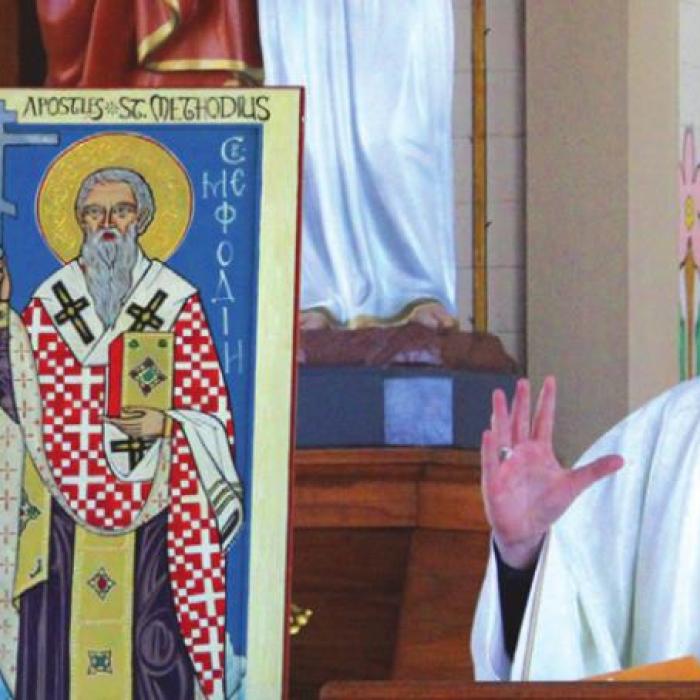
In front of a packed congregation Monday at Sts. Cyril and Methodius Catholic Church, including at least seven priests, students from St. Micheal’s School, and others from all across the state, Bishop Brendan J. Cahill officially designated the church as a Diocesan Shrine “to which the faithful may come in pilgrimage.”
Cahill said it was the first such designation he has made since he became Bishop of the Diocese of Victoria in 2015.
As he read the official designation document to the congregation Monday Cahill said “spiritual benefits would be granted to the faithful who make a pilgrimage to this shrine” including plenary indulgences to anyone who comes to the shrine to pray on the Feast Day of Saints Cyril and Methodius (February 14) and partial indulgences to anyone coming into the shrine to pray on any other day of the year.
The new designation only heightens the importance of Dubina to the faithful who continue to come to it, and the three other Fayette County painted churches in droves. More than 400 bus tours came to the painted churches last year alone.
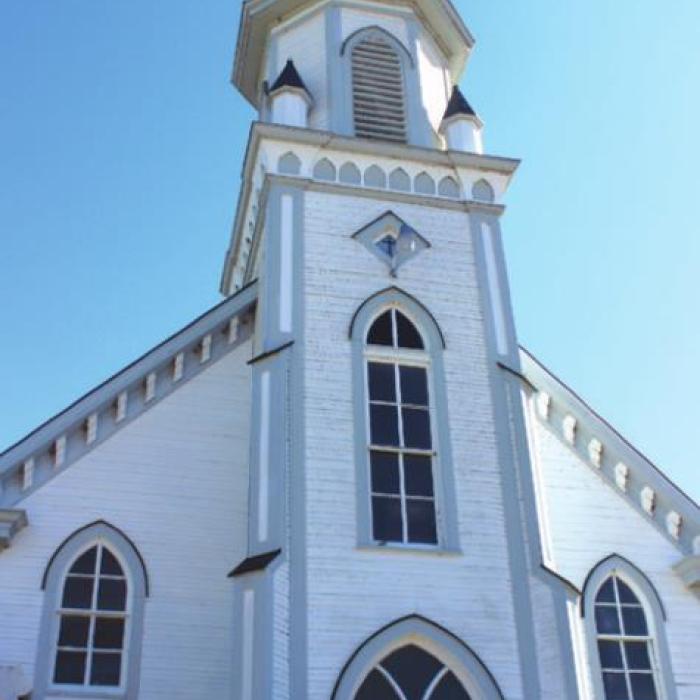
Situated in the far southeastern edge of Fayette County, Dubina is considered the first Czech settlement in Texas, after a group of immigrants found shelter under a group of large oak trees (Dubina is Czech for “oak grove”) and later built a community there.
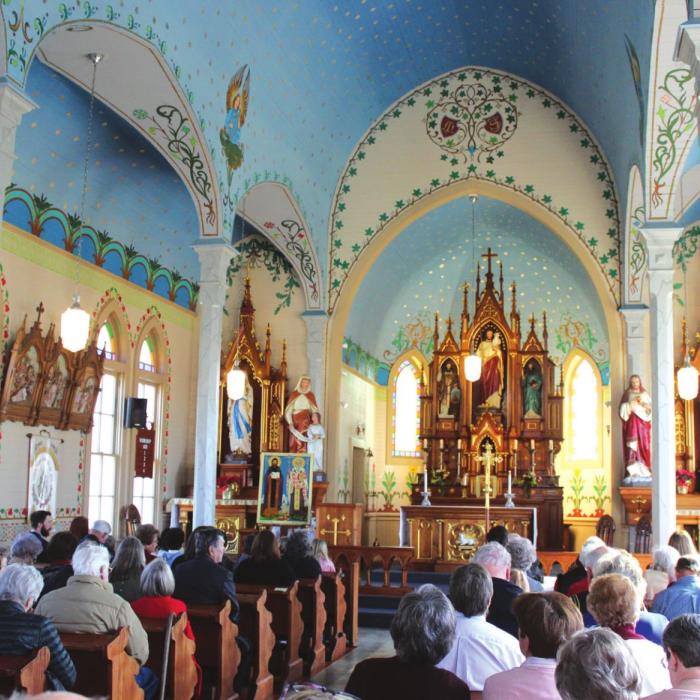
The first church was built in Dubina in 1877. The present church was built in 1911, designed by San Antonio architect Leo Dielmann. Like several other Texas churches built by Central European immigrants, Sts. Cyril and Methodius is adorned with an array of decorative interior painting, but all of the church’s interior paintings were covered with white paint in 1952, but their existence was never forgotten and faint traces remained visible.
After over thirty years, the church’s parishioners decided to uncover and restore the paintings in 1983. Thus began a long and tedious restoration process, undertaken each Sunday after church services by the parishioners themselves. They carefully removed the white paint to reveal portions of the paintings. With the aid of historic photographs, the parishioners then re painted all of the interior decorations in their original locations.
One of Dubina’s most striking features is its dramatic blue ceiling covered with hundreds of golden stars.
The church’s importance to Texas Czech Catholics was underscored Monday. The church was the first in Texas named after Sts, Cyril and Methodius, brothers, who were early missionaries sent to the Slavic regions of Moravia and the Czech lands. In his homily Monday, Cahill highlighted the importance of respect for other cultures.
“They were bridges between the Eastern and Western traditions,” Cahill said. “We are called to be a bridge ... and the example we can look to is Sts. Cyril and Methodius.”
“With this designation comes a great deal of responsibility,” said Rev. Wayne Flagg, the pastor of Sts. Cyril and Methodius.
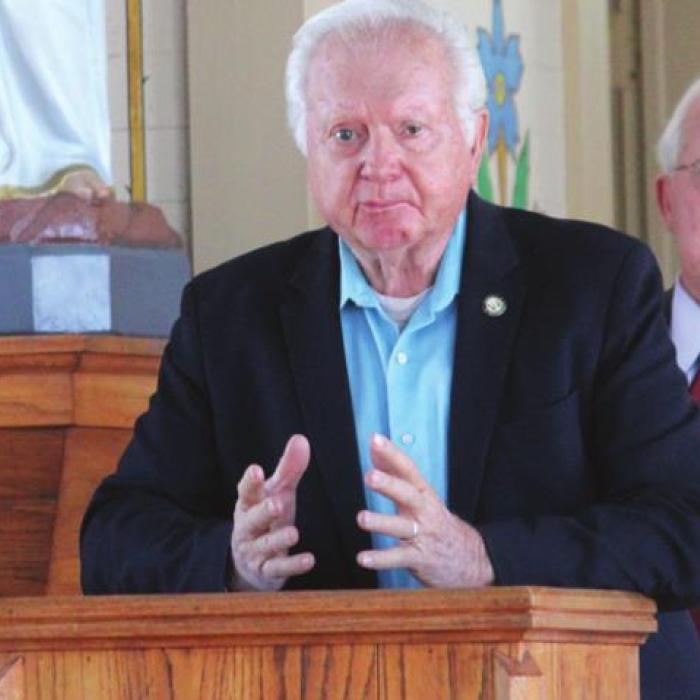
“Thank you for this honor Bishop, and we’ll try to live up to it,” said retired Fayette County Judge Ed Janecka, a Dubina resident who was instrumental in the restoration work at the church.
Brian Vanicek, Honorary Consul of the Czech Republic to the State of Texas, read a letter from the Czech ambassador to the U.S., extending his congratulations on the new designation.
After the Mass, the designation was further celebrated at the adjacent church hall, which is shaded by some of the most impressive oak trees in the county.
Fittingly, the post-Mass meal was comprised of a Czech feast of sausage, sauerkraut, potatoes and kolaches.