


The Coach Who Practiced What He Preached
Although winning feels great, the thrill is short-lived, says Tom Walker, who believes working effectively as a member of a team is a life skill


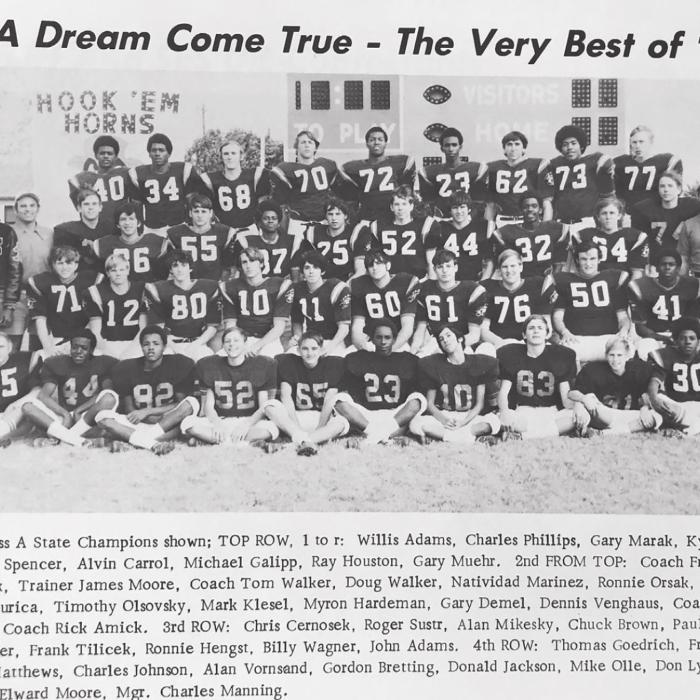
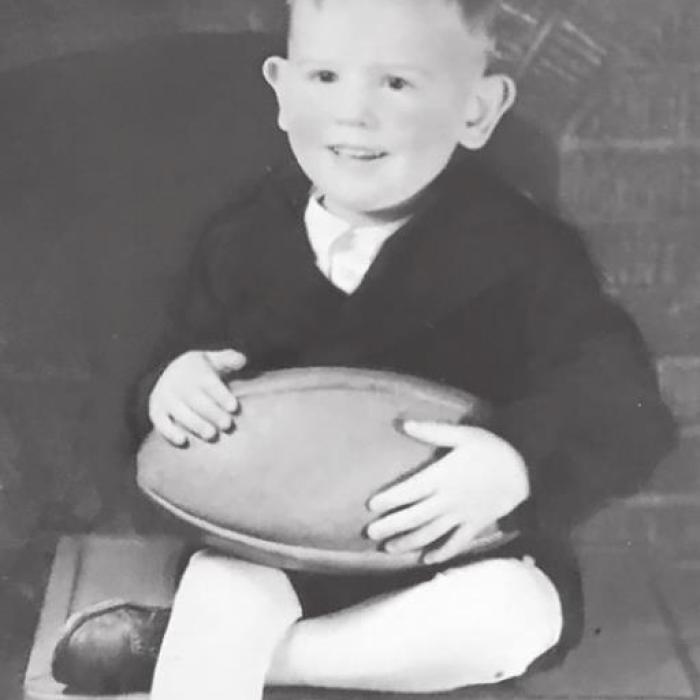
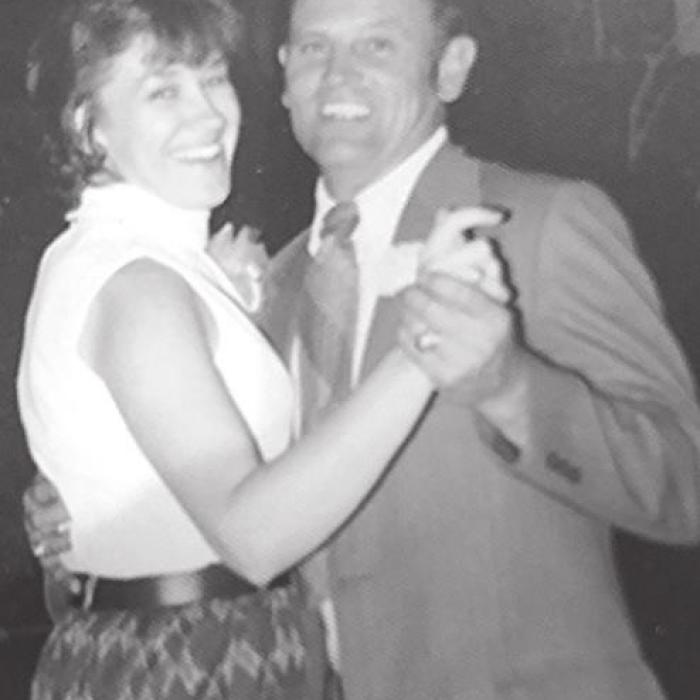
In the summer of 1972, the Schulenburg community was anxious. The year before, the Schulenburg Shorthorns had gotten as far as the Class A state football semi-final championship, a very respectable showing, indeed. A prestigious publication called Dave Campbell’s Texas Football picked the Shorthorns to take the title, even though the school board had just hired a coach named Tom Walker.
Did the school board know what it was doing? Could this new guy who wasn’t from here pull it off? He had been born in Iowa of all places, which didn’t have the same fierce devotion to football as Texas had. Not only that, but before accepting the Schulenburg post, he had coached at Del Valle High School near Austin. The Del Valle Cardinals was an AAA team.
Who was this Tom Walker, anyway?
Sizing up opportunity
Tom had heard about the athletic director vacancy at Schulenburg from a sporting goods salesman who called on him at Del Valle High School.
“He told me I ought to call A.C. Winkelman, the superintendent at Schulenburg, and apply for the job. The salesman, who mentioned he’d told Mr. Winkelman about me, kept saying things like, ‘They need you down there.’
“When I called Mr. Winkelman on a Saturday, he asked if I had any objection to working on Sunday. When I told him that I didn’t, he told me to come down the following day, so I did. I sat down with him then and had a pretty good interview. Afterward, he showed me around the high school,” Tom remembers.
Several days later, a threeperson Schulenburg ISD delegation arrived at Del Valle High School to check out the promising job applicant. They talked to Tom’s bosses rather than to the applicant himself.
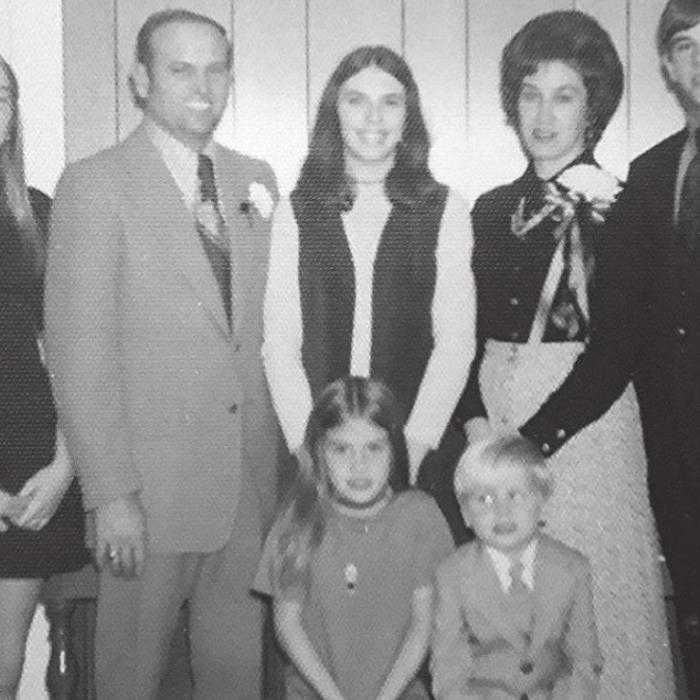
“The following Saturday was the junior prom at Del Valle High and I didn’t have a date,” says Tom’s oldest daughter, Terri Walker Wagner of La Grange. “I told my mom I wasn’t going and she said, ‘Yes, you are. Your dad will take you.’
“So I went to the prom with my dad and guess what? Mr. Winkelman called while we were at the dance and asked to speak to my father. When Mom told him Dad was at the prom, Mr. Winkelman didn’t think he had heard her correctly. ‘He’s where?’ he said.”
The Schulenburg school superintendent was impressed when he discovered that Tom Walker attended social events and choir programs that had nothing to do with athletics. So Mr. Winkelman invited Tom, along with three or four other prospective coaches, to interview with all the school board members. At a meeting that dragged on far into the night, Tom was the last candidate to be introduced and grilled.
One of the Schulenburg emissaries who had come to Del Valle High School on the factfinding mission, Dr. Norman DeRuiter, was as supportive of Tom as Mr. Winkelman was. The board, which liked what it had seen and heard, voted to offer Tom the job.
Seeking family support
support Tom was eager to accept but recognized the move would affect the lives of his family, especially Terri, who was a high school junior. If the Walker family relocated to Schulenburg, Terri would be starting her senior year in a new school. The additional complication was if Tom waited a year to move until his contract with Del Valle was up, the state’s athletic relocation rule would kick in. It would preclude Doug, Terri’s younger brother, from playing varsity sports as a junior. That wouldn’t play well when it came time for Doug to seek college scholarships.
“I remember Dad coming to my room one night in Austin, sitting down and saying, ‘This is what is happening.’ You have to keep in mind that I was 16 and already a junior because I had started school earlier than most kids had,” Terri recalls.
Tom then told his oldest daughter he would respect her decision.
“With no hesitation, I told him, ‘Let’s go.’ I could see that being a senior with my senior class at Del Valle High School would not help our family in any way, shape or form. If we went to Schulenburg, Doug might be able to get some financial help for college if he could play varsity as a junior, which would help us all,” Terri recalls.
It wasn’t the first time that Terri had made a mature decision.
At Del Valle High School, volleyball was the sole sport for freshmen girls. Terri hated the game, but common sense told her that it wouldn’t look good if the athletic director’s daughter wasn’t involved in sports. After playing volleyball for a while, Terri found she loved what she had at one time called a ‘stupid sport.’
So Tom called Mr. Winkelman and accepted the Schulenburg coaching job. As soon as the drivers’ education class Tom had committed to teach that summer at Del Valle High School wrapped up, the family would move. But Tom didn’t wait that long to make his first public appearance in Schulenburg.
“I went down to Schulenburg the last day of school and attended the picnic,” Tom says. “Afterward, one of the players asked me what would happen if a player didn’t show up for a scheduled practice. My answer was simple. I told him anyone who didn’t come to practice shouldn’t expect to play in the next game. He seemed satisfied. Later, the assistant coaches told me that I’d made myself clear about who would run the program. I never had any trouble.”
Tom’s future son-in-law, La Grange Independent School District Superintendent Bill Wagner, was an all-state center on the 1972 Shorthorn team. On the first day of practice in mid-August, he recalls being impressed with what the new coach said. Tom told the team that he was committed to them and they needed to commit to the team. The new coach also mentioned that he was spending his 18th wedding anniversary with the team instead of his wife back in Austin.
Tom observed that the Schulenburg players were very disciplined. After laying out what he and the assistant coaches expected, the Shorthorns got off to a shaky start that fall. The loss of their first game to Hallettsville shook them up and they got busy, determined to pull together. Their record that season was 12 wins, one loss and two ties.
Back home in Iowa
Tom was just where he wanted to be, although it was a long way from Iowa where he and his wife, Marilyn, had grown up. Marilyn, who had been a high school cheerleader and member of the band, would have followed her husband anywhere.
“My dad was the postmaster of the little town of Kalona outside Iowa City,” Tom explains. “Dad was a softball pitcher on a town team for about 10 years. Every Sunday after Mass in the summertime, we’d go to a tournament some place in the area. It was a family affair and Mom would pack a picnic. Dad was pretty fortunate to usually get into the finals.”
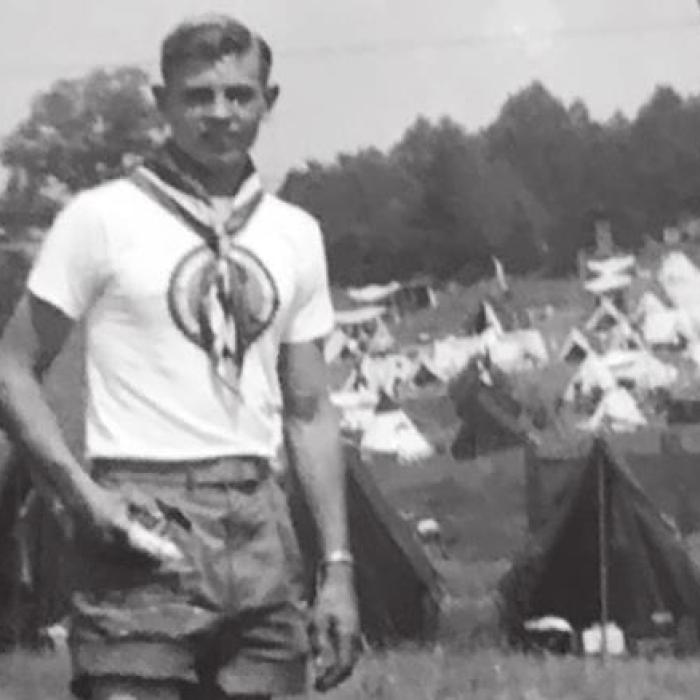
Herman (Chet) Walker also took his eldest son to all the high school basketball games, where he operated the clock at home games. They also went to football games, including those at the University of Iowa where members of a local Boy Scout troop like Tom served as ushers. After fulfilling their responsibility for getting fans to their seats, the boys would go down and sit on the bench with the players.
“Like my grandfather, Dad has always been very athletic,” Terri notes.
Tom excelled at several sports, especially softball, before football became his game of choice.
“Dad played catch with me in the yard. I was left-handed, so I threw on the same side he threw because he was righthanded,” Tom adds.
He aspired to join the college football team at the University of Notre Dame in South Bend, Indiana. However, since he was only a walk-on, Tom never got to play because of the stiff competition from the many talented scholarship athletes there. Disappointed, Tom had decided to take a job with the highway department until he received an offer from Iowa State Teachers College in Cedar Falls, Iowa. There, he was a starter on the football team and first baseman on the baseball team and also ran track. But football remained his favorite sport.
After graduating, Tom landed an assistant coaching job in southwest Iowa at Shenandoah and went on to serve as head coach for six or seven years.
“But when I kept reading about how big high school football was in Texas, I knew that’s where I belonged.”
Tom took out a membership in the Texas High School Coaches Association and began scrutinizing the state’s athletic director/coaching openings.
“I told my wife I was taking a trip to Texas and was going to force myself on a school. The first couple of stops were disappointing. When the head coaches heard I was from Iowa, they suddenly had no openings,” Tom adds.
He found his first Texassized opportunity at Bowie High School in El Paso. Several years later, he moved to King High School in Corpus Christi and from there accepted the Del Valle High School post.
“Politics always played a part in the community and school boards’ decisions, but I tried to stay out of it and just do my job.
“I was pretty strong-willed, I guess you might say. I didn’t back down from too many people, regardless of the situation. If I thought I was right, I maintained that belief until I was proven wrong,” he says.
Schulenburg brings home the title
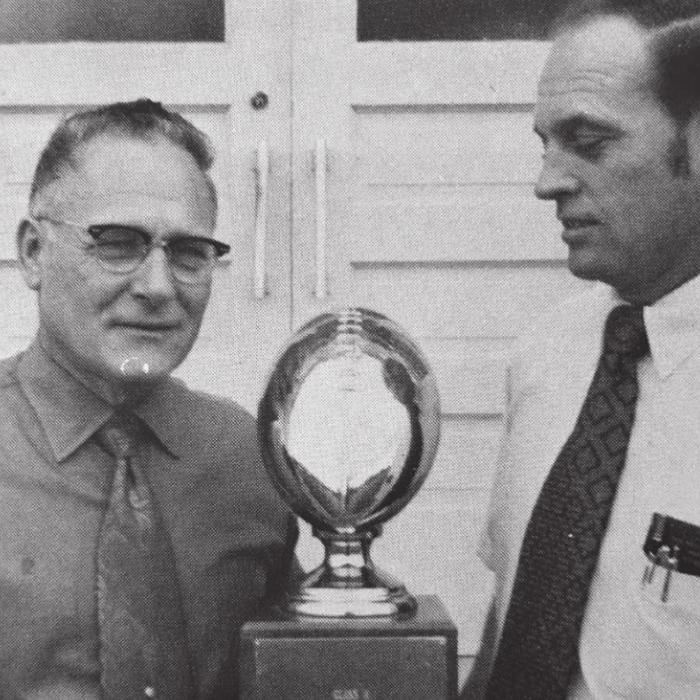
On Dec. 22, 1972, at Brownwood’s Municipal Stadium, the Schulenburg Shorthorns succeeded in bringing home the Class A state football championship for the first time in the school’s history.
“In the final 27 seconds of the game, we won 14 to 10 against the Clarendon Broncos,” he remembers.
What a triumph that win was for every team member and for Tom during his first season as head coach.
“I came to Schulenburg with the idea of doing my best. I told the kids that they were important and their success did not depend on me but upon themselves. They were outstanding!”
Tom and his family spent a rewarding decade in Schulenburg before he was lured away to serve as assistant athletic coach at Texas Lutheran College (now Texas Lutheran University) in Seguin. When the college nixed its football program, Tom became the athletic coordinator at Kitty Hawk Middle School in the Judson Independent School District near San Antonio where he coached for 23 years. He spent the final three years of his 61-year coaching career with the Columbus Cardinals. He hung up his whistle for the final time in 2016. Four years later in 2020, Judson ISD dedicated its new gymnasium at Kitty Hawk Middle School as Walker Gymnasium in his honor.
Engraved on the plaque is the sentence, ‘Coach Walker was known for his extraordinary ability to build relationships with students, staff and the community.’
Those words echo Tom’s beliefs.
“While I wanted each student to achieve some personal gain, what was even more important was seeing what the kids could do as a team. I tried to instill the understanding that everyone on a team should contribute. The better a group of athletes works together, the greater their shared success will be.
“Something that always impressed me was that some kids kind of went along with the program. However, if they got a little special attention, they would have some success and continue to improve. Then others would follow them,” Tom says.
“As I look back on my years of coaching, what gives me the best feeling is having seen on more than one occasion the star on a team put his arm around the last player on the team. That’s what teamwork is all about.”
Tom carried his beliefs home from his various coaching/athletic director jobs.
“Listening to Dad talk today, it hit me that the teamwork he instilled in his athletes is similar to the teamwork he instilled in our family. ‘Work together for the betterment of all.’ That’s what we have always done, too,” Terri adds.
If you’d like to read more stories written by Elaine, visit www.elainethomaswriter.com/blog/ and sign up to receive new posts twice a month. You can also call Elaine at 979-263-5031.