


My Pepper Problems Prove Not Permanent
-
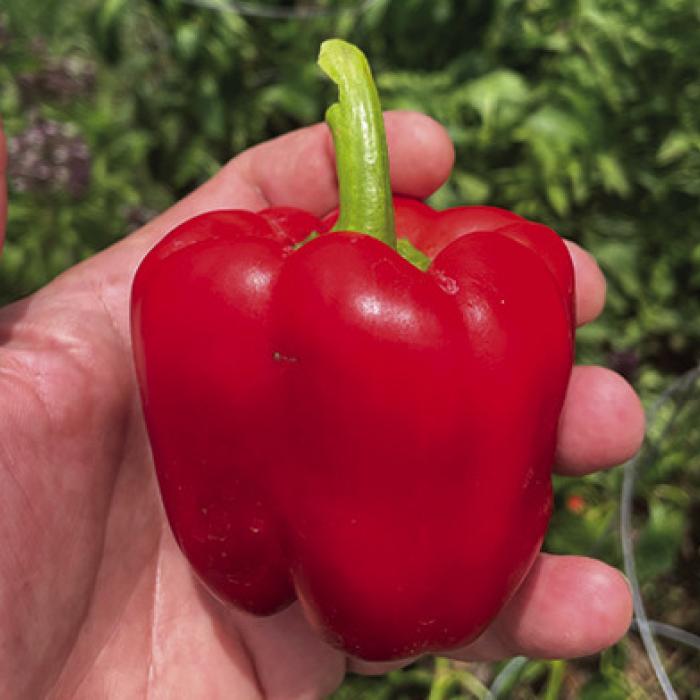 A few weeks ago I wrote about my red bell peppers rotting on the plant just as they started to ripen. For whatever reason, that problem has disappeared. My five plants are now loaded with red bells. Photos by Andy Behlen
 -
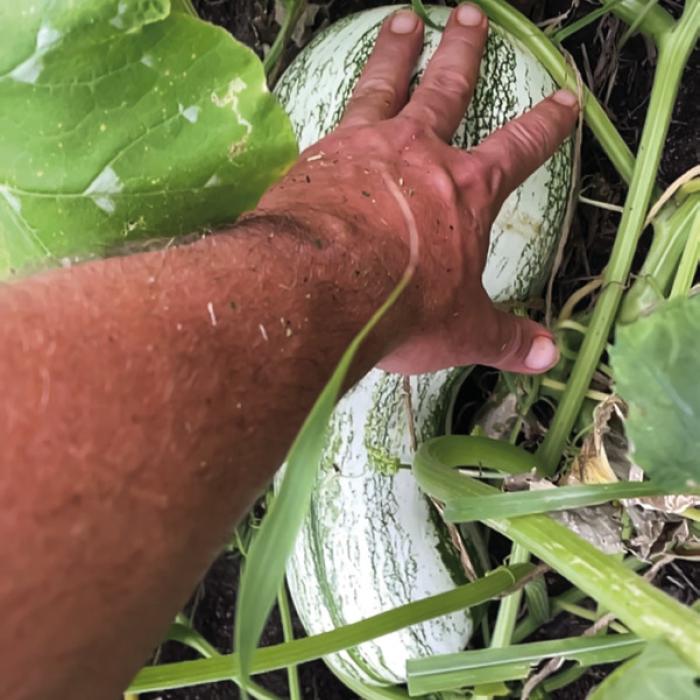 The bulbs on some of my green stripe Cushaw squash are almost the size of a basketball right now.
Ispoke too soon a few weeks ago when writing about some problems I had with red peppers.
At the time, I mentioned a fellow gardener had contacted me about the same problem – beautiful, glossy green bell peppers that seem to deteriorate and rot as they ripen to red.
Both he and I theorized that our hot weather may be the culprit, especially since many of the red bell peppers sold in grocery stores are often grown in cooler climates. Maybe we’re just stuck with green bell peppers, we thought.
Well, no sooner than that column went to the press, this problem I was having disappeared. My five bell pepper plants are now producing so many big, beautiful, red fruits that I can’t eat them all. And boy, are they sweet.
So what changed? It only got hotter. I did apply a side dressing of organic fertilizer around the time I wrote the last column about red bell peppers. Maybe they needed a nutrient boost. Or perhaps I was overwatering them. I have cut back the water after the good rain that fell a few weeks ago. Could it have been stink bugs? I don’t think so, because I’m seeing more stink bugs now than I did then.
If you’re still having trouble producing ripe bell peppers, here’s some advice a reader from Ellinger sent me last week: “After years of having little success growing red bell peppers (had been planting ‘Big Bertha’), I switched to planting ‘Ajvarski’ peppers ( Capsicum annum), a Macedonian roasting pepper from Baker Seeds. They are prolific producers throughout the summer and fall, turn red beautifully, and are sweet and thick-walled enough to be a great substitute for traditional red bells. I generally harvest them when they are about half-red and they turn completely red within a few days after resting on the countertop. They are the peppers that are grown in Mediterranean areas (so they can take the heat) They are the ones you see hanging to dry on houses everywhere. They are also used to make ajvar, which is a popular condiment in the Adriatic area, made from roasted ajvarski peppers.”
This reader said she’s also growing red “Impact” hybrid bell peppers: “So far they are doing well. Some of the first green peppers on the plants were looking small and shriveled, but the ones I am harvesting now are beautiful. Again, I harvest them while they are about half red, and they are ripening well on the countertop. We will see how they do in the heat as summer continues.”
Elsewhere in the garden, my patch of green stripe Cushaw squash has exploded. It looks like a bumper crop may be in my future. There must be dozens of them growing on the vines. Some of them are already huge. But the vines are so thick and spread so far that I can’t see most of the fruits without stepping all over the plants.
Cushaw squash are a variety of the species Cucurbita argyrosperma. Like all squash, it’s native to the Americas. This one is believed to have originated in southern Mexico. It seems to love our climate. Best of all, it is resistant to the squash vine borer.
Cushaw is a “winter” squash, meaning that it is typically allowed to fully ripen on the vine until the skin hardens. The flesh becomes sweet and golden, similar to butternut squash. These qualities allow for storage and consumption during the winter.
“Summer” squash like zucchini and yellow squash, on the other hand, are picked at the immature state and eaten immediately during the summer while they are growing.
Last week I picked a few immature Cushaw squash and grilled them. They tasted great, but I noticed they took longer to cook than yellow squash or zucchini.
They don’t need much water. I’m growing them on the outside of a patch of field corn. I irrigated the corn with a sprinkler on a tripod when it was first getting started. The water got to about half of the Cushaw patch, but the other half has survived on rainfall alone. The fruits on the nonirrigated vines are noticeably smaller, but there seems to be more of them. The bulbs on the irrigated vines are almost the size of a basketball right now, and they get bigger every day.
The only downside to Cushaw squash is that they take up a lot of space. The plants have now spread 20 feet in all directions, and they show no signs of slowing down.
If you have the space, I think you could plant some right now and still get a harvest before cold weather sets in. In fact, a lot of people plant winter squash and pumpkins in July so that they’ll be ready to eat by Thanksgiving. The only tricky part to starting them this time of year is making sure they get enough water.