


Iron Stars Exemplify Texas History
-
 Iron Stars Exemplify Texas History
 -
 Iron Stars Exemplify Texas History
 -
 Iron Stars Exemplify Texas History
 -
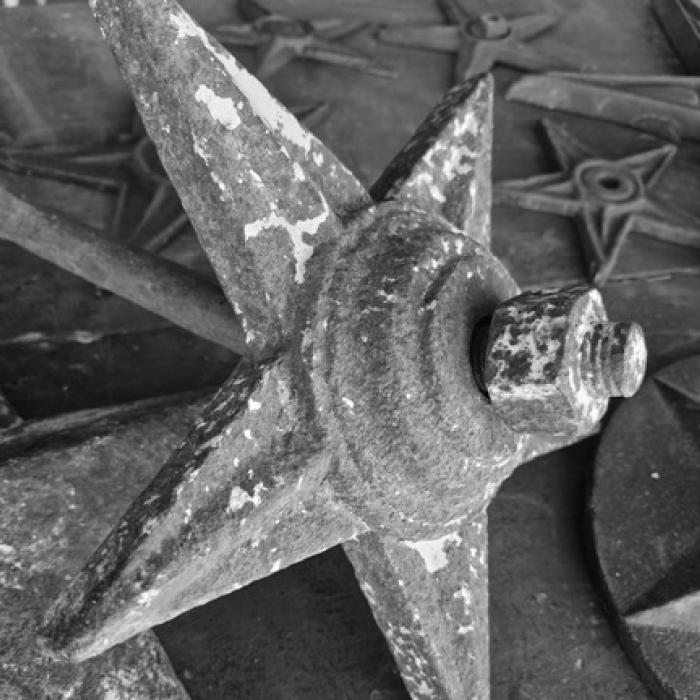 Architectural stars act like big, decorative washers for the tie-rods that reinforce masonry buildings.
 -
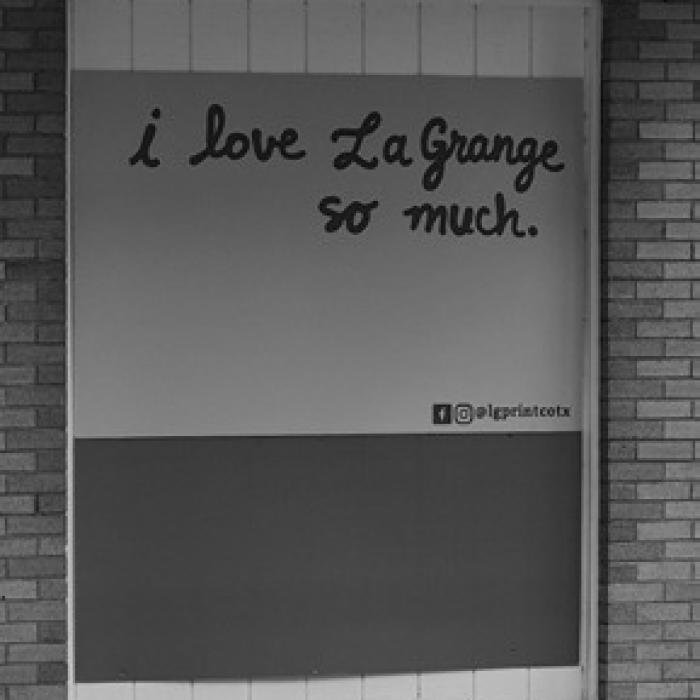 Find this building in downtown La Grange. Read the message. Then look up.
 -
 Iron Stars Exemplify Texas History
More of my song lyrics:“… take your eyes off the screen, look all around, take a good look up and down…” A nd that’s how you start to see not just the blur of the built environment surrounding you, but you learn to appreciate each individual structure: its design, its personality, and its story.
And for those of us lucky enough to live in Texas, where many townscapes retain fine buildings going back to the mid-19th Century, there is a fun challenge in looking for and cataloging all the varieties of cast iron stars one can find studding the walls of vintage brick and masonry construction.
These symbols of individual strength, resolute compression, and stolid integration with the building’s architectural integrity are the prefect symbols of why Texas has always been known as The Lone Star State.
Structural stars are not to be confused with tin “building stars” that decorate barns and out-buildings. Masonry and brick walls, especially after rising up two and three stories, need exact engineering and careful attention to the forces of physics and nature.
The floor can add support to two walls, but the walls parallel to the joists are subject to the unpredictability of winds, shifting ground, and inferior mortar.
So builders “way back then” learned to add “anchor plates” to make everything nice and sturdy.
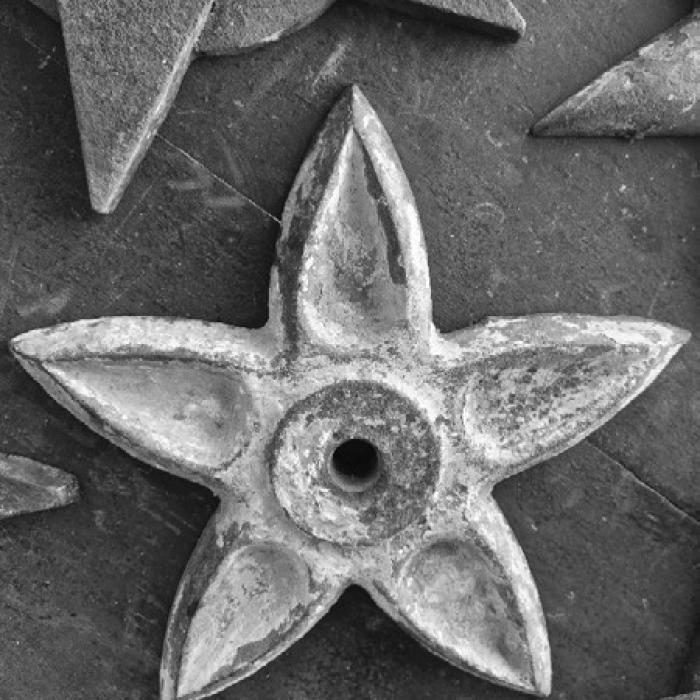
You will find many vintage buildings with “wall washers” that are plain and boring. But back in the day it was more fun to try a little creativity, and so you will also discover a whole catalog of tie-plate shapes, the most popular being the star.
That makes sense as a radiating design spreads the overall compression area to maximum benefit. It also makes for a pleasant decorative addition. And in Texas, a great looking star comes with a spirit of pride, pragmatism, and heritage.
LooLoo Design is grounded in architectural antiques. In fact, Jill & I met at Brimfield over a vintage bathtub that had enormous claw feet. Cast iron, and blacksmith-made wrought iron, has been a primary fabrication material since the nation’s earliest days. Good old iron objects are always on our radar and are well represented in our inventory.
An adage in the antiques business is that you will “buy anything, once.” Which is the same as life: most things (experiences) are not remarkable; for antiques dealers especially, the quest is always to find something in your areas of primary interest that is both unusual and worthy.
Another adage is “always follow a lead.” Most don’t end with much success, but those that do make up for all the dead ends.
And yet another adage is “it’s better to present a collection rather than just one or two examples.” With a group of quality items you present yourself as the “knowledgeable curator”, and with multiple examples to discuss and compare, it also sets up excellent conversations This, in turn, attracts serious potential buyers who often share information and insights that are eye-opening.
Last Spring, on a Sunday afternoon, Jill was driving down a major local road and saw a small sign guaranteed to make her tap the brakes. Up a dirt road, this Estate Sale, was like most others, with mostly modern items. But on the hearth lay a very large cast iron star, one that had a great look and some serious age.
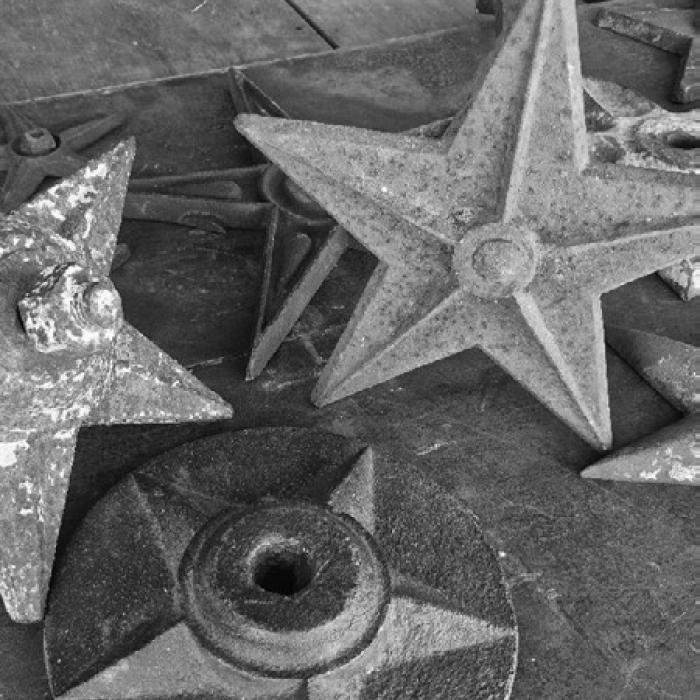
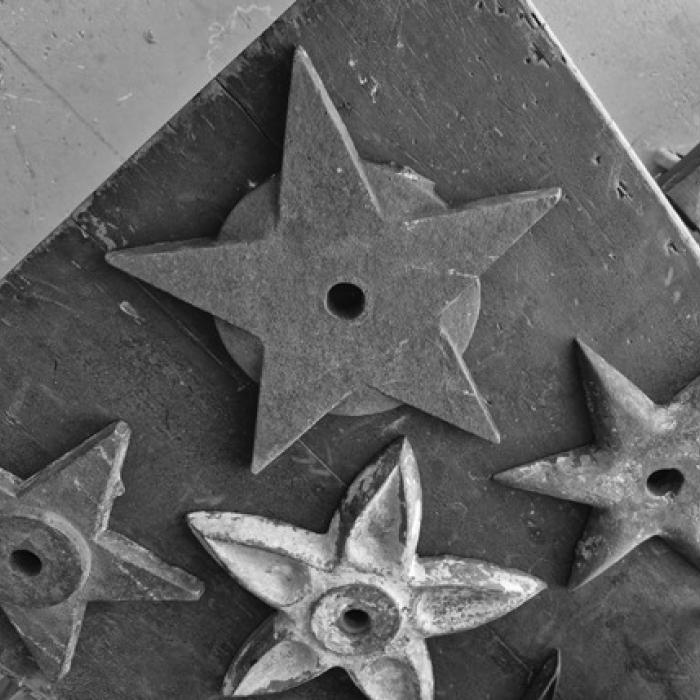
Asking a question or two, she learned there was actually a collection of old iron stars for sale, a couple of which weighed 20+ pounds. Of course, she bought them all.
Together these architectural artifacts make an impressive display. We’ve seen plenty of “building stars” before, but most are the small, lightweight reproductions that proliferate the antiques market. This collection has some meat, as they say… Very quickly we will learn which are the special ones, and which are the duds. We’ll follow the premise of our earlier column on the “80/20 Guide to Valuations” and aim to make a profit on the whole transaction before all the good stuff is gone.
This pointed panorama of architectural history has power and personality, and it will be fun to display and discuss all the possibilities with potential buyers. Then the leftovers will go to auction, or maybe Second Chance.
So that’s your challenge: take your eyes off the screen and look around. Spot a fine old cast iron star and then think about who built that structure, and what life was like back then.
It will bring you to the meaning of Texas Strong.
Web & Jill Wilson live in Rutersville & love a good antiques story. Email them at hww@webwilson.com or text or call (401) 339-5522.