


Local Bishop Chairs National Church Committee on Migration
-
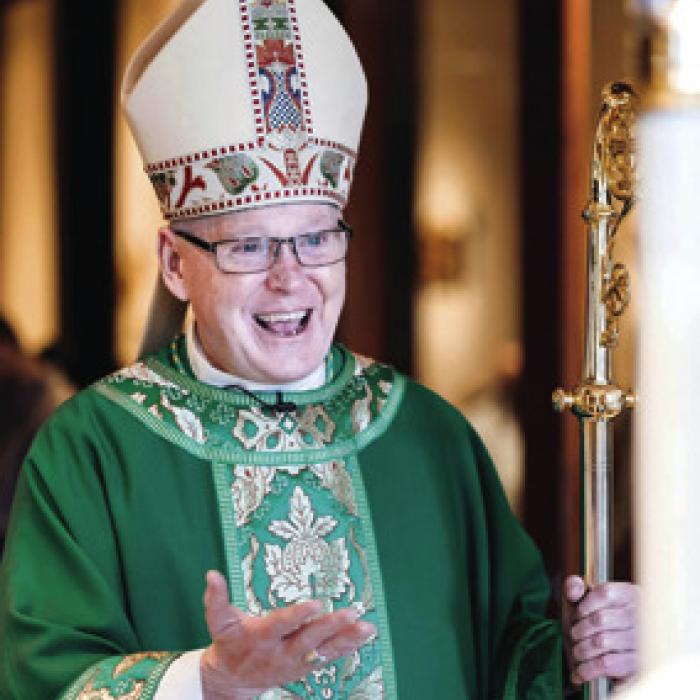 Bishop Brendan J. Cahill
Bishop Brendan J. Cahill of the Diocese of Victoria (which includes several Fayette County Catholic Churches) took office as the Chairman for the Committee on Migration at the United States Conference of Catholic Bishops (USCCB) plenary assembly. The plenary assembly took place Nov. 10-13 in Baltimore.
Bishop Cahill’s diocese includes all of the Catholic parishes in Fayette County south of the Colorado River.
As Chairman of the Committee on Migration, Cahill helps to guide public policy in the United States regarding migration, refugees, and trafficking of persons. The Committee also oversees Catholic services to refugees, forced migrants, and victims of trafficking; and special needs for people on the move.
Several U.S. Bishops have recently spoken out about policies at immigration detention centers prohibiting detained people from receiving the Catholic sacraments, especially the Eucharist.
The U.S. bishops assembled in Baltimore last week took the unusual step of issuing a “Special Message” regarding immigration in the United States. The bishops overwhelmingly approved the message by a vote of 216 in favor, 5 against, and 3 abstentions.
In part, the message stated, “We are disturbed when we see among our people a climate of fear and anxiety around questions of profiling and immigration enforcement. We are saddened by the state of contemporary debate and the vilification of immigrants. We are concerned about the conditions in detention centers and the lack of access to pastoral care. We lament that some immigrants in the United States have arbitrarily lost their legal status. We are troubled by threats against the sanctity of houses of worship and the special nature of hospitals and schools. We are grieved when we meet parents who fear being detained when taking their children to school and when we try to console family members who have already been separated from their loved ones.”
“We recognize that nations have a responsibility to regulate their borders and establish a just and orderly immigration system for the sake of the common good,” the message went on to say. “Without such processes, immigrants face the risk of trafficking and other forms of exploitation. Safe and legal pathways serve as an antidote to such risks.”
The last time the bishops issued such a message was in 2013, and that time it was over a federal mandate forcing religious employers to offer contraceptive methods in their health plans.