

Adventures With Agretti
-
 Adventures With Agretti
 -
 Adventures With Agretti
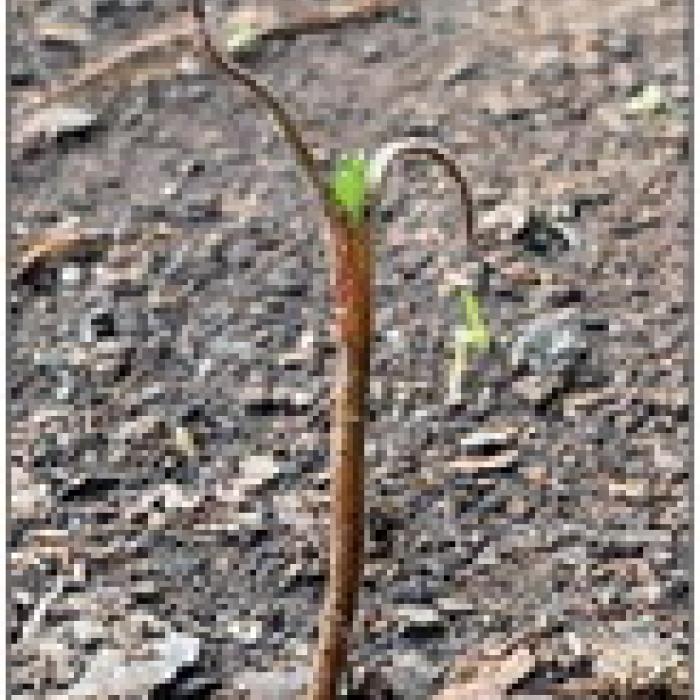
I’ve never grown agretti before, and I had no idea what it was supposed to look like as a seedling. I’m pretty sure this is it, though. The tuft of green emerging from the stem are the first true leaves, which resemble chives when fully grown. Before the green emerged, the reddish-brown stem looked like a piece of compost. So far I’ve found six separate seedlings in the patch where I planted it. There’s probably a lot more. They’re just too hard to spot when they’re this small. Photo by Andy Behlen
The trouble with growing new plants is knowing what they are supposed to look like when they sprout.
For a few years now, I’ve wanted to grow agretti (Salsola Soda), a plant in the saltwort family. Italians love to cook this plant as a green like spinach, sometimes to accompany seafood or tossed into a simple pasta dish. A similar plant in the saltwort family is widely used in Japan as a medicinal herb.
Agretti is somewhat of a wild plant that grows naturally in salt marshes around the Mediterranean Sea. Centuries ago this plant was important in the glassmaking industry as a source of soda ash, an ingredient for making clear glass. Agretti is a halophyte, meaning it can grow in high-salinity soil. The plant sequesters sodium ions from the soil in its plant tissue. It tastes naturally salty, similar to its botanical relatives – beets, spinach and swiss chard.
However, it looks nothing like beets, spinach or chard. The leaves resemble bunches of curly chives. For that reason, it is sometimes called “monk’s beard” in Englishspeaking countries.
It’s a tricky plant to grow, though. The seeds stays viable for a very short time, perhaps only a month or two, with a germination rate of only about percent. Once established it supposedly propagates quite readily. Even though it is native to coastal marshes, it can reportedly survive extended droughts. From what I’ve read, it may even survive as a perennial here. Regardless, everyone who grows it says it will self-seed quite readily.
The short-lived seed and poor germination rate means not many gardeners grow it outside of its native range in the Mediterrenean. Agretti is grown commercially in California, however, which makes me think it might grow well in Texas. We’ll see.
I purchased some agretti seed from Franchi, an Italian seed company, through the website growitalian.com. The package said they should be planted as soon as they arrive in the mail. The seeds sort of resemble that of okra or borage.
About two weeks ago I scattered them in a bed currently growing Romaine lettuce, which I will soon harvest. I’ve watered the bed almost every day since then. I was worried the seed may have been too old to germinate. But this week I noticed something growing that looked different than the weeds in the bed. I was able to find many pictures of mature agretti online, so I know what its supposed to look like when fully grown. But photos of newly-sprouted agretti were hard to come by. Finally I ran across an online blog from a gardener in the United Kingdom who tried growing this plant. He took some photos of the seeds germinating. Sure enough, I was able to confirm that the strange little reddishbrown stems popping from the soil were in fact young agretti seedlings.
I’m really excited about growing this plant. From what I understand, it grows vigorously once established, and the more you cut it, the more it grows. I’ve read that agretti does not transplant well – it’s better to scatter the seeds in a bed and allow them to sprout naturally than to try and germinate them indoors under lights. That’s what I did, and it seems to have worked.